All Purpose Committee: Attachments
21 August 2012 Page 1

15 August 2012
Shire of Esperance
All Purpose Committee Meeting
21 August 2012
Attachments
All Purpose Committee: Attachments
21 August 2012 Page 1
15 August 2012
Shire of Esperance
All Purpose Committee Meeting
21 August 2012
Attachments
TABLE OF CONTENTS
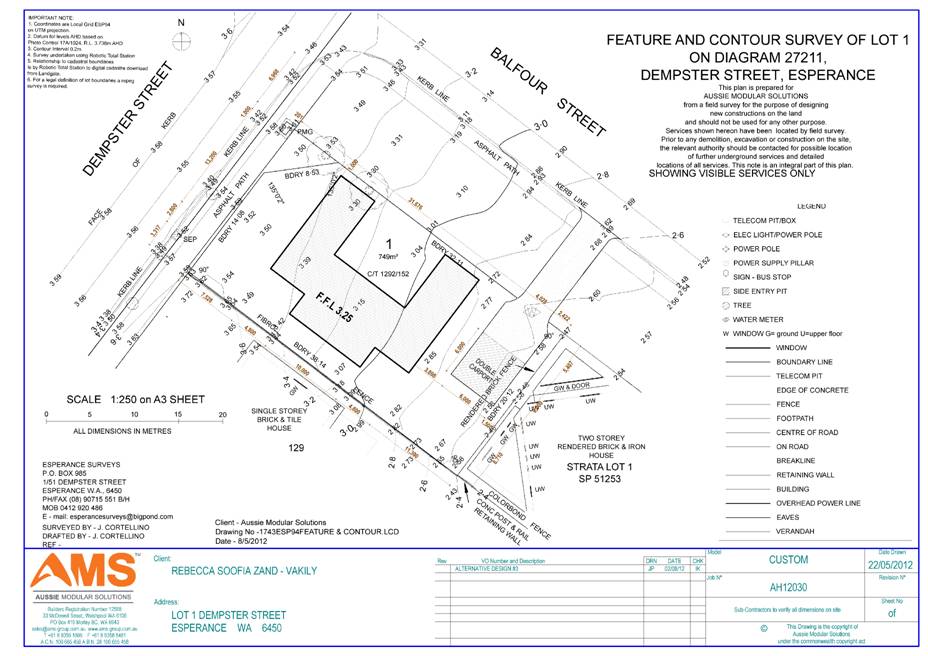
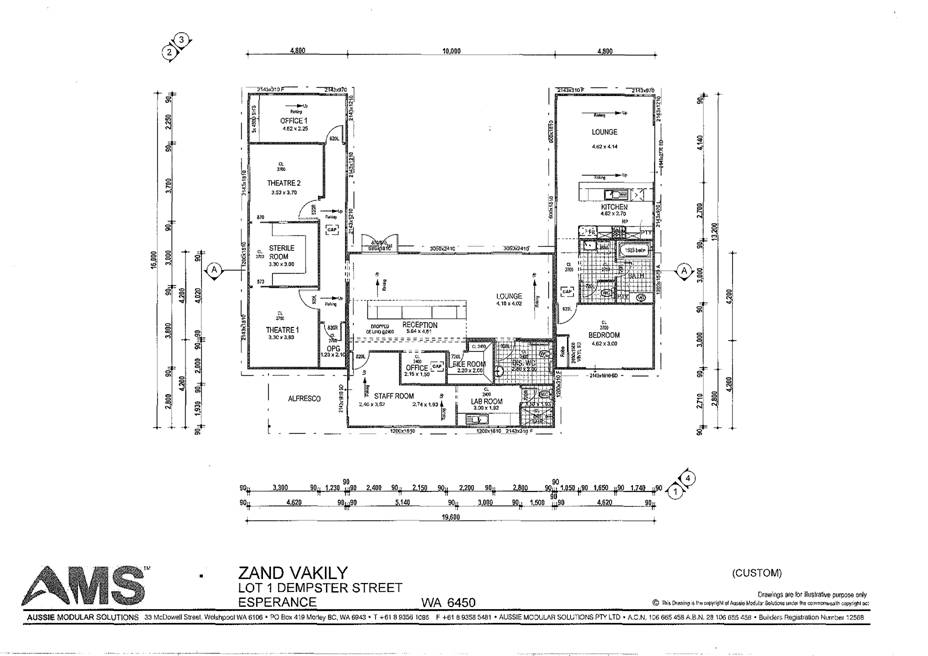
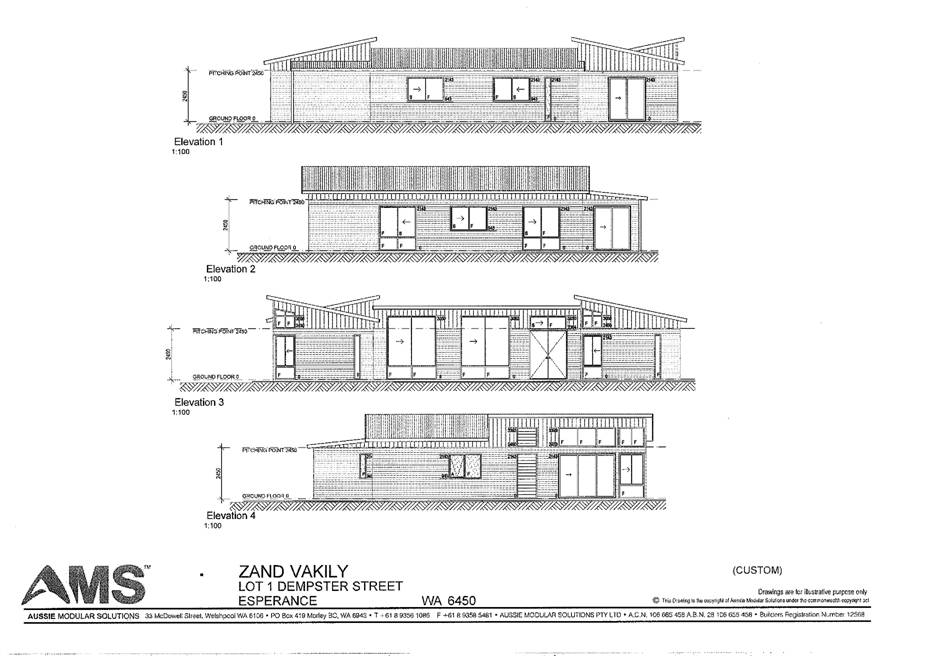
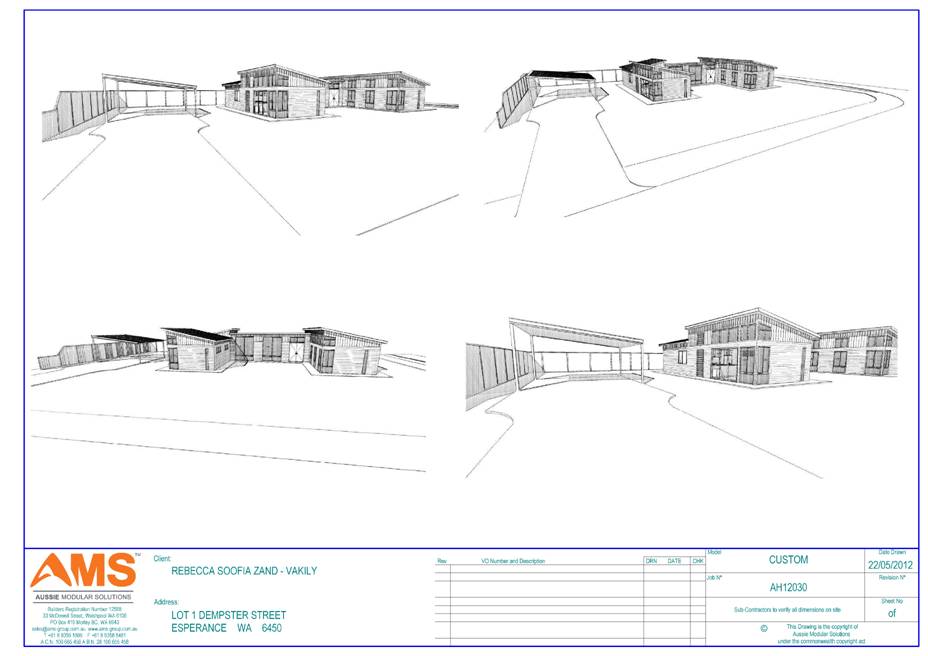
8.1 DEVELOPMENT APPLICATION: PROPOSED DENTAL CLINIC ON LOT 1 (8) DEMPSTER STREET,ESPERANCE
Attachment a: Attachment A-Proposal
Attachment b: Attatchment B- Neighbour Objection ( Denfarm Pty Ltd)
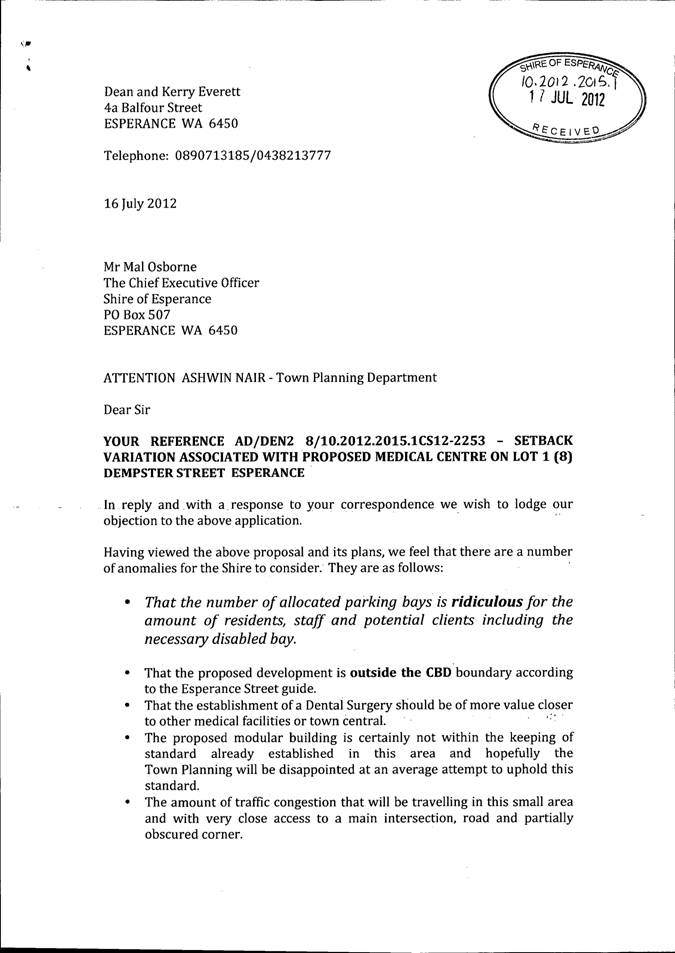
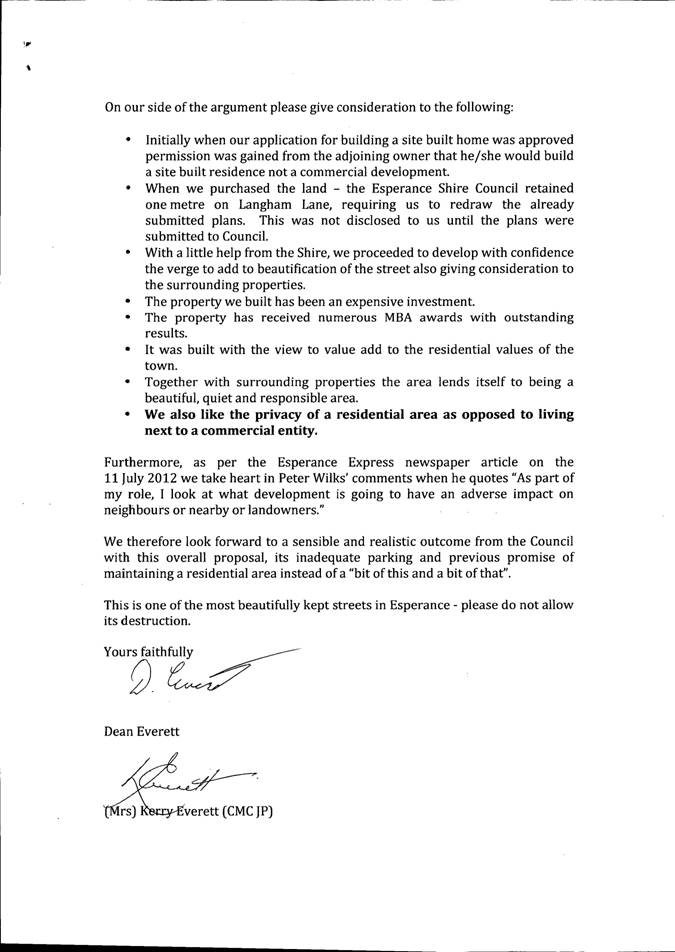
Attachment c: Attachment C - Neighbour Objection (D & K Everett)
Attachment d: Attachment D - Neighbour Objection ( G Everett & L Natouli)
Attachment e: Attachment E- Applicants Justification for variations
8.2 Development Application- Construction of 22 one-bedroom holiday units and a new office building
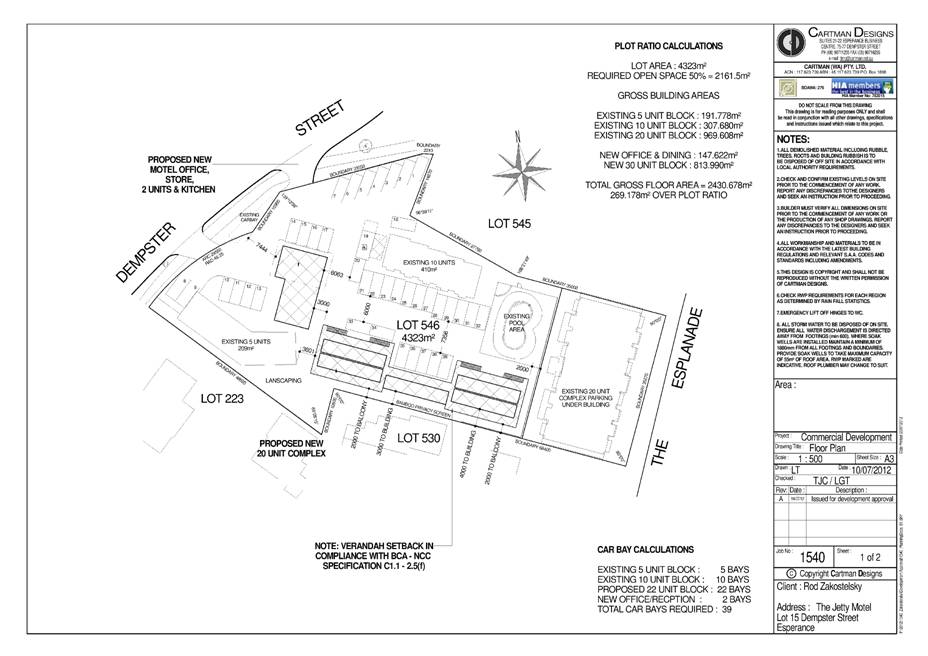
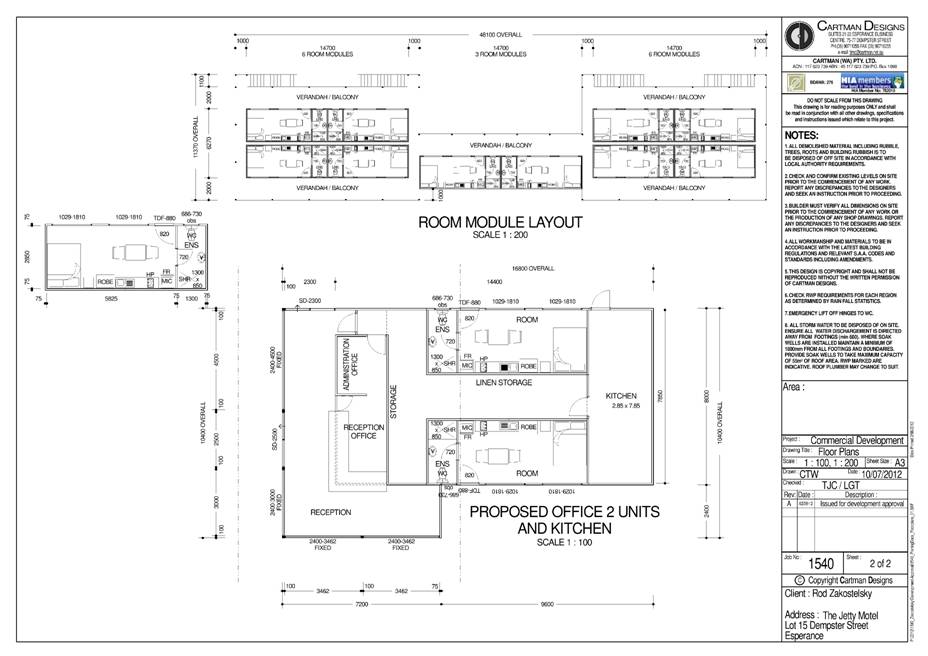
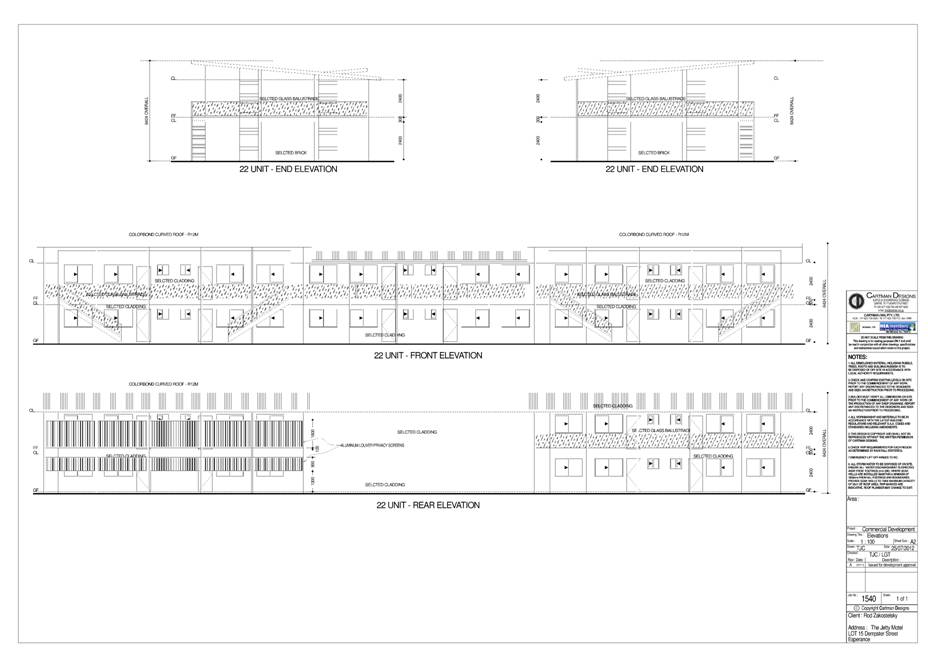
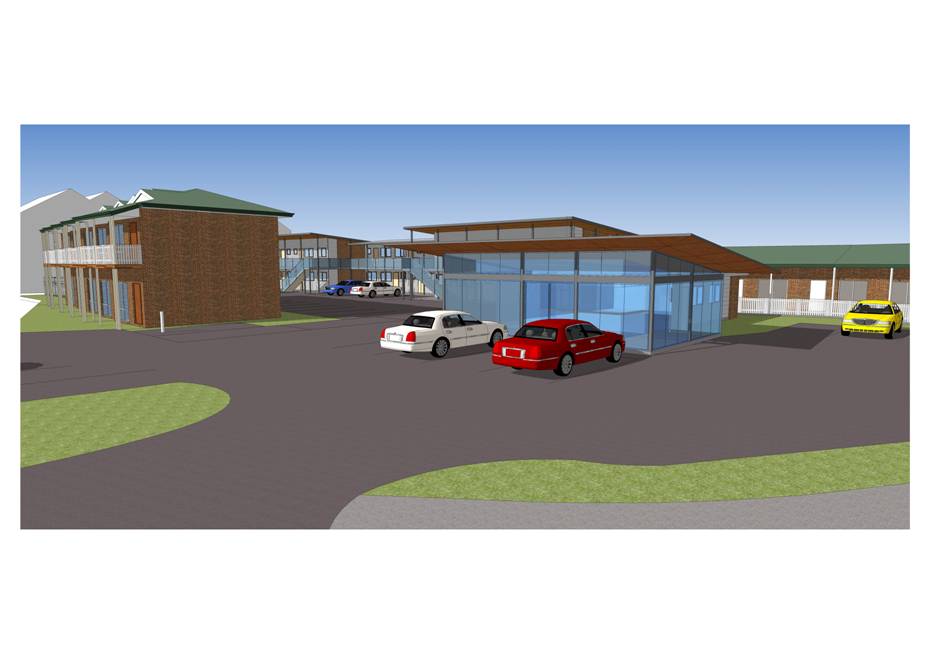
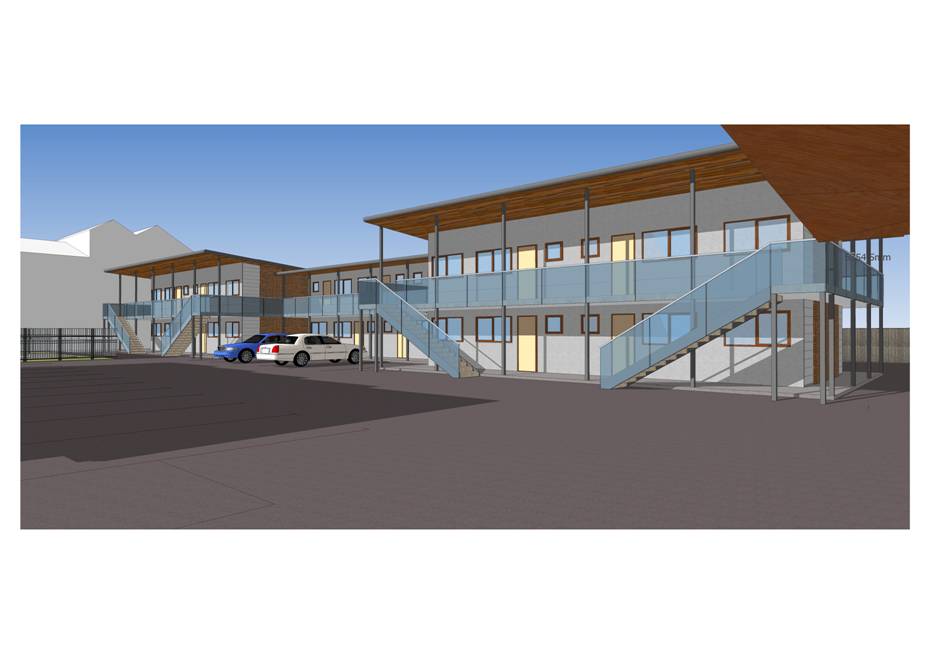
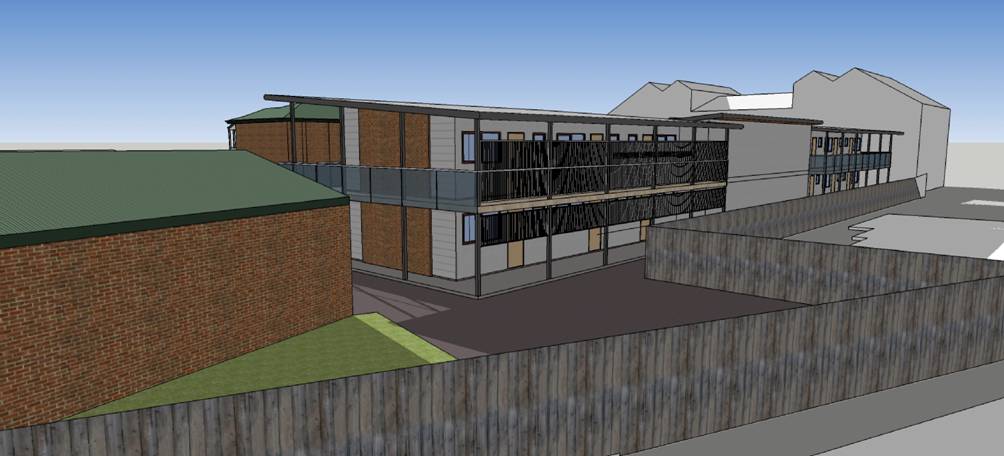
Attachment a: Proposed Development
Attachment b: Neighbour Objection
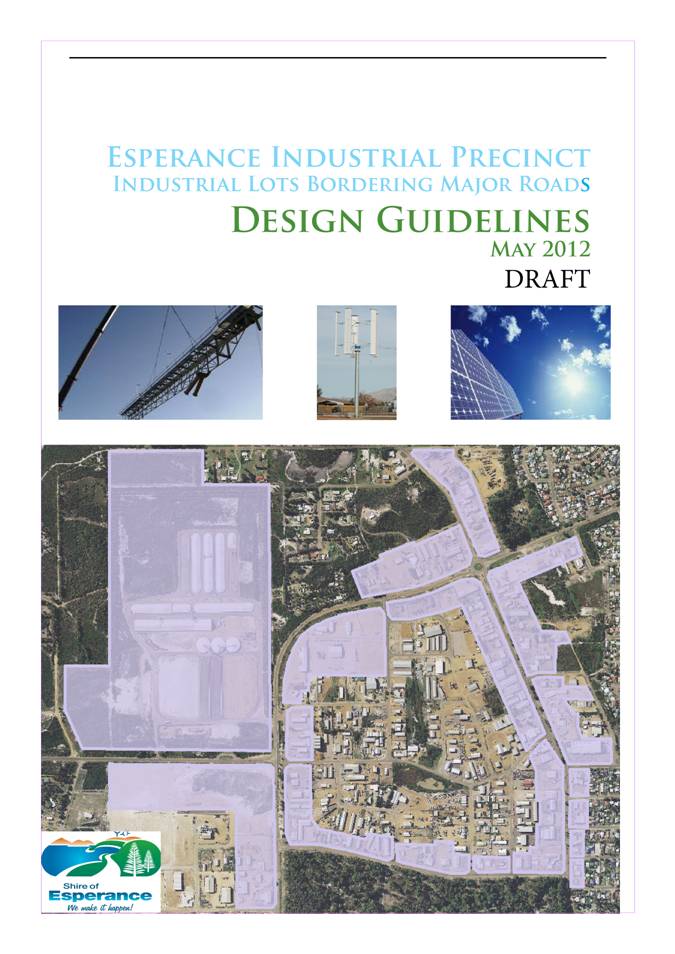
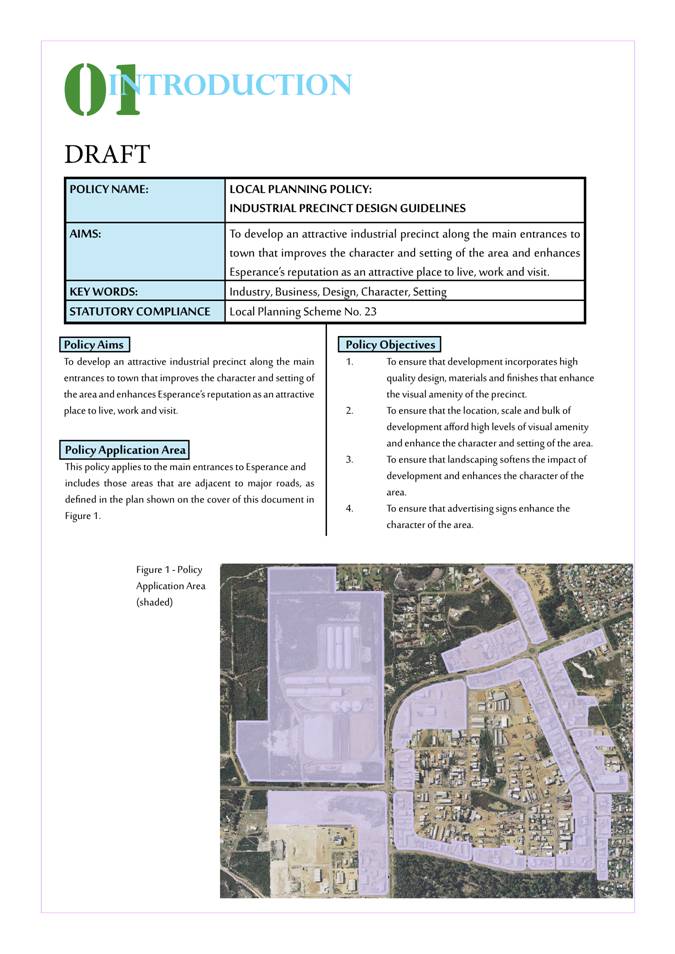
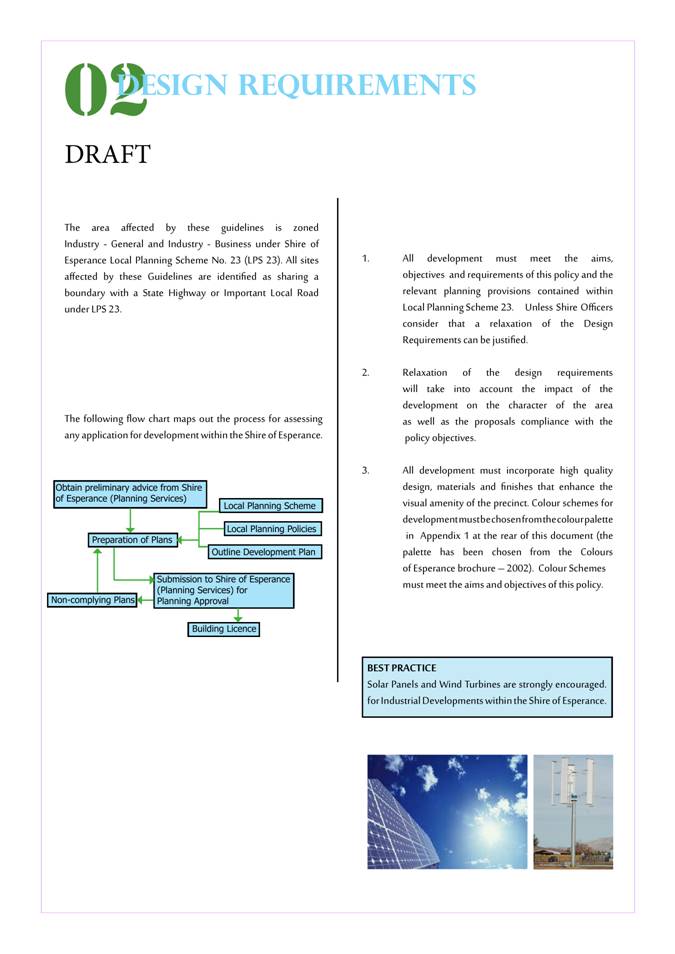
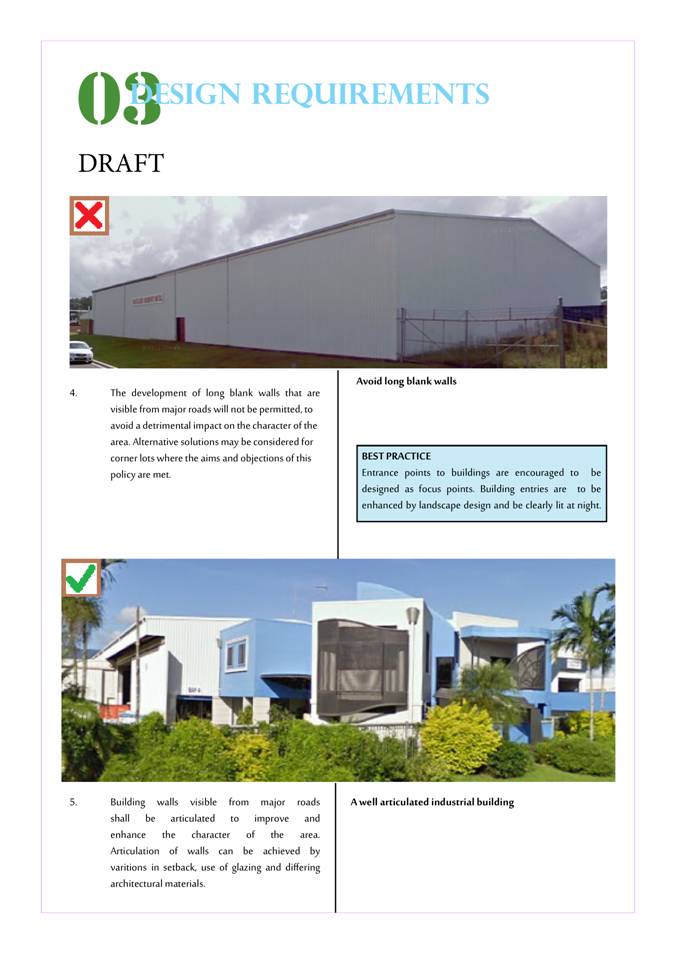
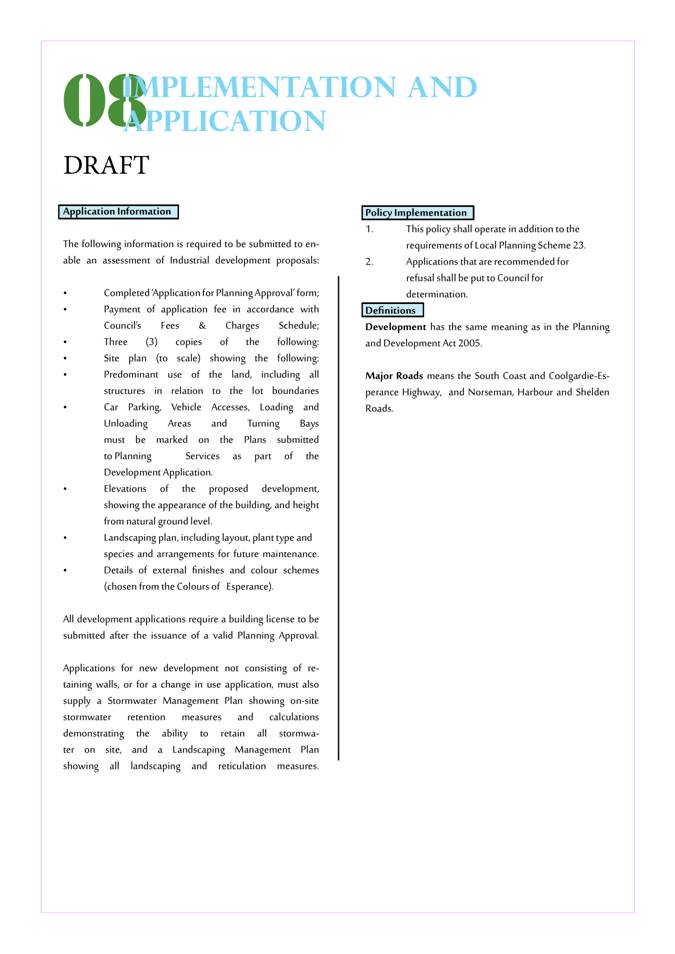
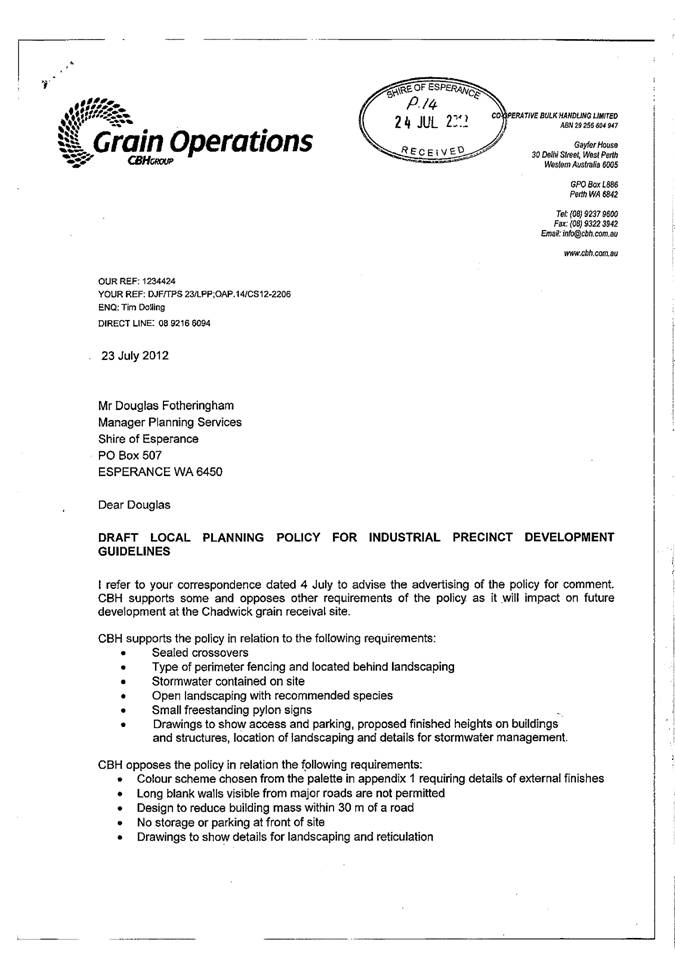
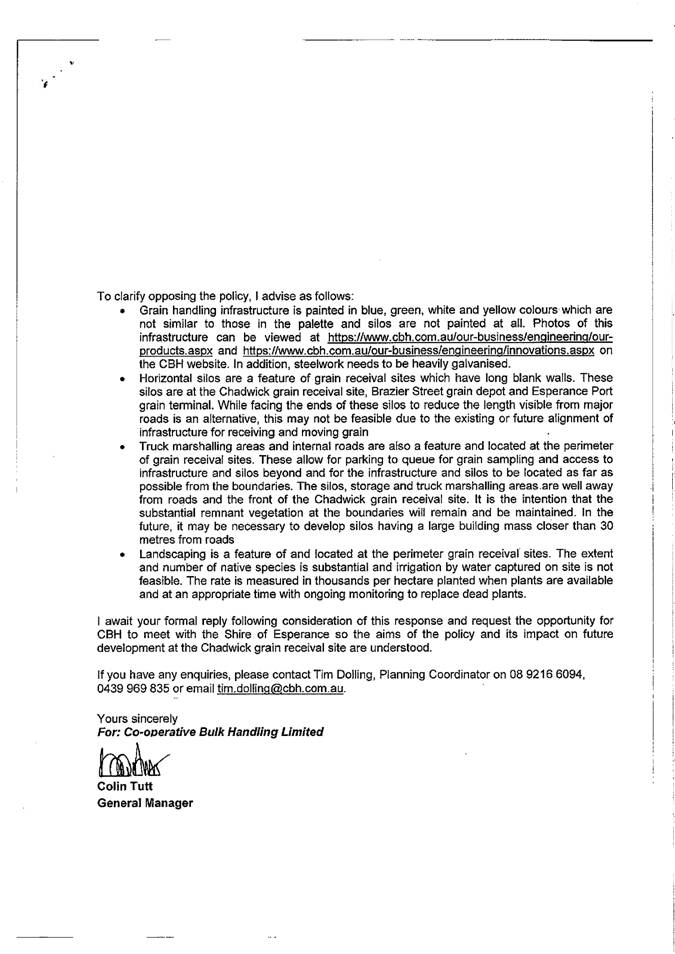
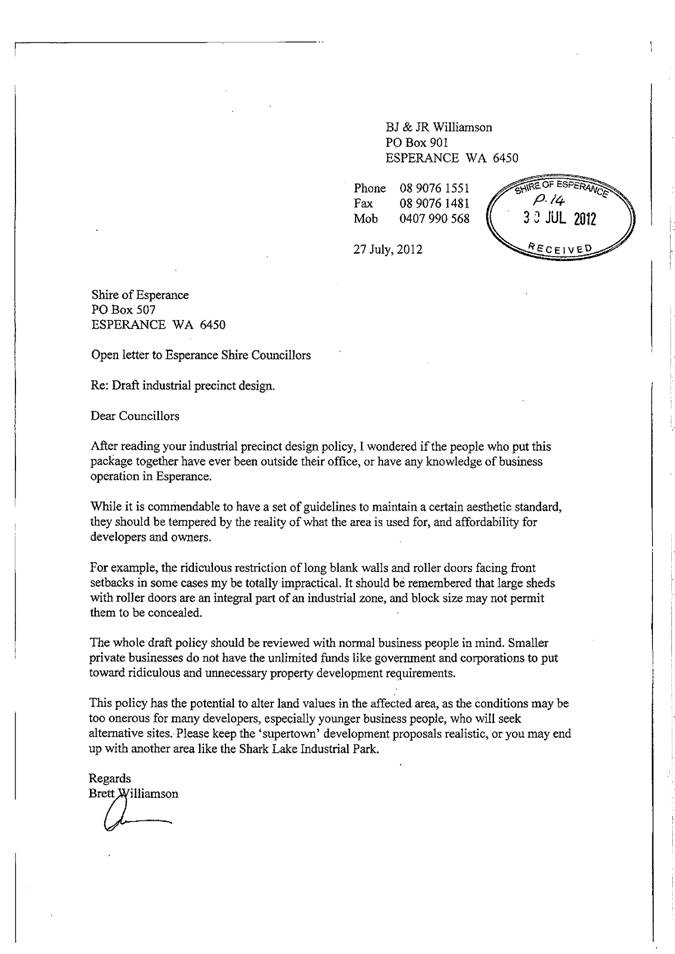
8.5 Proposed Local Planning Policy - Industrial Precinct Design Guidelines
Attachment a: Draft Industrial Precinct Design Guidelines
Attachment b: Two Public Sumbissions
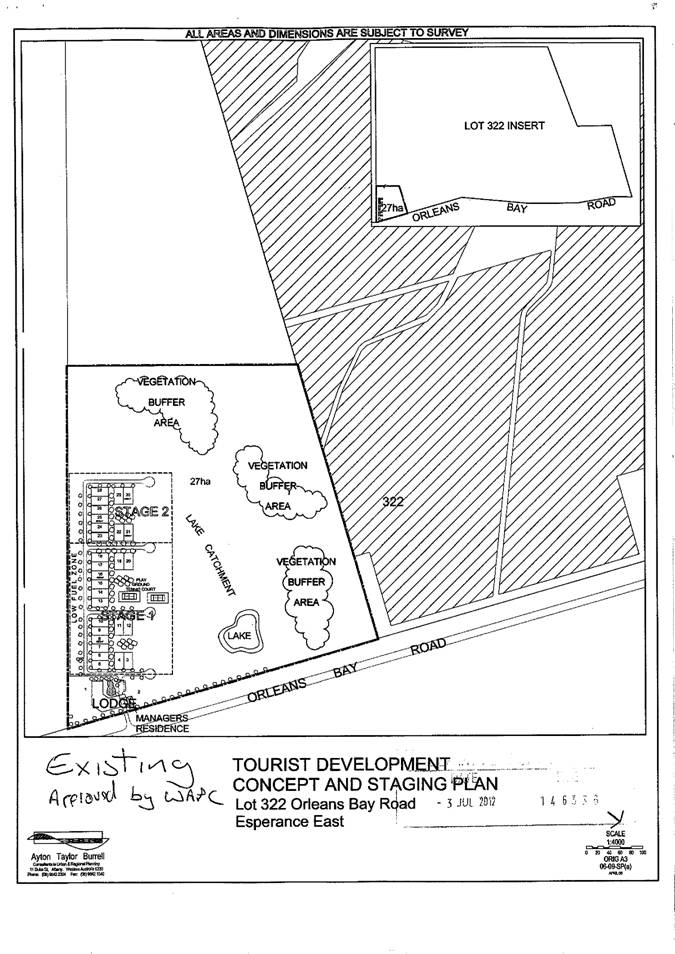
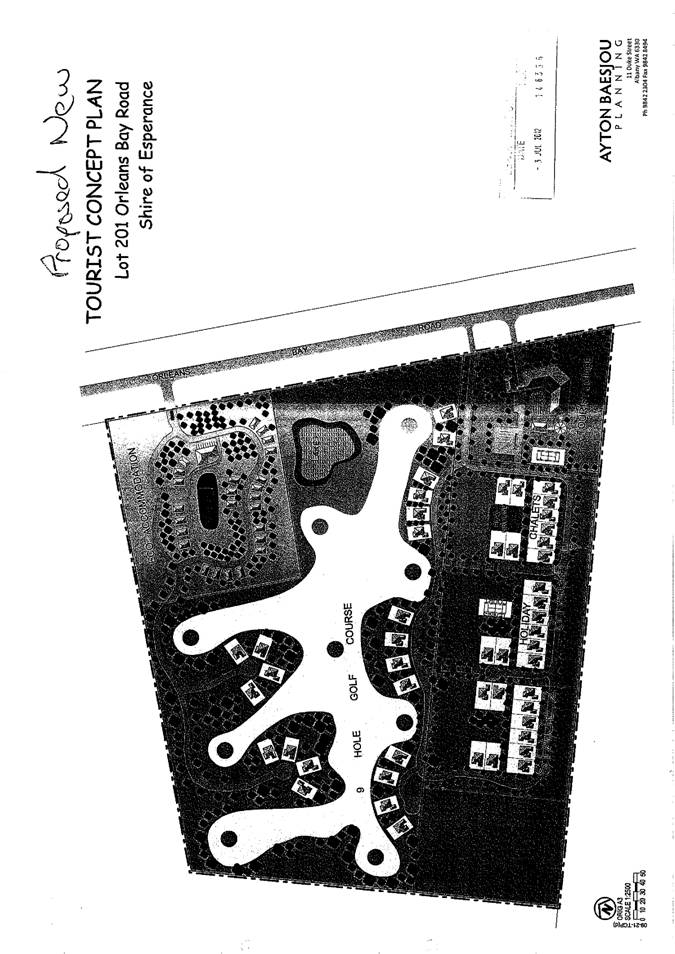
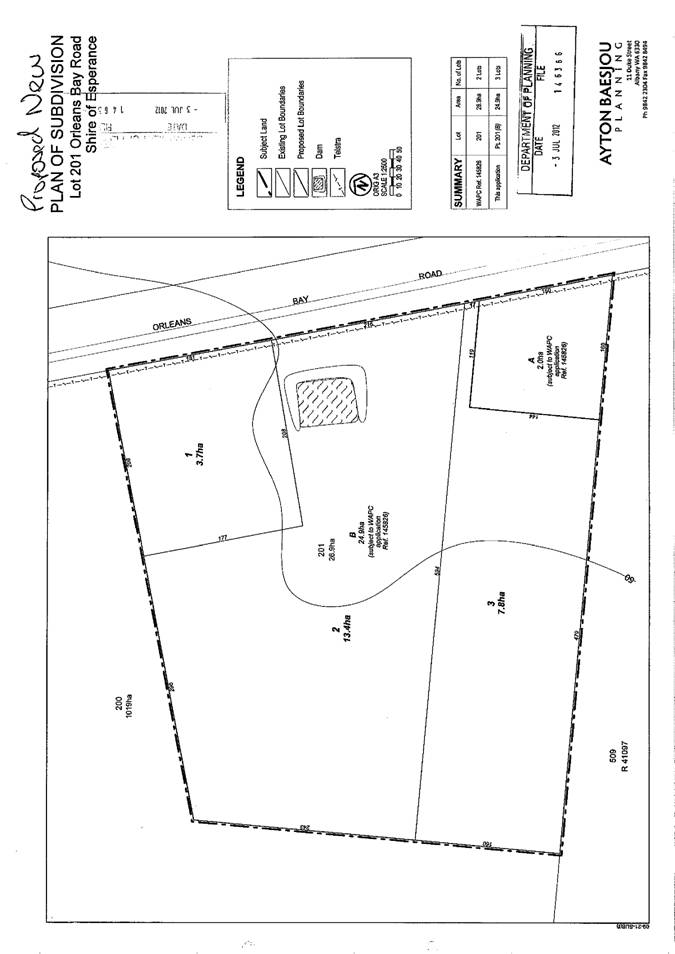
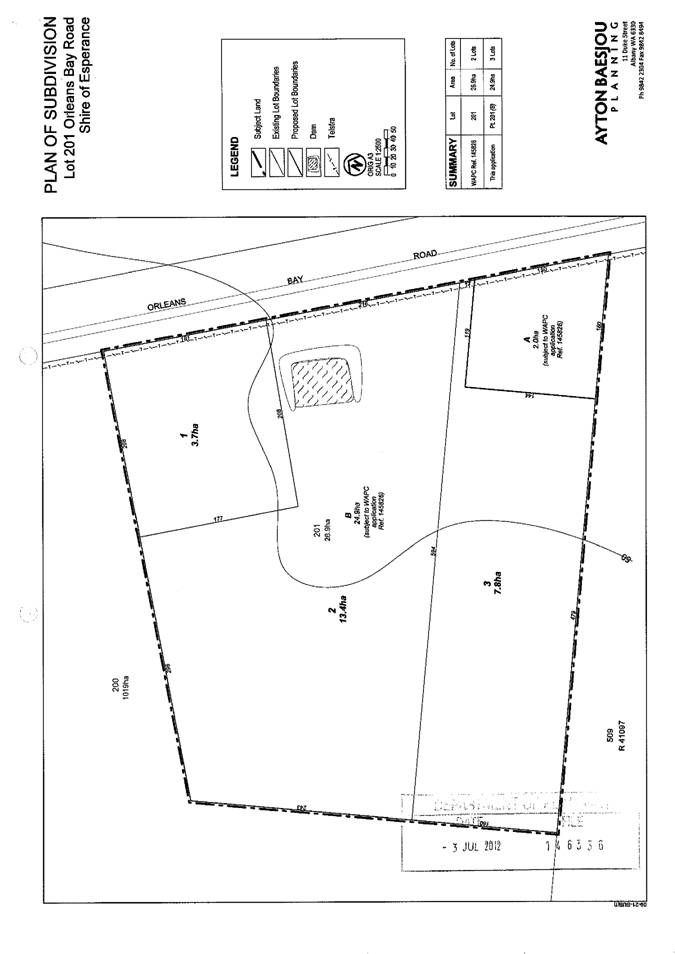
8.6 Revised Concept Plan / Subdivision Lot 201 Orleans Bay Road
Attachment a: Existing & Proposed Concept Plans and Report
8.7 Review of Wards and Representation
Attachment a: Review of Wards and Representation- Discussion Paper
8.8 Memorandum of Understanding Between The Shire of Esperance, Goldfields-Esperance Development Commission and Esperance Chamber of Commerce and Industry
Attachment a: MOU - Draft
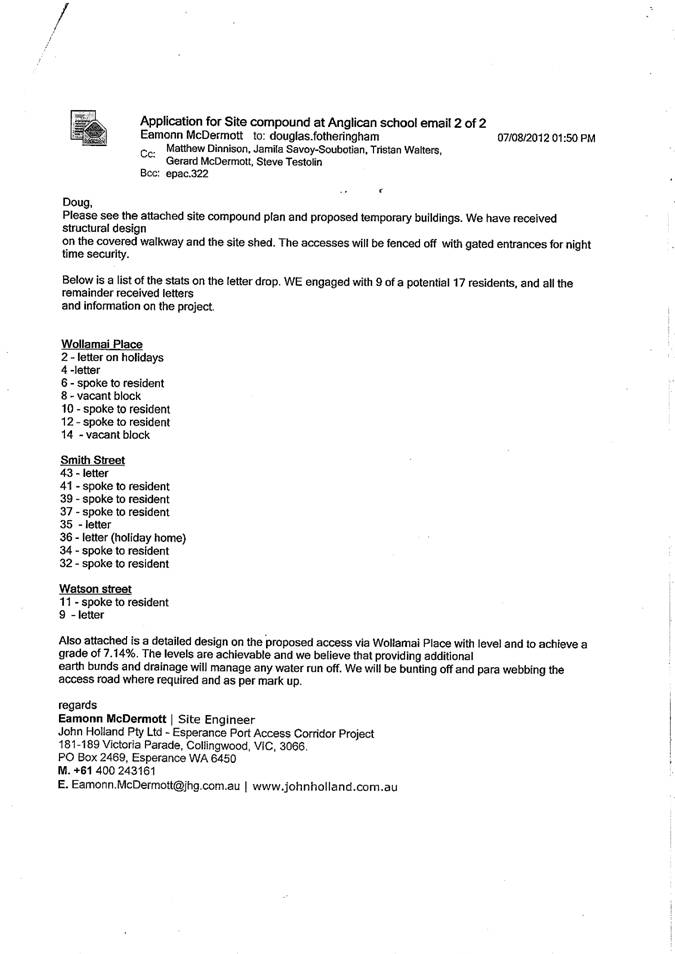
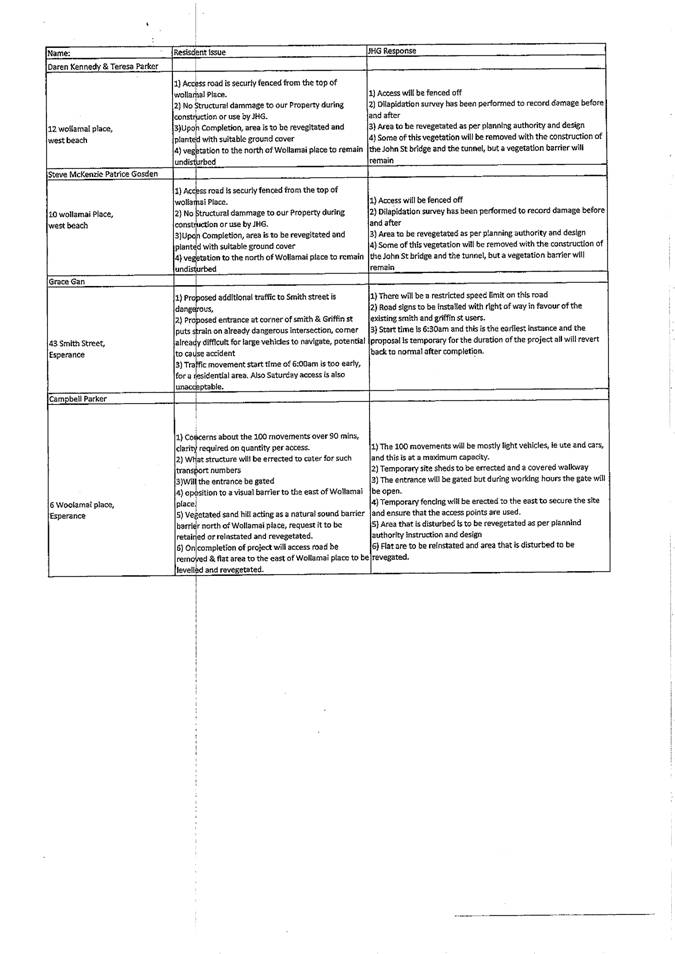
8.10 Transport Workers Compound at Anglican Community School
Attachment a: Applicants list of notified neighbours and objections
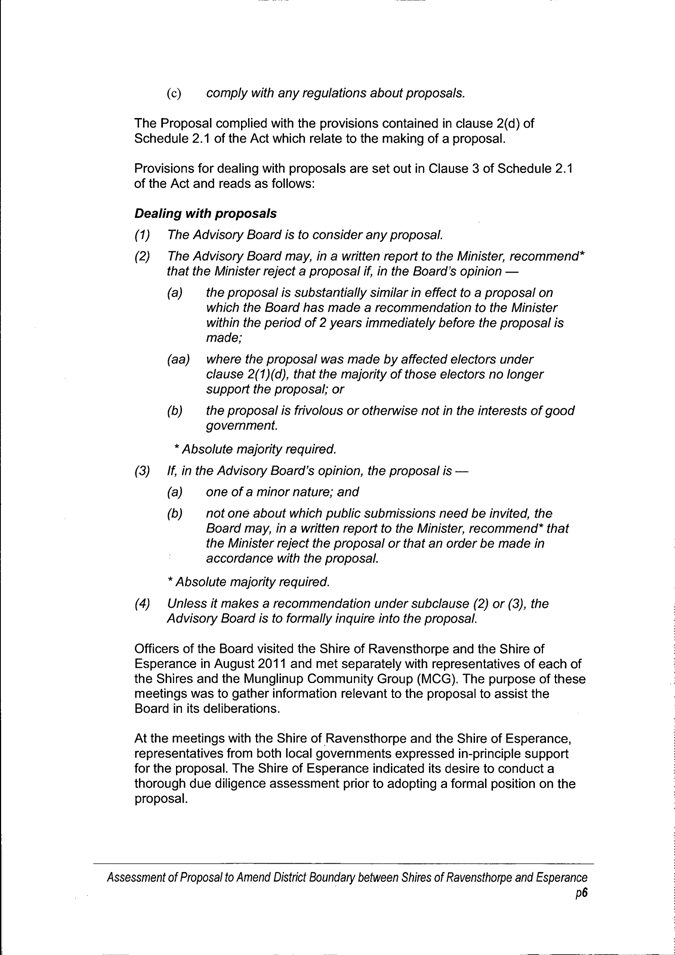
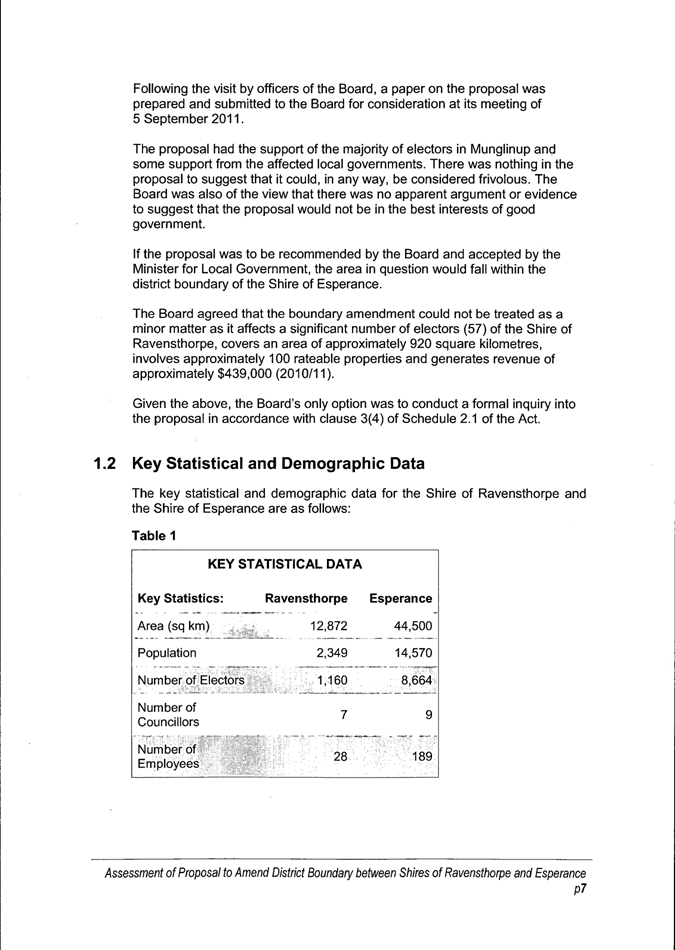
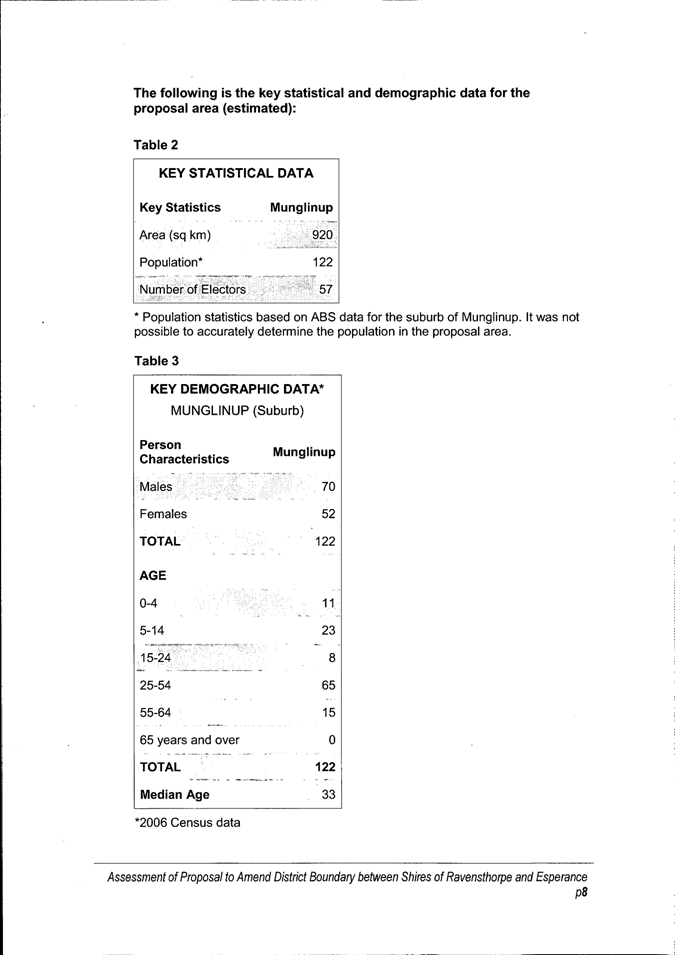
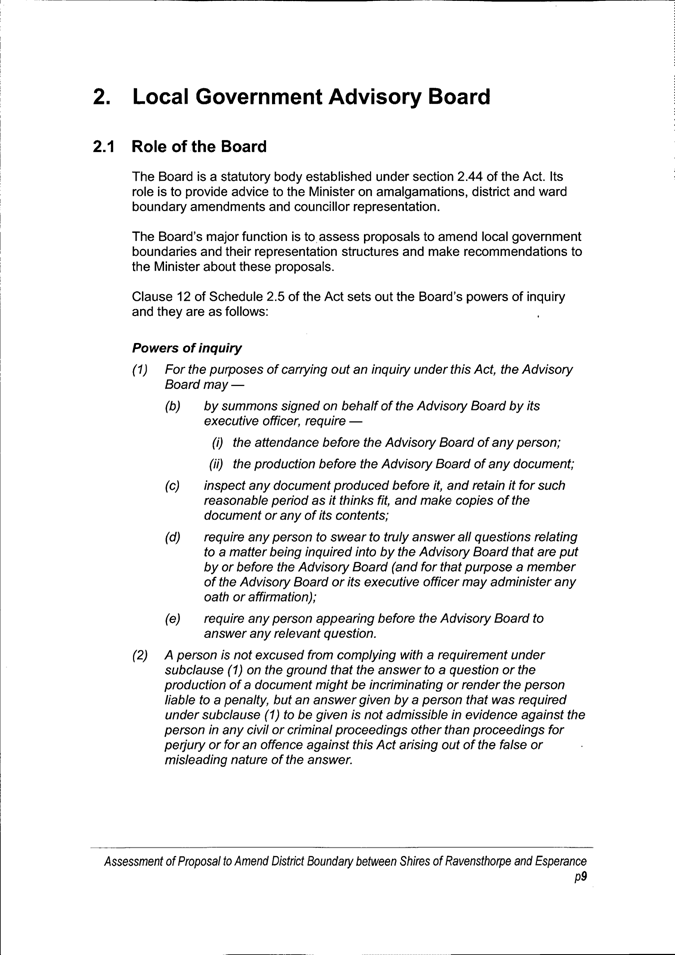
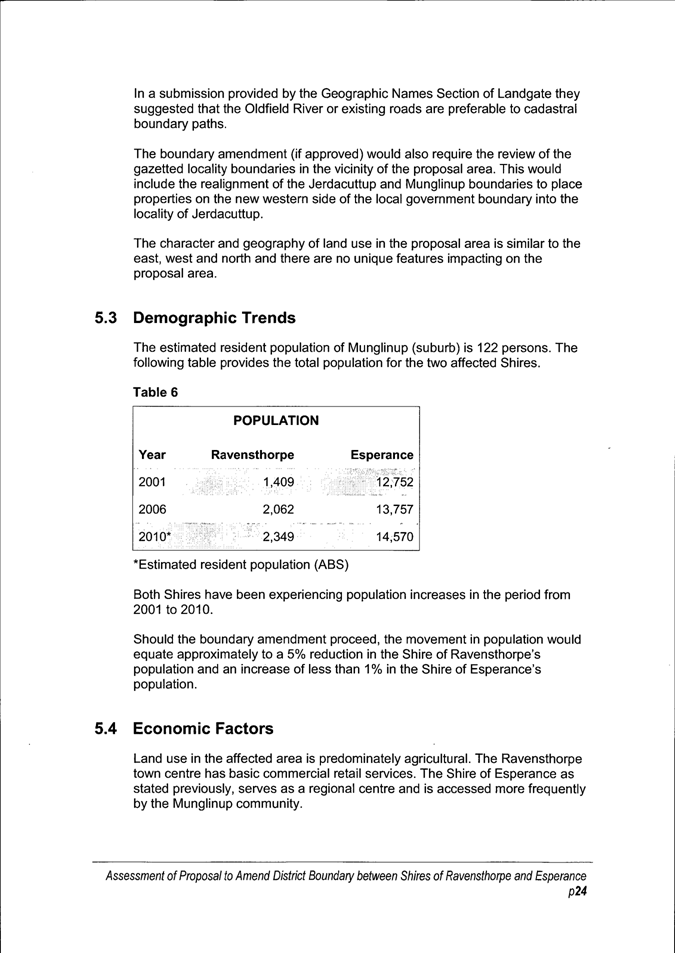
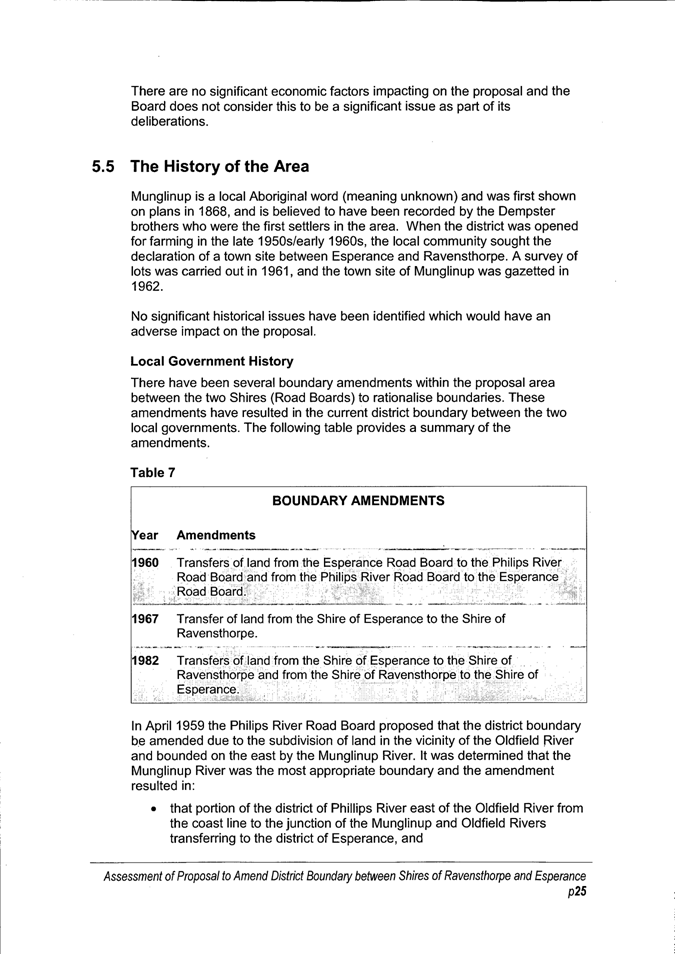
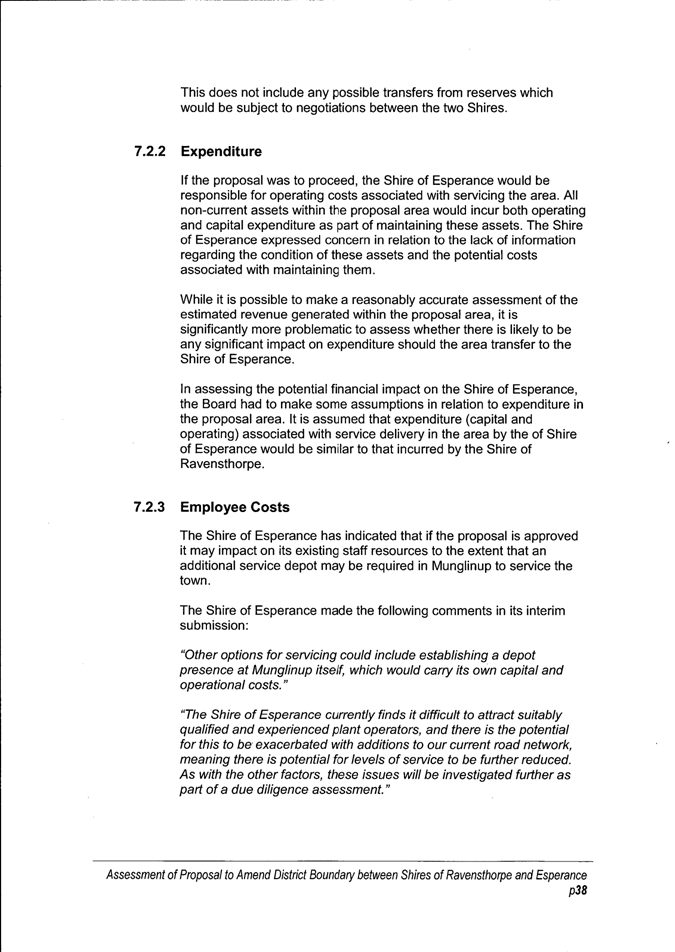
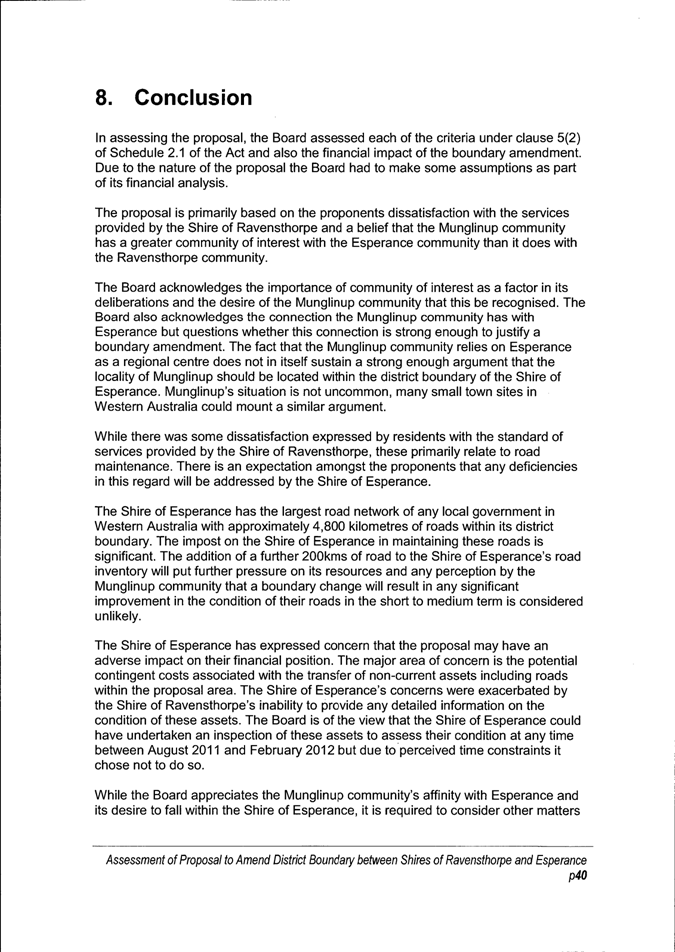
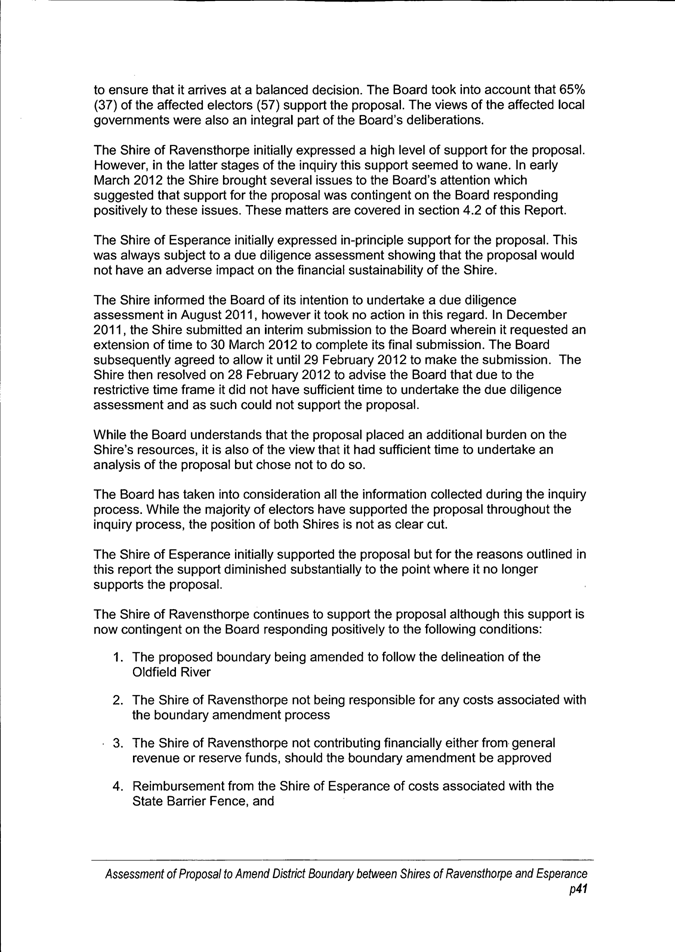
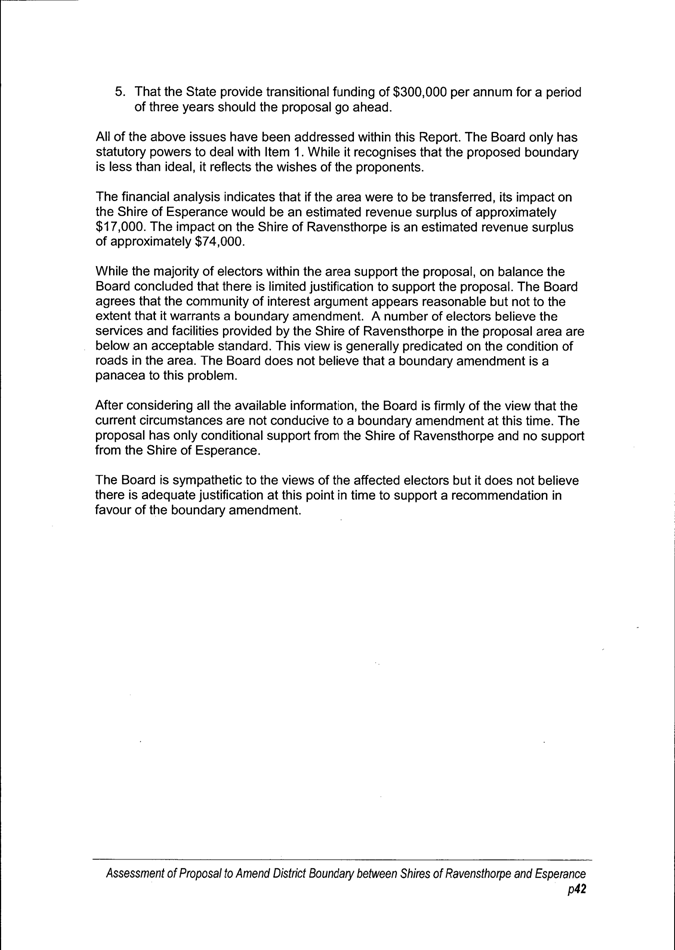
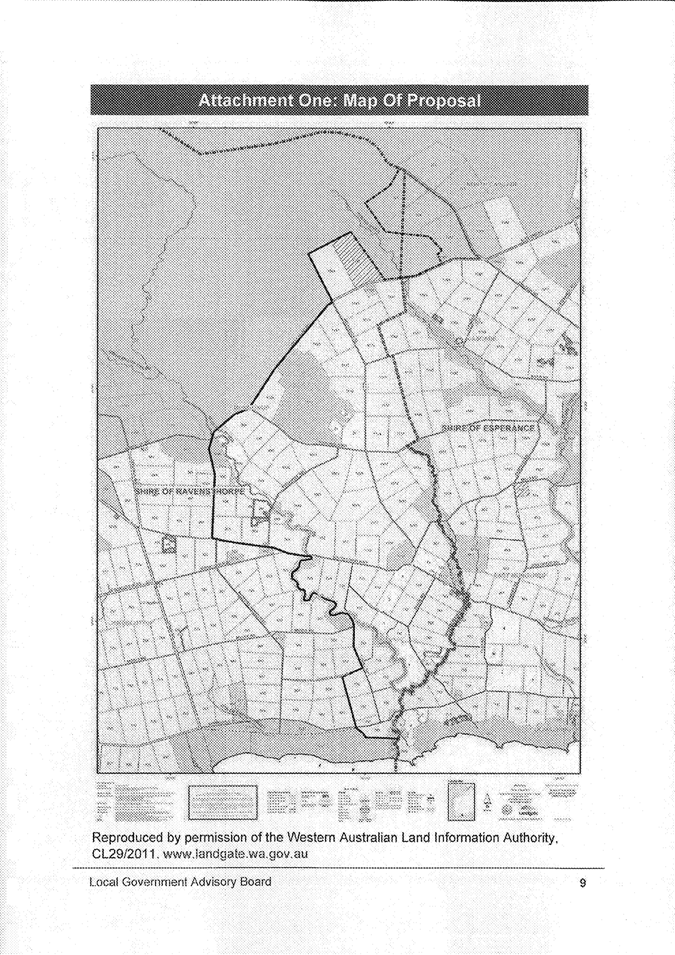
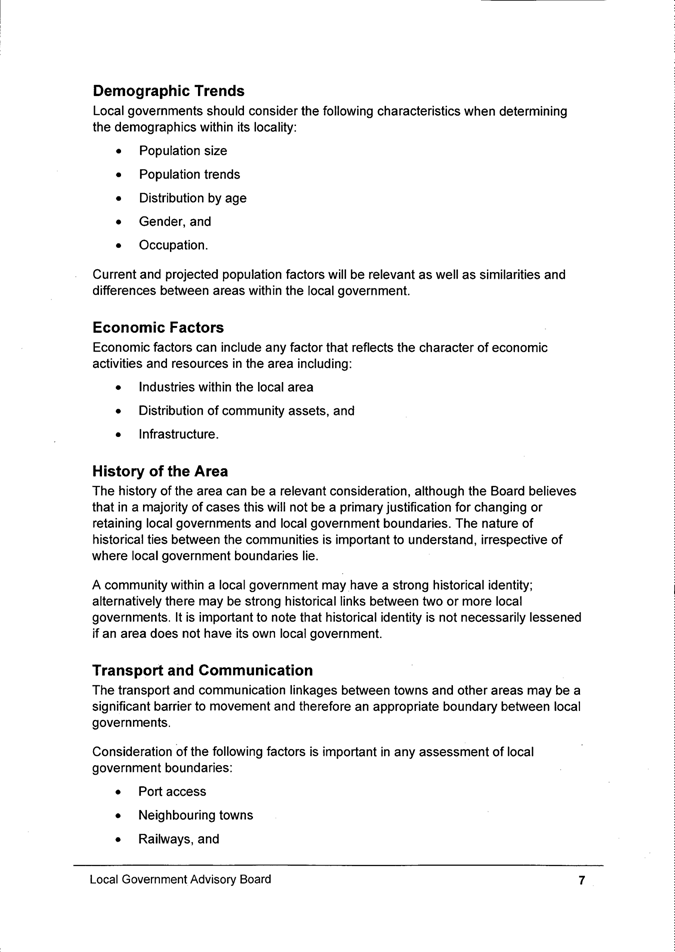
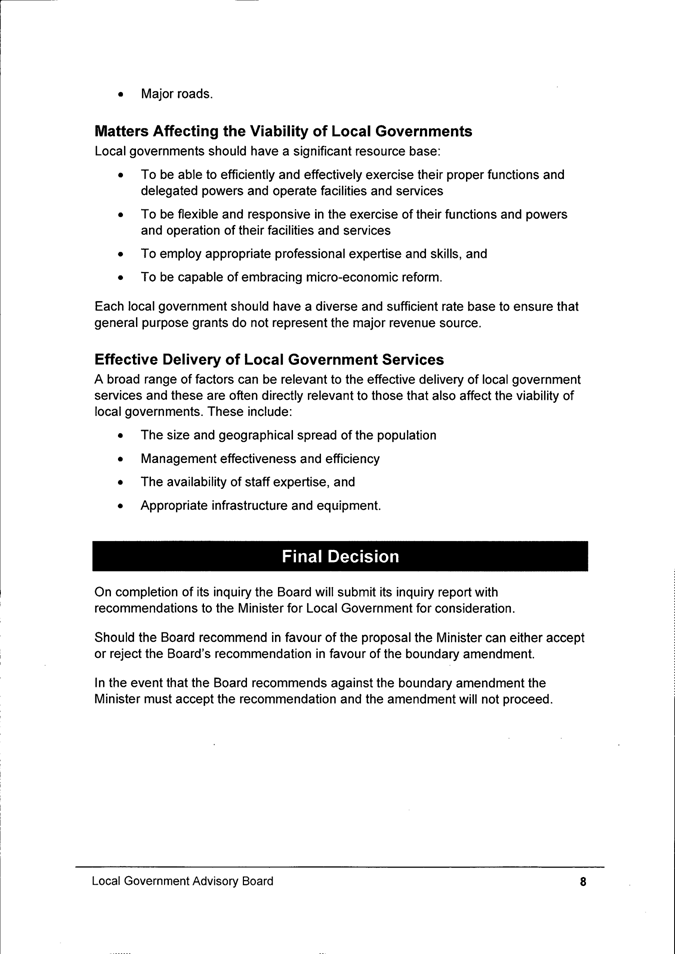
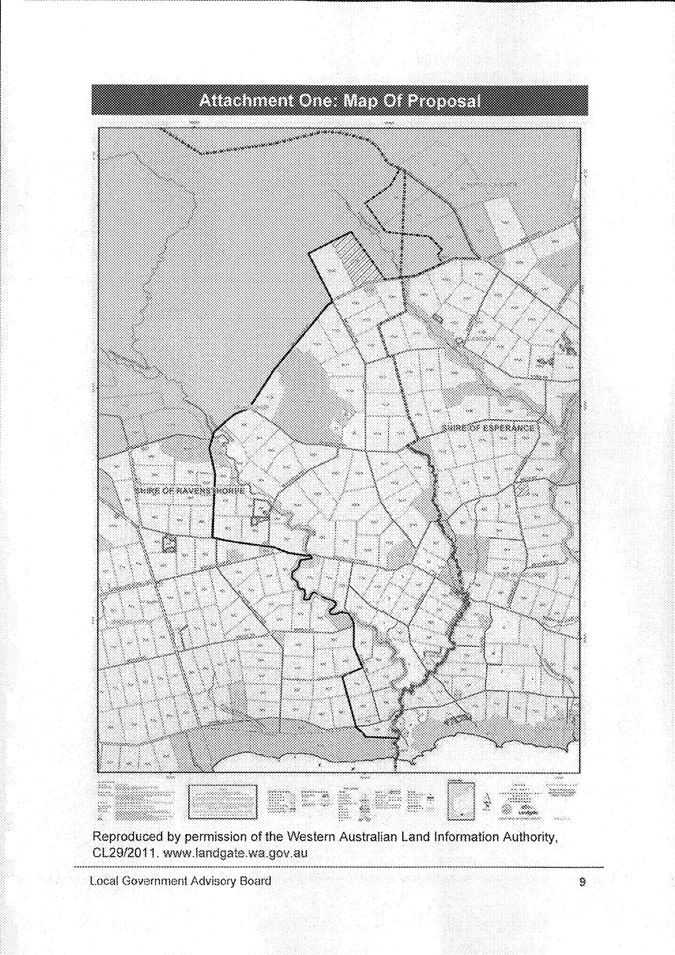
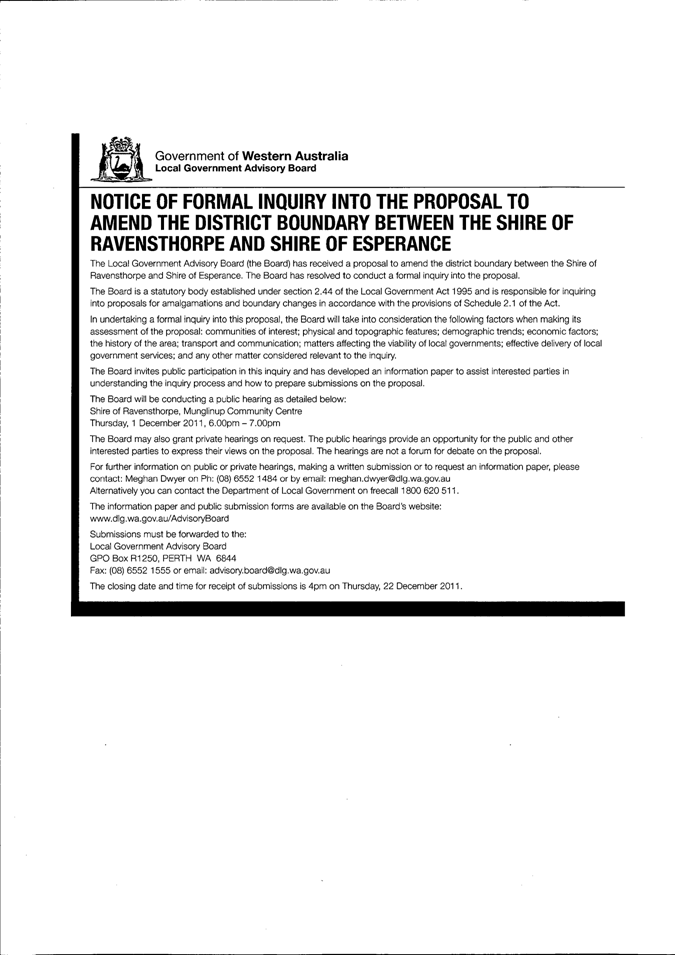
8.11 Proposal to amend the district boundary between the Shires of Ravensthorpe and Esperance
Attachment a: Correspondence from the Minister of Local Government and Report from Local Government Advisory Board
|
Attachment b.: Attatchment B- Neighbour Objection ( Denfarm Pty Ltd) |
Our Ref: 100685
Your Ref: AN/DEM2.8/10.2012.2015.1/CS12-2252
Date: 17 July 2012
VIA EMAIL
Chief Executive Officer
Shire of Esperance
PO Box507
ESPERANCE WA 6450
Attention: Planning Services
Dear Sir/Madam
RE: OBJECTION TO PROPOSED MEDICAL CENTRE – LOT 1 (8) DEMPSTER STREET, ESPERANCE
We represent Denfarm Pty Ltd and Chakola Pty Ltd owners of the Captain Huon Motel, 5 The Esplanade, Esperance.
We have reviewed the application for planning approval for a Medical Centre on Lot 1 (8) Dempster Street, Esperance and hereby advise of our objection to the proposal on the following grounds:
1. Front Setbacks
Under Local Planning Scheme (LPS) 23, a 5.0m street setback to the building is required. The applicant proposes to reduce the front street setback to 1.0m. We believe such reduced front setback would be out of character with the streetscape and have an adverse impact on the general amenity of the area, particularly on the adjoining residential dwellings. To maintain some consistency in the streetscape it is recommended that the street setback remain as per LPS 23 (5.0m).
It should be noted that there is ample unused land on the site plan and the buildings could easily be setback without affecting the floor space proposed.
2. Car Parking Provision
Under LPS 23 the minimum number of parking bays required to be provided on site is 10 bays. Only 4 bays have been indicated on the plan and these are in the form of tandem bays which is unacceptable. We believe that the number of bays to be provided on site including allowance for staff parking should be in the order of 14 bays. The car parking area should be designed with adequate turning and manoeuvring space and with access/egress to Balfour Street.
The proposed provision of only 4 bays is totally inadequate. My clients have expressed concerns about unauthorised car parking in the Captain Huon Motel and inadequate parking on the foreshore and surrounding streets. No legal parking is available in Dampier Street either. They are concerned that the Motel car park will be utilised as a ‘flow over’ car park for the medical centre.
It is therefore recommended that the application be modified to incorporate between 10 and 14 bays on site with suitable turning/access arrangements. Again, it would appear from the site plan that there is sufficient land to accommodate additional on-site parking required.
3.0 Other Matters
· Building Design/Aesthetics
The immediate locality contains some of Esperance’s premier residential dwellings. The architectural design, visual appearance and external materials are totally out of keeping with the high quality architectural amenity of the area. The light weight modular construction with country style cladding gives the appearance of a horse stable development more suited to a rural environment, as opposed to a modern contemporary commercial type building located within this prominent part of Esperance.
4.0 Summary
Whilst development is generally a good thing for the town, it must meet suitable standards so that it does not detract from the amenity of existing developments.
Accordingly, it is recommended that the Council refuse the application for planning approval on the grounds that it does not comply with LPS 23 in respect to front street setbacks requirements and especially on site car parking provision.
In addition, the architectural design of the building, construction and material types are inappropriate for this location and totally out of character with the surrounds.
Yours faithfully
GRAY & LEWIS

GEOFF LEWIS
|
Attachment d.: Attachment D - Neighbour Objection ( G Everett & L Natouli) |
From: Gavin and Lisa [gavinlisa@bigpond.com]
Sent: Tuesday, 17 July 2012 11:15 AM
To: Shire Of Esperance
Cc: Ashwin Nair
Subject: Submission of Objection to Esperance Shire Council
17th July 2012
Gavin Everett and Lisa Natoli
4B Balfour Street
Esperance WA
Dear Shire of Esperance- Attention Chief Executive Officer,
We hereby submit our e-mail Objection submission in regards to ref AN/DEM@ 8/10.2012.2015.1/CS12-2251.
Adjoining Land Owner Referral: Setback variation associated with proposed medical centre on Lot 1(8) Dempster Street, Esperance.
We are writing to strongly oppose and object to the above ref proposal.
The proposal does pose an extensive adverse effect on our residence.
1. We herby raise the flowing to support our objection:
We have built and invested a significant amount of money into the Esperance region, due to the location, uniqueness and statue of housing that are situated in our residential area. We would have never purchased the land and invested in building an award winning MBA home if we knew that there would ever be a proposal to build a business centre adjoining our home. We purchased the land in a site built residential area, for the privacy and maintaining a residential area.
2. We complied with the Council in building a 1 ( one ) metre setback- which also specified that we leave a clear low fence on the corner of our property. This corner is directly where the proposed Medical centre will be built- leaving us with no to very minimal privacy, in compliance with the building requirements set upon us.
3. Parking is of extreme concern, as there is not enough allocated parking bays for the amount of staff and visitors and disabled parking that is allotted on the plans and we do not wish to have cars parked in our private driveways or the verge areas.
4. We have spent a significant amount of money on the verge and beautification of the fronts areas of our home based on living in a residential area
5. Concern also on the amount of increase in traffic in a residential based street.
6. The proposal is for a transportable office complex which does not fit in with the frontage of residential housing and is situated adjacent to 4 Award Winning properties which are a credit to the Esperance region.
Thank you for consideration into our objection to the ref: AN/DEM@ 8/10.2012.2015.1/CS12-2251 proposal. Could you please confirm that you have received our objection.
Gavin Everett and Lisa Natoli
4B Balfour Street
Esperance
WA
0419185093
|
Attachment e.: Attachment E- Applicants Justification for variations |
Attn: Town Planning, Shire of Esperance.
re: Justification for parking exemption at 8 Dempster Street
A parking exemption is requested for financial, environmental and aesthetic reasons.
Given the high cost of providing quality facilities, the project will not be economically viable if cash-in-lieu payments are required for parking. Alternatively, the cost of developing extra car-parking bays either on site or on the verge area, deems the project similarly unviable.
There is space off-site to develop the parking. There is room to provide the required parking on the verge area on the Balfour St frontage of the site. Around 10 parking bays can be accommodated here (actual parking use is likely be a maximum of 4 patient cars and more commonly 3 cars). Parking for 2 staff cars is provided in the double carport.
On-site space is planned for plants/landscaping on the Balfour St frontage including the courtyard area in front of reception; the Dempster St frontage (for shade and street appeal). In order to create a more liveable area for the residential component, garden space is also required for outdoor living, storage, etc. The landscaped gardens will have many environmental benefits, including:
● reduced energy use (trees provide shade, shrubs reduce reflective heat)
● reduced water runoff / increased groundwater capture
● provision of food and shelter for native species
The provision of Dental services is a community service. I am an experienced Dentist who is personally funding a quality, fully equipped facility. There are examples of shires in WA that have funded dental clinics to provide such services (the latest being the Three Springs Shire funded clinic completed in July 2012: land & building by shire, equipment by NRHA grant). Relaxation of the parking requirement will ensure this service can be provided.
The Planning requirement for me to pay for all the parking will mean the project is no longer viable. There is a lack of space to have the required 11 parking bays on site and also have vegetation to improve the appearance / provide environmental support. I am making an effort to provide some parking by building the double carport on site. This is a unique and innovative project that will potentially bring many flow-on benefits to the town of Esperance.
Regards,
Dr Rebecca Zand-Vakily.
|
Attachment b.: Neighbour Objection |
Esperance Villas
3 The Esplanade, Esperance
Strata Plan No. 43508
P O Box 1094
KALGOORLIE WA 6430
Telephone: 0419 240 778
Email: kackem@bigpond.com
6 August 2012
Mr Mal Osborne
Chief Executive Officer
Shire of Esperance
P O Box 507
ESPERANCE W A 6450
O B J E C T I O N
Additional Motel Units Lot 529, 1 The Esplanade
Dear Sir,
I am writing to object to the proposed development on Lot 529 on behalf of the 12 owners of the Esperance Villa Development at 4 The Esplanade, Esperance. The Proponents Plans show the development being on Lot 546. The councils letter to the individual owners of Strata Plan 43508 refers to Lot 529.
The Town Planning Scheme allows for a specific plot ratio which the developer or his consultants would have been aware of prior to preparation of their plans. Our view is that any development in this area should be a conforming development or it defeats the purpose of the Esperance Town Planning Scheme.
When development approval for the 12 Villas at 4 The Esplanade was sought we were not permitted to have windows on walls facing the Jetty Motel site or the Captain Huon site. This proposal not only has windows facing our units but balconies as well. This will severely impact the privacy of the two units (6 & 7) immediately adjoining the proposed development and each of the remaining 10 units to a lesser extent the further away from the proposed development you go. The balconies are within 2 metres of the dividing fence.
The proponent on one elevation has included Aluminium privacy screens and another plan shows Bamboo privacy screens. This is an admission by the proponents that the privacy and amenity of the neighbours will be severely compromised by what is being proposed. Noisy smokers and drinkers on balconies late at night will be a problem.
Both of the elevations we have seen are simply too ugly to contemplate. Surely, a double storey development, this close to the boundary can’t be allowed by responsible council officers.
What materials of construction are being proposed and is the proponent considering transportable or a modular style construction? If the use of anything but brick and tile/colourbond is being contemplated it will further detract from what is already a fairly eclectic use of building styles on the Jetty Motel site.
The owners of Strata Plan 43508 are not anti development but all have purchased valuable properties in the area and don’t wish to see future developments that will visually spoil our rear living area views.
It is a great part of the town that needs to be protected by sensible planning. The real test for this application is to ask yourself “would I like this development to be built alongside my own boundary fence?”.
We trust the Town Planning Department at the Shire of Esperance will consider everyone’s position in this and refuse the application in its present form.
Yours Sincerely,
ERobinson
Emily Robinson
Strata Manager
For the Owners of Strata Plan 43508
|
Attachment a.: Review of Wards and Representation- Discussion Paper |
|
|
|
Review of Wards and Representation
Discussion Paper |
|
August 2012 |
Shire of Esperance

|
OAB.3
|
Background
The Shire of Esperance has resolved to undertake a review of its ward system to comply with the requirements of the Local Government Act 1995 (Act).
Schedule 2.2 of the Act requires local governments with wards to carry out reviews of the ward boundaries and the number of Councillors for each ward from time to time so that no more than eight years elapse between successive reviews.
The last review of wards in the Shire of Esperance was submitted to the Department of Local Government in March 2004 and is now appropriate to carry out another review.
As part of the Shire of Esperance Structural Reform submission, which was endorsed by Council in August 2009, the Shire undertook extensive community consultation, including holding four public meetings across the Shire relating to a range of options presented for discussion, one of which was to reduce the number of Councillors from 11 to 9.
The Minister for Local Government approved the recommendation from the Local Government Advisory Board (Board), that the number of Councillors in the town ward be reduced from seven to six and in the rural ward from four to three, with the reduction occurring in time for the 2011 local government elections.
The proposal that the Shire submitted to the Board in October 2010 was in accordance with clause 5(b) of Schedule 2.2 of the Act i.e. “one of a minor nature and not one about which public submissions need be invited”. In this case local public notice was not given and public submissions were not sought therefore it did not meet the statutory requirements for a formal review.
Current Situation
Currently the Shire of Esperance has nine (9) Councillors elected from two (2) wards.
The table below shows the Shires Councillor to elector ratios at the time of the October 2011 elections.
WARDS AND REPRESENTATION
|
Ward |
Number of Councillors |
Number of Electors |
Councillor to Elector Ratio |
% Ratio Deviation |
|
Rural |
3 |
2,793 |
931 |
+3.29% |
|
Town |
6 |
5,871 |
979 |
-1.64% |
|
TOTAL |
9 |
8,664 |
963 Average |
|
(Source: Statistics provided by the WA Electoral Commission October 2011 Ordinary Local Government Elections)
The % ratio deviation gives a clear indication of the % difference between the average councillor/elector ratio for the whole local government and the councillor/elector ratio for each ward.
The Local Government Advisory Board has expressed the view that it will tolerate a 10% deviation either way in the Councillor to elector ratio. The above table clearly shows that there is acceptable (within 10%) deviation between the wards; therefore no change of boundaries for the sake of Councillor to elector ratio needs to occur.
A map showing the existing ward boundaries is attached.
Review Process
The review process is set out in the Local Government Act 1995 schedule 2.2.
1. In order to begin a review, a local government must pass a resolution at Council to this effect. Council made this on the 28th August 2012.
2. Prior to carrying out a review, a local government has to give local public notice advising that the review is to be carried out and that submissions may be made to the local government. The public submissions period is to be not less than 6 weeks after the notice is first given.
3. A local government is encouraged to provide a number of options as a basis to generate public discussion.
4. Public submission closes and the submissions received are collated and reviewed.
5. Council considers all submissions received.
6. Council reaches a decision based on an assessment of the options against a number of established criteria as contained in schedule 2.2 clause 8 of the Local Government Act 1995.
7. A report is then submitted to the Local Government Advisory Board.
8. If a change is proposed and the Board is satisfied with the recommendation then the Board submits the recommendation to the Minister for Local Government.
Factors to be considered
Under schedule 2.2 clause 8 of the Local Government Act 1995, a number of criteria have been established upon which a local government is to assess any changes proposed to be made to the ward system. These criteria include-
1. Community of interest;
2. Physical and topographical features;
3. Demographic trends;
4. Economic factors; and
5. Ratio of Councillors to Electors in the various wards.
The Board offers the following interpretation of these factors.
· Community of interest
The term community of interest has a number of elements. These include a sense of community identity and belonging, similarities in the characteristics of the residents of a community and similarities in the economic activities. It can also include dependence on the shared facilities in an area as reflected in catchment areas of local schools and sporting teams, or the circulation areas of local newspapers.
Neighbourhoods, suburbs and towns are important units in the physical, historical and social infrastructure and often generate a feeling of community and belonging.
· Physical and topographic features
Ward boundaries should follow cadastral boundaries. As a consequence, it is appropriate to use them as ward boundaries. These may be natural or man made features that will vary from area to area. Water features such as rivers and catchment boundaries may be relevant considerations. Coastal plain and foothill regions, parks and reserves may be relevant as may other man made features such as railway lines and highways.
· Demographic trends
This information can give a profile of a community. Population trends are important to note, such as increasing or decreasing populations within an area. Population distributions are also important whether there are young families or retirees in certain areas, thereby creating community of interest in specific areas. It may be appropriate for ward boundaries to be drawn to reflect the different community profiles within the local government.
· Economic factors
Economic factors can be broadly interpreted to include any factor that reflects the character of economic activities and resources in the area. This may include the industries that occur in a local government area (or the release of land for these) and the distribution of community assets and infrastructure such as road networks.
· Ratio of Councillors to Electors
This relates to the level of representation of Councillors to Electors. It is expected that a local government will have similar ratios of electors to Councillors across the wards of its district. Electors in each ward are currently equally represented, within the acceptable 10% deviation set by the Board.
When considering the above factors, it is important to also consider possible changes in the profiles in the foreseeable future. It could well be an argument for a recommendation outcome that while there is a variation in ward populations currently that perhaps the population in one ward is showing a trend of decline while another is increasing.
Options to consider
The Council will consider the following options and members of the community may suggest others. Please note, that Council does not have a preference for any of the options listed below, and the order in which the options are listed is purely coincidental. The Shire recognises that each of the options have advantages and disadvantages. These factors will be noted when Council considers the submissions received and the report and assessment of each option against the established criteria. The options listed below are merely a means to generate discussion within the community on this issue.
· Option 1 – Maintain the current ward system and ward boundaries, and current number of Councillors.
· Option 2 – Maintain the current ward system and ward boundaries, but reduce the number of Councillors to 2 for the rural ward and 5 for the town ward. Note that the Board recommends the number of Councillors be between 6 and 9.
· Option 3 – Divide the local government area into three wards. A special rural ward could be created to include those areas on the fringe area of the town ward represented by 1 Councillor for those ratepayers with small lot holders and reducing the rural ward to 2 Councillors, ensuring acceptable Councillor to Elector % Ratio Deviation.
· Option 4 – Move the ward boundary to include more rural residential electors into the town ward and increase the town ward representation by 1 whilst reducing the rural ward representation by 1, ensuring acceptable Councillor to Elector % Ratio Deviation.
· Option 5 – Remove the ward system. The electorate would vote for all Councillors chosen from across the entire local government area.
The name of the wards will also be considered depending on whether or not the structure of the existing ward system is changed. For example, rather than rural and town, it may be preferred to use the names of localities or the names of pioneering families in the district.
Also under consideration will be the number of Councillors for each ward and the total for the Shire. Section 2.17 of the Local Government Act 1995 establishes a minimum of six (6) Councillors with a maximum of fifteen (15). It may be that fewer Councillors will provide good representation and may result in financial savings and more effective and efficient decision making.
Public Submissions
Members of the community are invited to make written submissions on any aspect of ward boundaries and representation. Submissions should be addressed to-
The Chief Executive Officer
Shire of Esperance
PO Box 507
Esperance WA 6450
Facsimile- (08) 9071 0600
Email- shire@esperance.wa.gov.au
All submissions must be received no later than 4.30pm 12th October 2012.
______________________ ______________________
Malcolm Heasman Mal Osborne
Shire President Chief Executive Officer
EXISTING WARD BOUNDARIES
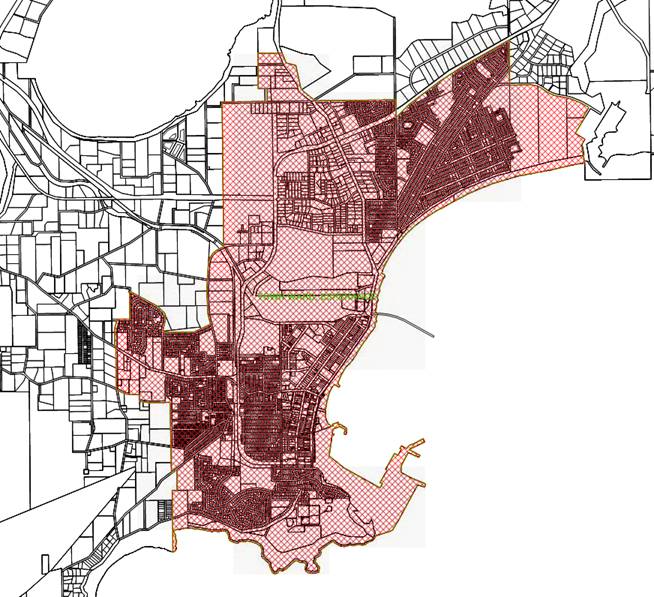
 Key
Key
 Town Ward
Rural Ward
|
Attachment a.: MOU - Draft |

MEMORANDUM OF UNDERSTANDING
Between
Shire of Esperance,
Goldfields- Esperance Development Commission
And
Esperance Chamber of Commerce and Industry
DRAFT
1. SCOPE
One of the unique attributes of Esperance is the collaborative approach that has developed over many years amongst key organisations. In recent times the collaborative relationship between the Shire of Esperance (SOE), the Goldfields- Esperance Development Commission (GEDC) and the Esperance Chamber of Commerce and Industry (ECCI) has continued to go from strength to strength.
This collaborative approach was built upon during the SuperTowns process and forged a strong robust alliance that has utilised the skills and resources of the three organisations for the betterment of Esperance and the South East Region
This alliance has ensured that a better outcome, than one organisation working singularly, has been delivered throughout the SuperTowns planning process. Like most regional communities human resources are scarce and creative measures have had to be found in order to maximise the outcomes.
These three organisations very early on in the planning phase agreed that this opportunity had to be maximised and therefore they would work together to ensure a better outcome could be delivered. This alliance has been formed out of goodwill developed over many years.
The timeframes and requirements of the SuperTowns process not only highlighted the strength of these organisations working together but also revealed the limitations. One of the key limitations highlighted the need for a greater focus of these organisations on delivering the objectives that have been identified throughout the SuperTowns Planning process.
With the current focus on planning the question remains whether the organisations, in their current capacity, can deliver on the transformational projects long term. Can the impetus continue and can the drain on their organisations as they focus on SuperTowns continue. In reality the planning process is the easy part, delivering long term transformational projects to ensure that Esperance can grow in a sustainable long term manner is the difficult part – this part is yet to occur.
The three organisations have
worked collaboratively on behalf of the Esperance community holistically.
Although each organisation brings different key stakeholders and
representations to the table, together there has been a significant effort to
ensure that Esperance has a whole is benefiting.
2. PURPOSE
The purpose of this Memorandum of Understanding is to ensure that
1. The strong collaboration that has been forged between the three organisations remains as a focus for the betterment of Esperance.
2. A forward thinking, proactive approach is developed to ensure that the collaboration continues to be relevant and best practice into the future.
3. That the three organisations remain committed to the ongoing collaboration, which is not dependent upon personalities but the appropriate structures are built in to the organisations themselves.
4. Regular liaison on key issues and key projects occurs.
3. PRINCIPLES FOR COLLABORATION
Transforming Esperance from its current population of 14,500 to a projected population of 29,000 will require additional personnel with new skills and amended structures and governance processes to allow effective and efficient facility and service delivery.
A clear requirement will be an
entrepreneurial approach to regional development through private and public
sector investment. This approach will need to ensure that it not only permits
innovation and investment but invites and actively attracts it from within the private
sector
(and pPublic ).
This requirement has been identified in the Esperance Growth Plan section 5.3 (March
2012 version, see appendix 1) prepared as part of the SuperTowns
process.
Continuing to build upon the synergies developed would need to include this proactive approach. The overarching desire as identified in the Esperance Growth Plan section 5.3.3 (March 2012 version) would be to:
Cultivate the economic and
social environment to ensure the long-term vibrancy and sustainability of
Esperance and the South East Region and to engage with
the community to achieve the aforementioned objectives..
This could be achieved through ensuring that some key Focal Points remain at the centre of the collaborative relationship.
|
Local Capacity Building local capacity focussed on longer term vibrancy and sustainability of the region |
· Fully utilise existing skills and knowledge · Further develop existing skills and knowledge · Further develop new skills and knowledge · Knowledge transfer locally *There is the requirement within this to identify and enable a mechanism to enable the release of people with these required skills from local organisations. |
|
Economic Growth Cultivating the environment for
the local econmoy
|
· Business and services growth · Business and services retention · Business and services attraction · Employee retention · Employee attraction |
|
Investment Positioning the region for investment to occur
|
· Attraction · Retention · Leveraging |
|
Planning Developing appropriate long-term strategic plans |
· Economic Development Strategy · Industry Attraction Study · Supply Chain Analysis · Business Retention and Attraction Program · Identification and Removal of Investment Barriers · Marketing and Branding Plan · Tourism Development Plan · Community Infrastructure Plan *an initial list of planning required |
|
Advocacy Ensuring the interests of Esperance remain at the forefront of the decision makers |
Joint Lobbying efforts could include topics of · Economic opportunities · Key infrastructure requirements · Amenity issues · Issues that are having a negative impact/possible positive impact on Esperance or the South East Region |
|
Marketing and Promotion Positioning Esperance as a viable location to invest, live and visist |
Develop a brand for Esperance Develop a Marketing Plan Implement the Marketing Plan Identify key target markets Strategically position Esperance to take advantage of key target markets. |
Section 5.3.2 of the aforementioned version of the Esperance Growth Plan identifies a framework (governance structure) to drive these key focal points.
4. PARTY COMMITMENT The SoE, GEDC and the ECCI agree to:
· Commit to ongoing consultation on significant issues and projects and incorporate key stakeholders as required..
· Continue to work on the implementation
of the Esperance Growth Plan and ensure that it remains relevant and up
to datecurrent.
· Work towards Tthe
parties
commit to refer to the Esperance
Growth Plan when creating or reviewing other strategic
documnetsbecoming an overarching document. All
rerevisions
of the growth plan iterations
will be agreed to and signed by all three organisations
Continue
to explore the concept of building upon the current collaborative working
approach used throughout the SuperTowns planning process to deliver the 8 key
points in the governance section of the Esperance Growth Plan section (section
5.3.2 March version see, appendix 1) including:
Investigating the
concept of developing a one stop shop (Enterprise Investment Unit) through a
discussion paper to Cultivate the economic and social environment to
ensure the long-term vibrancy and sustainability of Esperance and the South
East Region (including a proposed governance model, outcomes and
deliverables, skill sets required to build local capacity, value of this unit
being co-located, funding mechanism etc) to direct the conversations between
the three organisations regarding the collaborative approach moving forward
Developing a proposed
model and business case, and seek agreement from each organisation, to
implement the proposed model and direct appropriate resources to deliver a long
term approach.
5. LIMITS OF RESPONSIBILITY AND INDEMNITY
The SoE, GEDC and the ECCI will not be liable for any loss or damage (including consequential loss or damage), however caused, which may arise from arrangements under this MoU.
6. SECURITY, PRIVACY AND CONFIDENTIALITY
· The SoE, GEDC and the ECCI agree to comply with the Information Privacy Principles set out in section 14 of the Privacy Act 1988 in respect of personal information received, created or held by GEDC, SoE and ECCI in connection with this MoU, as if the SoE, GEDC and the ECCI were an agency as defined in the Privacy Act 1988.
· This clause shall survive the termination or expiry of this MoU.
· In regard to information policy it should be noted that the GEDC is subject to Freedom of Information provisions under the Freedom of Information Act 1992.
7. INTELLECTUAL PROPERTY RIGHTS
The SoE, GEDC and the ECCI acknowledge that nothing in this MoU shall affect ownership of any intellectual property rights.
8. DISPUTE RESOLUTION
· In the event of a dispute under this MoU, each party will each use their best endeavours to resolve the dispute between them at an operational level.
9. TERM OF THIS MOU
· This MoU will commence on the date of execution and, subject to the following Clause, will continue indefinitely.
· Any of the parties may terminate this agreement by written notice to the other parties as follows:
· Any of the parties must give the other parties to this MoU 90 calendar days notice of termination. Any of the parties may give notice for immediate termination if any party has taken action contrary to any of the commitments of this MoU.
Signed in Esperance
On _____________Day of ___________________ 2012-03-27
................................................ ................................................
President Chief Executive Officer
Shire of Esperance Shire of Esperance
................................................ ................................................
Chairman Chief Executive Officer
Goldfields Esperance Development Commission Goldfields Esperance Development Commission
................................................ ................................................
President Chief Executive Officer
Esperance Chamber of Commerce and Industry Esperance Chamber of Commerce and Industry