5 December 2013
Shire
of Esperance
 Ordinary Council
NOTICE OF MEETING AND AGENDA
An Agenda Breifing Session of the Shire of Esperance will
be held at Council Chambers on 10 December 2013 commencing at 1pm to consider
the matters set out in the attached agenda.
Ordinary Council
NOTICE
OF MEETING AND AGENDA
An Ordinary Council meeting of the Shire of Esperance
will be held at Council Chambers on 17 December 2013 commencing at 4.00pm to
consider the matters set out in the attached agenda.
W M (Matthew) Scott
Chief Executive Officer
DISCLAIMER
No responsibility whatsoever is implied or accepted by the
Shire of Esperance for any act, omission or statement or intimation occurring
during Council or Committee meetings. The Shire of Esperance disclaims any
liability for any loss whatsoever and howsoever caused arising out of reliance
by any person or legal entity on any such act, omission or statement or
intimation occurring during Council or Committee meetings. Any person or legal
entity who acts or fails to act in reliance upon any statement, act or omission
made in a Council or Committee meeting does so at that person’s or legal
entity’s own risk.
In particular and without derogating in any way from the
broad disclaimer above, in any discussion regarding any planning application or
application for a licence, any statement or intimation of approval made by a
member or officer of the Shire of Esperance during the course of any meeting is
not intended to be and is not to be taken as notice of approval from the Shire
of Esperance. The Shire of Esperance warns that anyone who has any application
lodged with the Shire of Esperance must obtain and should only rely on written
confirmation of the outcome of the application, and any conditions attaching to
the decision made by the Shire of Esperance in respect of the application.
ETHICAL DECISION
MAKING AND CONFLICTS OF INTEREST
Council is committed to a code of conduct and all decisions
are based on an honest assessment of the issue, ethical decision-making and
personal integrity. Councillors and staff adhere to the statutory requirements
to declare financial, proximity and impartiality interests and once declared
follow the legislation as required.
ATTACHMENTS
Please be advised that in order
to save printing and paper costs, all attachments referenced in this paper are
available in the original Agenda document for this meeting.
 Disclosure of Financial, Proximity
or Impartiality Interests
Disclosure of Financial, Proximity
or Impartiality Interests
Local
Government Act 1995 – Section 5.65, 5.70 and 5.71 and Local Government
(Administration) Regulation 34C
 Name of Person Declaring the Interest:

 Position: Date of
Meeting:
Position: Date of
Meeting:
This form is provided to
enable members and officers to disclose an Interest in the matter in accordance
with the regulations of Section 5.65, 5.70 and 5.71 of the Local Government Act
and Local Government (Administration) Regulation 34C.
|
Interest
Disclosed
 Item No: Item No:
 Subject: Subject:
Nature of Interest:
Type of Interest: Financial
Proximity Impartiality
|
|
Interest
Disclosed
Item No:
Subject:
Nature of Interest:
Type of Interest: Financial
Proximity Impartiality
|
|
Interest
Disclosed
Item No:
Subject:
Nature of Interest:
Type of Interest: Financial
Proximity Impartiality
|

 Signature: Date:
|
Office Use Only:
 Entered into
interest Register: Entered into
interest Register:
Officer Date
|
Declaration
of Interest (Notes for Your Guidance)
A member who has a Financial Interest in any
matter to be discussed at a Council or Committee Meeting, which will be
attended by the member, must disclose the nature of the interest:
a)
In a written notice
given to the Chief Executive Officers before the Meeting or;
b) At the Meeting, immediately before the
matter is discussed.
A member, who makes a disclosure in respect to an
interest, must not:
c)
Preside at the part of
the Meeting, relation to the matter or;
d) Participate in, or be present during any
discussion or decision-making procedure relative to the matter, unless to the
extent that the disclosing member is allowed to do so under Section 5.68 or
Section 5.69 of the Local Government Act 1995.
Notes on Financial Interest (For your Guidance)
The following notes are a basic guide for Councillors
when they are considering whether they have a Financial Interest in a matter.
1.
A Financial Interest
requiring disclosure occurs when a Council decision might advantageously or
detrimentally affect the Councillor or a person closely associated with the
Councillor and is capable of being measured in money terms. There are
expectations in the Local Government Act 1995 but they should not be relied on without
advice, unless the situation is very clear.
2.
If a Councillor is a
member of an Association (which is a Body Corporate) with not less than 10
members i.e sporting, social, religious ect, and the Councillor is not a holder
of office of profit or a guarantor, and has not leased land to or from the
club, i.e, if the Councillor is an ordinary member of the Association, the
Councillor has a common and not a financial interest in any matter to that
Association.
3.
If an interest is
shared in common with a significant number of electors and ratepayers, then the
obligation to disclose that interest does not arise. Each case need to be
considered.
4.
If in doubt declare.
5.
As stated in (b)
above, if written notice disclosing the interest has not been given to the
Chief Executive Officer before the meeting, then it must be given when the matter arises in the Agenda, and
immediately before the matter is discussed.
6.
Ordinarily the
disclosing Councillor must leave the meeting room before discussion commences.
The only exceptions are:
6.1
Where the Councillor
discloses the extent of the interest, and Council carries a
motion under s.5.68(1)(b)(ii) of the Local Government Act; or
6.2
Where the Minister
allows the Councillor to participate under s.5.69(3) of the Local Government
Act, with or without conditions.
Interests Affecting Proximity
1)
For the purposes of
this subdivision, a person has a proximity interest in a matter if the matter
concerns;
a)
a proposed change to a
planning scheme affecting land that adjoins the person’s land;
b)
a proposed change to
the zoning or use of land that adjoins the person’s land; or
c)
a proposed development
(as defined in section 5.63(5)) of land that adjoins the person’s land.
2)
In this section, land
(the proposal land) adjoins a person’s land if;
a)
The proposal land, not
being a thoroughfare, has a common boundary with the person’s land;
b)
The proposal land, or
any part of it, is directly across a thoroughfare from, the person’s land; or
c)
The proposal land is
that part of a thoroughfare that has a common boundary with the person’s land.
3) In this section a reference to a person’s
land is a reference to any land owned by the person or in which the person has
any estate or interest.
Interests Affecting Impartiality
Definition: An interest that would give rise to a reasonable
belief that the impartiality of the person having the interest would be
adversely affected, but does not include an interest as referred to in Section
5.60 of the ‘Act’.
A member who has an Interest Affecting Impartiality in any matter to
be discussed at a Council or Committee Meeting, which will be attended by the
member, must disclose the nature of the interest;
a)
In a written notice
given to the Chief Executive Officers before the Meeting or;
b) At the Meeting, immediately before the
matter is discussed.
Impact of an Impartiality Closure
There are very different outcomes resulting from
disclosing an interest affecting impartiality compared to that of a financial
interest. With the declaration of a financial interest, an elected member
leaves the room and does not vote.
With the declaration of this new type of interest, the
elected member stays in the room, participates in the debate and votes. In
effect then, following disclosure of an interest affecting impartiality, the
member’s involvement in the Meeting continues as if no interest existed.
SHIRE OF ESPERANCE
AGENDA
Ordinary
Council Meeting
TO BE HELD IN Council Chambers ON 17 December 2013
COMMENCING
AT 4.00pm
1. OFFICIAL OPENING
2. ATTENDANCE
Members
Cr M
Heasman President Town Ward
Cr V
Brown Deputy President Rural Ward
Cr N
Bowman Rural
Ward
Cr
P Griffiths Town
Ward
Cr K
Hall Town
Ward
Cr L
McIntyre Town
Ward
Cr R
Horan Town
Ward
Cr
B Stewart, JP Town
Ward
Cr B
Parker Rural
Ward
Shire
Officers
Mr W
M (Matthew) Scott Chief Executive Officer
Mr S
Burge Director Corporate Services
Mr
G Harris Director Engineering Services
Mr
R Hilton Director Community Services
Mr
R Hindley Director Development Services
Ms
H Hall Minutes Secretary
Members
of the Public & Press
3. APOLOGIES & NOTIFICATION OF
GRANTED LEAVE OF ABSENCE
4. APPLICATIONS FOR LEAVE OF ABSENCE
5. ANNOUNCEMENTS BY THE PERSON PRESIDING
WITHOUT DISCUSSION
6. DECLARATION OF MEMBERS INTERESTS
6.1 Declarations
of Financial Interests – Local Government Act Section 5.60a
6.2 Declarations
of Proximity Interests – Local Government Act Section 5.60b
6.3 Declarations
of Impartiality Interests – Admin Regulations Section 34c
7. PUBLIC QUESTION TIME
8. PUBLIC ADDRESSES / DEPUTATIONS
9. Petitions
Nil
10. CONFIRMATION OF MINUTES
|
That
the Minutes of the Ordinary Council Meeting of the 26 November 2013 be
confirmed as a true and correct record.
Voting Requirement Simple Majority
|
11. DELEGATES’ REPORTS WITHOUT DISCUSSION
12. MATTERS REQUIRING A DETERMINATION OF
COUNCIL
12.1 Development Services
Nil
12.2 Engineering Services
Nil
12.3 Corporate Services
Item: 12.3.1
Lease:
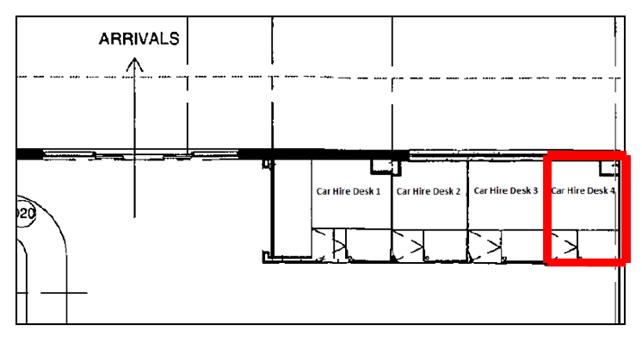
Esperance Airport Car Hire Desk 4
|
Author/s
|
Jennifer Parry
|
Manager Administration Services
|
|
Authorisor/s
|
Shane Burge
|
Director Corporate Services
|
File Ref: F13/554
Applicant
Surefire Enterprises as trustee for the Zakostelsky
Family Trust trading as Jetty Car Hire
Location/Address
Executive Summary
For Council to consider allowing Surefire Enterprises
(Pam Zakostelsky, Director) as trustee for the Zakostelsky Family Trust trading
as Jetty Car Hire, to lease Car Hire Desk 4 for a period of 5 years with a 5
year option commencing 1 January 2014.
Recommendation in Brief
That Council agrees to lease a portion of the Esperance
Airport Terminal Building on Lot 15 Coolgardie-Esperance Highway Gibson,
to Surefire
Enterprises as trustee for the Zakostelsky Family Trust trading as Jetty Car Hire for a Hire Car Desk.
Background
The Jetty Resort trading as Europcar were given permission to
lease Car Hire Desk 3 in September 2012, but before the lease was fully
executed the business franchise association between The Jetty Resort and
Europcar broke down. Europcar now operate from Car Hire Desks 3 in their own
right.
Rod and Pam Zakostelsky have operated their car hire business
successfully for several years from the Jetty Motel have requested to lease Car
Hire Desk 4 at the Esperance Airport. Their intentions being to operate a car
hire service, but are also investigating the possibility of extending into
operating tours and a shuttle service between the airport and town.
Officer’s Comment
It is recommended that the applicant be offered a 5
year lease with a 5 year option. Car Hire Desks 1 & 2 have both been let
for a 5 year term with a 5 year option; Car Hire Desk 3 has elected only to
have a 1 year term with 4 x 1 year options, ensuring compliancy with the
Commercial Tenancies Act.
There is no current arrangement with any of the car
hire companies regarding storage of cars on site at the Airport; a separate
licence agreement for this will be developed in the near future.
Consultation
Engineering Services
Financial Implications
Financial implications arising from this report should be
minimal albeit that landlord’s are no longer able to recover from a tenant
expenses relating to the negotiation, preparation or execution of the lease.
The income generated from the lease will be determined by independent
valuation. The income will form part of the airport income with any surplus
funds from the business unit being transferred to the Airport Reserve.
Asset Management Implications
Asset management implications would be negligible given the
age and minimal size of the premises and that the lessee is responsible for
maintenance of the booth.
Statutory Implications
Local Government Act
1995- Section
3.58 Disposing of Property
Commercial Tenancy
(Retail Shops) Agreement Act 1985
Policy Implications
This item relates to Council Policy CORP 004 for Building and
Property Leases.
The Building and Property Lease Policy determines property
classifications that can be applied to all Council’s property providing for
consistency in leased documentation and equity in terms and conditions within
the various property classifications. This policy also aims to clarify the role
and responsibilities between the Lessor (Shire) and Lessee on matters relating
to cleaning, internal and external property maintenance.
The applicable classifications for this item are:
Commercial Premises – Open Market which covers Airline Offices and Car
Rental Desks at the Esperance Airport. It requires that market rental be
determined by valuation with individual rental as determined by Council.
Strategic Implications
Strategic Community Plan 2012-2022
4.5 Be innovative in the management of Shire operations,
services, staff and resources to create a resilient and financially stable
Shire
1.2 Create a vibrant built environment that is accessible
and inclusive and reflects the Shire’s identity and local heritage
3.5 Maintain the Shire’s robust asset management practices
and maintenance programs
Corporate Business Plan
Action 4.5.12 Manage Shire leases and insurances
Environmental Considerations
Nil
Attachments
Nil
|
Officer’s Recommendation
That Council agrees to lease a portion of the
Esperance Airport Terminal Building on Lot 15 Coolgardie-Esperance
Highway Gibson, known as Car Hire Desk 4 to Surefire Enterprises as
trustee for the Zakostelsky Family Trust trading as Jetty Car Hire for a Hire Car Desk, subject to
the following;
1) The term of the
lease be 5 years with a 5 year option;
2) The lease
rental to be determined from valuation;
3) The lease area
to be used by Jetty Car Hire to be clearly identified in an attachment to the
lease document; and
4) The disposal of
property be advertised in accordance with the Local Government Act
s.3.58(4)
Voting Requirement Simple Majority
|
Item: 12.3.2
Audit
Committee- Appointment of Independent Member
|
Author/s
|
Shane Burge
|
Director Corporate Services
|
|
Authorisor/s
|
Matthew Scott
|
Chief Executive Officer
|
File Ref: F12/3695
Applicant
Corporate Services
Location/Address
Shire of Esperance
Executive Summary
For Council to consider the appointment of an
independent member to the Audit Committee.
Recommendation in Brief
That Council appoint Ms Pia Powell as the independent
member to the Audit Committee as per the Audit Committee Terms of Reference.
Background
As a result of the recent Council elections held on
the 19th October, the membership to Council appointed committees was
declared vacant. At the Ordinary Council Meeting held in October, Council
appointed four Councilors to the Audit Committee being Cr Heasman, Cr Stewart,
Cr Griffiths and Cr Parker.
The Audit Committee Terms of Reference have an
independent person as one of the members on the committee that is filled by
calling for nominations from the community. An advertisement was placed in the
Esperance Express on the 6th November and closing on the 20th
November calling for interested and experienced nominations.
Officer’s Comment
One nomination was received by the due date from Ms
Pia Powell.
It is considered that Ms Powell has the relevant
experience and qualifications that could add considerable experience,
independent advice and input into the Audit Committee.
The application and resume from Ms Powell is attached
as a confidential attachment under separate cover for Council’s reference.
Consultation
The process for the appointment of the independent member was
discussed at the Audit Committee meeting that was held on the 19th
November.
Financial Implications
Nil
Asset Management Implications
N/A
Statutory Implications
Part 7 Division 1A of the Local Government Act 1995
deals with the Audit Committee.
Shire of Esperance Audit Committee Terms of Reference
Policy Implications
N/A
Strategic Implications
Strategic Community Plan 2012-2022
4.5 Be innovative in the management of Shire
operations, services, staff and resources to create a resilient and financially
stable Shire.
Corporate Business Plan 2013/2014 – 2016/2017
4.5.15 Manage financial services
Environmental Considerations
Nil
Attachments
|
a.
|
Audit Committee Application- Pia
Powell - Under Separate Cover
|
|
|
Officer’s Recommendation
That Council appoint Ms Pia Powell
as the independent member to the Audit Committee as per the Audit Committee
terms of reference.
Voting Requirement Absolute Majority
|
Item: 12.3.3
Lease
- Esperance Goldfields Surf Life Saving Club
|
Author/s
|
Jennifer Parry
|
Manager Administration Services
|
|
Authorisor/s
|
Shane Burge
|
Director Corporate Services
|
File Ref: F13/968
Applicant
Esperance Goldfields Surf Life Saving Club Inc.
Location/Address
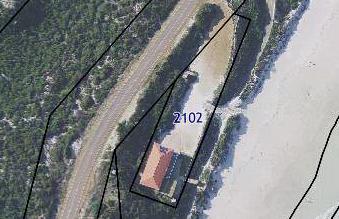
Lot 2102 on Plan 192574, Reserve 41860, Twilight Beach
Road, Dalyup
Executive Summary
For Council to consider allowing Esperance Goldfields
Surf Life Saving Club Inc to lease (land only) Reserve 41860, Lot 2102 Twilight
Beach Rd Dalyup subject to the approval of the Minister for Lands.
Recommendation in Brief
That Council, subject to the approval of the Minister
of Lands, agrees to lease to Esperance Goldfields Surf Life Saving Club Inc.
Lot 2102 on Plan 192574, Reserve 41860, Twilight Beach Road Dalyup for a period
of 21 years.
Background
The 2642.762 m2 area of land in question
was formally part of Reserve 24486 vested in the Shire of Esperance in 1956 for
the purposes of ‘Flora’. In 1989 the Esperance Goldfields Surf Life Saving Club
(EGSLSC) was formed by interested community members. On 8/10/1990 the group
wrote to Council requesting to place a transportable building in a beachside car
park overlooking Twilight Beach. This building was to become the headquarters
of the club; they also wrote “we envisage this area being kept as a private car
park for the Surf Club with a drop down boom gate to close off to the public
when we are out patrolling beaches”. This was the initial request for exclusive
use of this land.
On 24/10/1990 Council resolved to give support in
principle and to approach the Department of Land Administration to form a
vested Reserve specifically for Surf Club purposes. Reserve 41860 was formed on
20/9/1991 for purposes of Surf Life Saving Club House. Vesting was with the
Shire of Esperance and a Power to Lease was granted for any term not exceeding
21 years. The Reserve area was altered in December 1995 to suit the positioning
of a new club building.
Attempts to put a lease in place have occurred in 2006
and 2010, for whatever reason, neither process was successful.
Records indicate considerable amounts of
correspondence between the Shire and EGSLC in regard to the building
deficiencies and building non-compliance issues. At its last inspection
6/8/2013, the building was again found to be non-compliant and continues to
have no Certificate of Approval as a public building.
Officer’s Comment
Research indicates that there have been imperfect
decisions made by both parties (EGSLSC & SoE) in the past regarding the use
of funds on areas other than rectification of building non-compliance issues.
Having a valid lease in place providing secure tenure,
will fulfill a prerequisite of most organizations that make grants available to
recreational community groups such as the EGSLSC. This opportunity could
possibly allow ESLSC to obtain further funding to remedy their building
non-compliance issues.
Consultation
Manager Building Services
Co-ordinator Asset Management
Financial Implications
There are minimal financial implications subject to the lease
being drawn up in a manner that clearly identifies the lease as ‘land only’,
with the Shire having no responsibility for the buildings.
Asset Management Implications
There are minimal asset management implications subject to
the lease being drawn up in a manner that clearly identifies the lease as ‘land
only’, with the Shire having no responsibility for the buildings.
Statutory Implications
Local Government Act 1995 - Section 3.58 Disposal
of Property
Functions and General
(Functions and General) Regulations 1996 - Section 30
Policy Implications
This item relates to Council Policy CORP 004 for Building and
Property Leases.
The Building and Property Lease Policy determines property
classifications that can be applied to all Council’s property providing for
consistency in leased documentation and equity in terms and conditions within
the various property classifications. This policy also aims to clarify the role
and responsibilities between the Lessor (Shire) and Lessee on matters relating
to cleaning, internal and external property maintenance.
The applicable classification for this item is:
Specific Sports Facilities
· Development of facilities by Shire or
Club on Council land often with capital cost shared between Shire, Department
of Sport and Recreation, and Club or any combination of this mix of funding.
· Exclusive use of the premises for a
specific sport
· All maintenance, operational and
cleaning expenses at the lessee cost
· All outgoings (consumable charges)
are recouped or charged direct to the Club
· Major repairs,
reconstruction/refurbishment to be detailed within lease or licence document
· The provision of bar facilities
should not be used to differentiate lease fees in this classification
· Council approval required prior to
any sub-letting of the premises
· Groups, Clubs and Organisations would
be encouraged to submit applications via the Community Development Fund Grants
process when requesting Council’s financial assistance.
Strategic Implications
Strategic Community Plan 2012-2022
3.5 Maintain the Shire’s robust asset management practices and
maintenance program
4.2 Maintain a clear, transparent and ethical decision making
process
4.5 Be innovative in the
management of Shire operations, services, staff and resources to create a
resilient and financially stable Shire
Corporate Business Plan 2013/2014 – 2016/2017
4.5.12 Manage Shire leases and insurances
Environmental Considerations
Nil
Attachments
Nil
|
Officer’s Recommendation
That Council subject to the approval of the Minister of
Lands, agrees to lease to Esperance Goldfields Surf Life Saving Club (Inc)
Reserve 41860, being Lot 2102 on Plan 192574, Twilight Beach Road,
Dalyup, subject to the following:
1) The term of
the lease to be 21 years;
2) The lease
rental to be $1.00 as and when demanded;
3) The charge of
a $110.00 Lease Preparation Fee along with the reimbursement at cost to
Council of any Legal Fees pertaining to this Lease;
4) The lease area
to be Reserve 41860 as defined in the lease and displayed clearly in the
lease document;
5) The use of the
property to be for Surf Life Saving Club House as designated in Vesting Order
G142730; and
6) That all lease
terms and conditions be as the Shire Land Only Lease.
Voting Requirement Simple Majority
|
Item: 12.3.4
New
Delegation - Section 40 - Liquor Control Act 1988
|
Author/s
|
Jennifer Parry
|
Manager Administration Services
|
|
Authorisor/s
|
Shane Burge
|
Director Corporate Services
|
File Ref: F12/256
Applicant
Corporate Services
Location/Address
Not Applicable
Executive Summary
For Council to consider delegating to the CEO section
40 of the Liquor Control Act 1988 – ‘Certificate of planning authority
as to whether use of the premises complies with planning laws’.
Recommendation in Brief
That Council delegate to the CEO, Section 40 of the Liquor
Control Act 1988 – Certificate of planning authority as to whether use of
the premises complies with planning laws.
Background
Delegation 4.1 General Administration Powers in the
current Delegation Register contains the following clause;
r) Issue Liquor Licensing Act Section
40 Certificates regarding compliance with relevant planning laws.
This delegation was made in relation to the Planning
and Development Act 2005 rather than the Liquor Control Act 1988.
Officer’s Comment
This delegation will rectify the current inaccuracy
with respect to issuing section 40 Certificates. There is a current delegation
under section 40 that has been made under the Planning and Development Act
2005. Whilst this is standard industry practice, it has been determined
that it is more appropriate to delegate under the Liquor Control Act 1988.
Consultation
Development Services
Financial Implications
Nil
Asset Management Implications
Nil
Statutory Implications
Local Government Act 1995 Section 5.42
Liquor Control Act 1988
Policy Implications
Nil
Strategic Implications
Strategic Community Plan 2012-2022
4.5 Be innovative in the
management of Shire operations, services, staff and resources
to create a resilient and financially stable Shire
Corporate Business Plan 2013/2014 – 2016/2017
4.5.8 Review and update Delegations Register
Environmental Considerations
Nil
Attachments
|
aView.
|
Liquor Control Act 1988 - Section
40
|
|
|
Officer’s Recommendation
That Council delegate to
the CEO, Section 40 of the Liquor Control Act 1988 – Certificate of
planning authority as to whether use of the premises complies with planning
laws.
Voting Requirement Simple Majority
|
|
|
3.3 Liquor Control Act 1988 – Section 40 Certificate
|
|
Function Delegated:
This text is provided as a reference only. Delegates
shall only act in full understanding of the delegated statutory power,
inclusive of conditions [see below].
|
Council Officers are delegated authority to issue a certificate
in accordance with S.40 of the Liquor Control Act 1988.
|
|
Statutory Power being Delegated:
|
Liquor Control Act 1988
S.40 Certificate of planning authority as to whether use of
premises complies with planning laws
|
|
Power is originally assigned to:
|
Local Government
|
|
Statutory Power of Delegation
|
s.5.42 Delegation of some powers or duties to the
CEO
|
|
Power Delegated to:
|
Chief
Executive Officer
|
|
Council’s Conditions on Delegation:
|
Nil
|
|
Statutory Power to Sub-Delegate:
|
Local Government Act 1995
s.5.44 CEO may delegate some powers and duties to
other employees
|
|
CEO’s Sub-Delegation to:
|
Director Development Services
Manager Planning Services
|
|
CEO’s Conditions on Sub-delegation:
|
Nil
|
|
Record Keeping Statement
[s5.46(3)]
|
A person to whom a power or duty is delegated under
this Act, is to keep records in accordance with the Local Government (Administration) Regulations
1996 r.19 Delegates to keep certain records (Act s.5.46(3)). You are
required to maintain a written record of;
(a) how you exercised the power or discharged the duty; and
(b) when you exercised the power or discharged the
duty; and
(c)
the persons or classes of persons, other than Council or committee members or
employees of the local government, directly affected by the exercise of the
power or the discharge of the duty.
|
|
Compliance Links
|
Section 40 of the Liquor Control Act 1988
|
|
Delegation Administration:
|
|
|
Decision Reference
|
|
Decision Reference
|
|
1.
|
Adopted -
|
5.
|
|
|
2.
|
|
6.
|
|
|
3.
|
|
7.
|
|
|
4.
|
|
8.
|
|
|
|
|
|
|
|
Item: 12.3.5
Lease
- Old Railway Station Master's Ticket Office - Museum Village
|
Author/s
|
Jennifer Parry
|
Manager Administration Services
|
|
Authorisor/s
|
Shane Burge
|
Director Corporate Services
|
File Ref: F13/1026
Applicant
Gisele West
Location/Address
Portion of Lot 103 (68) Dempster St Esperance - Reserve 2815
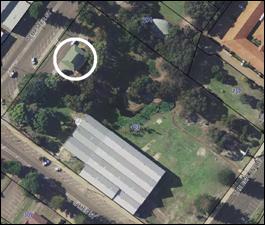
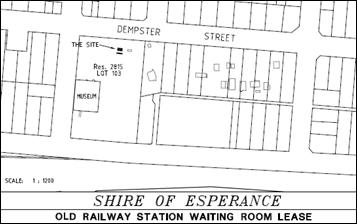
Executive Summary
For Council to consider allowing Gisele West to lease
the Old Station Master’s Ticket Box at Museum Village for a period of 6 months.
Recommendation in Brief
That Council agrees to lease the Old Station Master’s
Ticket Box at Lot 103 Dempster Street, portion of Reserve 2815 to Gisele West
for the purpose of painting workshop and painting therapy for a period of 6
months.
Background
The applicant would prefer to lease the property until
the end of 2015, but has been explained that an application would need to be
lodged with the State Administrative Tribunal (SAT) to provide an order
overriding the Commercial Tenancy (Retail Shops) Agreements Act 1985 (CTA).
The Manager Administration Services has investigated all avenues for the Shire
to be able to obtain a ruling from SAT, but has been advised that the
application must come from the Lessee or prospective Lessee and not from the
Lessor.
The Act as it stands creates a basic right for retail
tenants to be granted an option to extend the lease to a minimum lease period
of 5 years in relation to leases of more than 6 months. For this reason we are
only able to offer a lease period of 1 day less than 6 months.
Officer’s Comment
It is recommended that the applicant be allowed to
have a lease of 1 day less than 6 months ensuring compliancy with the CTA. The
tenant has inspected the property and is aware that there is no water available
inside the building and would need to access water from a tap outside the main
building which is located undercover within 2.5 metres of the back door.
Consultation
State Administrative Tribunal, Department of the
Attorney General
Herron Todd White, Registered Valuer.
Financial Implications
The Local Government Act 1995 requires that the
consideration to be received (rent) for the proposed disposition (lease) of
property be ascertained from a market valuation carried out not more than 6
months prior to the proposed disposition.
A review of the current rental valuation from Herron Todd
White (Registered Valuer) dated 4 December 2013 indicates that the current
valuation would be $60.00/m2 per annum (GST exclusive) equating to
$3,387.00 per annum (GST exclusive) for this 56.45 m2 property.
Asset Management Implications
It is anticipated that the asset management implications
would be negligible albeit that the buildings are very old; the Shire (Lessor)
is responsible for structural maintenance of this property and the Lessee
responsible for minor maintenance.
Statutory Implications
Local Government Act
1995- Section
3.58 Disposing of Property
Commercial Tenancy
(Retail Shops) Agreement Act 1985
Policy Implications
This item relates to Council Policy CORP 004 for Building and
Property Leases.
The Building and Property Lease Policy determines property
classifications that can be applied to all Council’s property providing for
consistency in leased documentation and equity in terms and conditions within
the various property classifications. This policy also aims to clarify the role
and responsibilities between the Lessor (Shire) and Lessee on matters relating
to cleaning, internal and external property maintenance.
The applicable classifications for this item are:
Commercial
Premises – Community
· All outgoings for these premises recouped or direct supply to lessee.
· Discounted rental applied, based on market rental valuation.
· Disposal to be in accordance with section 3.58 Local Government Act
1995, noting exemptions that apply via Regulation 30 of Local Government
(Functions and General) Regulations 1996.
· Minor maintenance, operational expenses, cleaning etc are cost to
Lessee.
· Major repairs, reconstruction/refurbishment to be detailed within lease
or licence document.
· Generally Council would have a building maintenance budget allocation
for the premises.
· Council approval required prior to any sub-letting of the premises.
Strategic Implications
Strategic Community Plan 2012-2022
4.5 Be innovative in the management of Shire operations, services,
staff and resources to create a resilient and financially stable Shire
1.2 Create a vibrant built environment that is accessible
and inclusive and reflects the Shire’s identity and local heritage
3.5 Maintain the Shire’s robust asset management practices
and maintenance programs
Corporate Business Plan
4.5.12 Manage Shire leases and insurances
Environmental Considerations
Nil
Attachments
Nil
|
Officer’s Recommendation
That Council agrees to lease the Old Station
Master’s Ticket Box at Lot 103 (68) Dempster Street, portion of Reserve 2815
to Gisele West for the purpose of painting workshop and painting therapy for
a period of 6 months subject to the following;
a) The
term of the lease be 1 day less than 6 months from commencement date;
b) The
lease rental to be determined from valuation;
c) The
lease area to be used by Gisele West to be clearly identified in an
attachment to the lease document; and
d) The
disposal of the property be advertised in accordance with the Local
Government Act s.3.58(4)
Voting Requirement Simple Majority
|
Item: 12.3.6
Financial
Services Report - November 2013
|
Author/s
|
Beth O'Callaghan
|
Manager Financial Services
|
|
Authorisor/s
|
Shane Burge
|
Director Corporate Services
|
File Ref: F13/639
Attachments
|
a.
|
Monthly Financial Management Report
- Under Separate Cover
|
|
|
Officer’s Recommendation
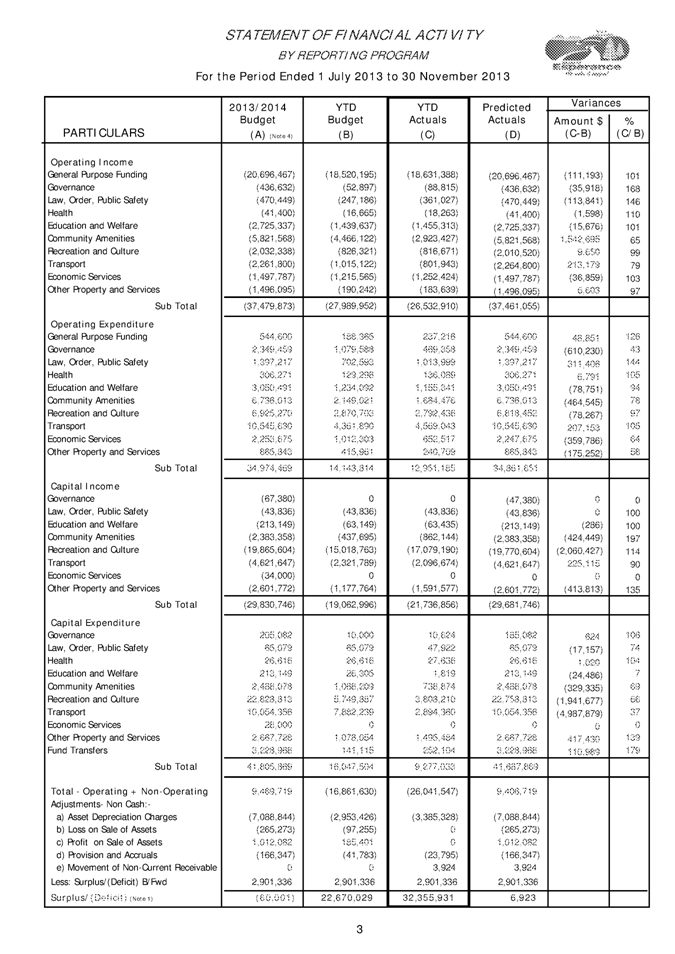
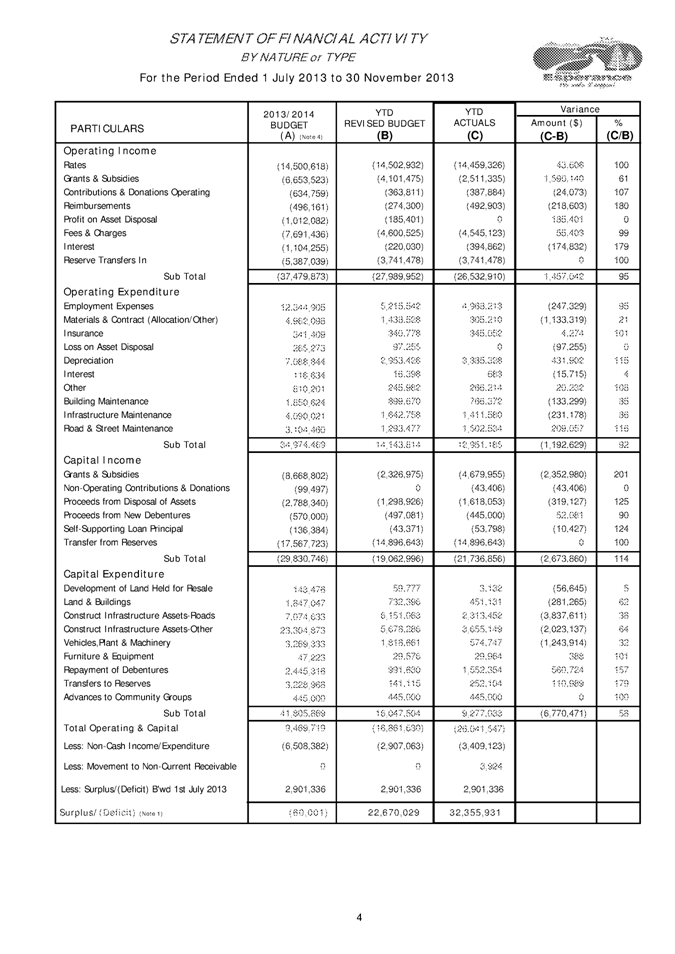
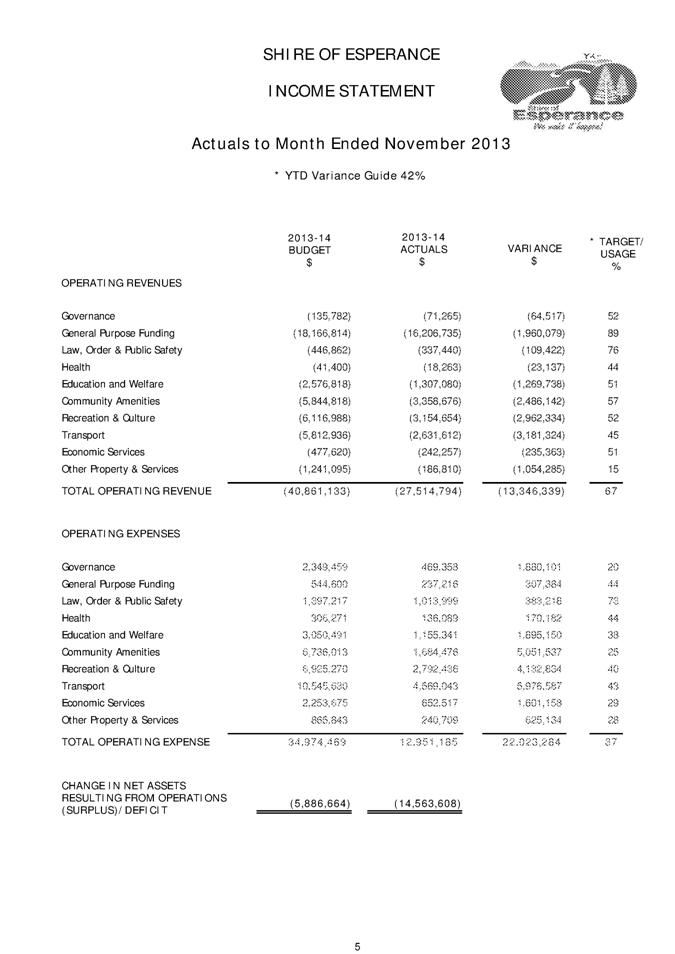
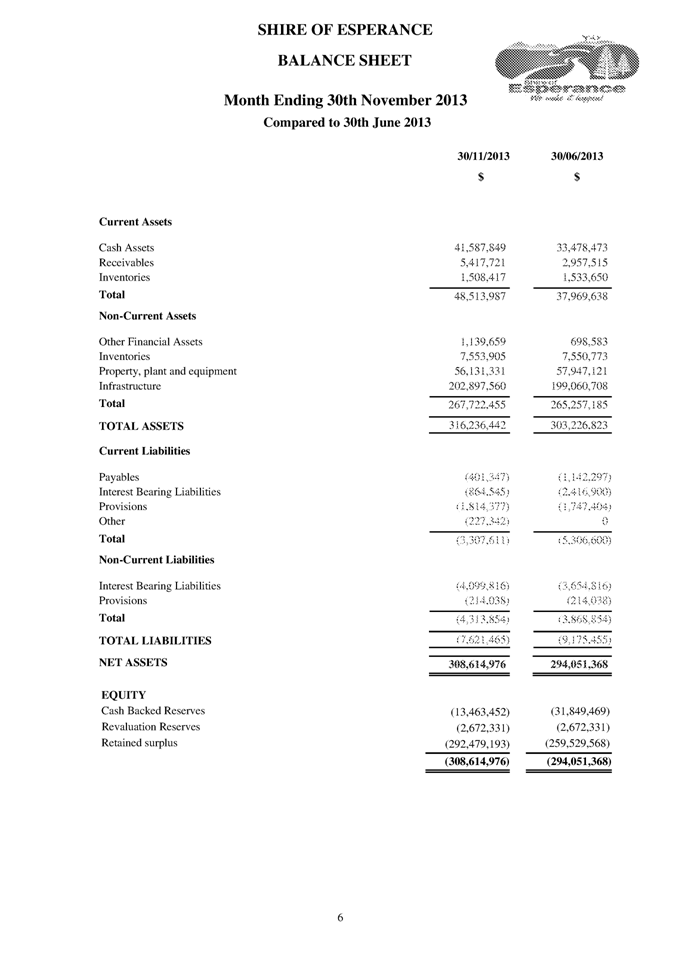
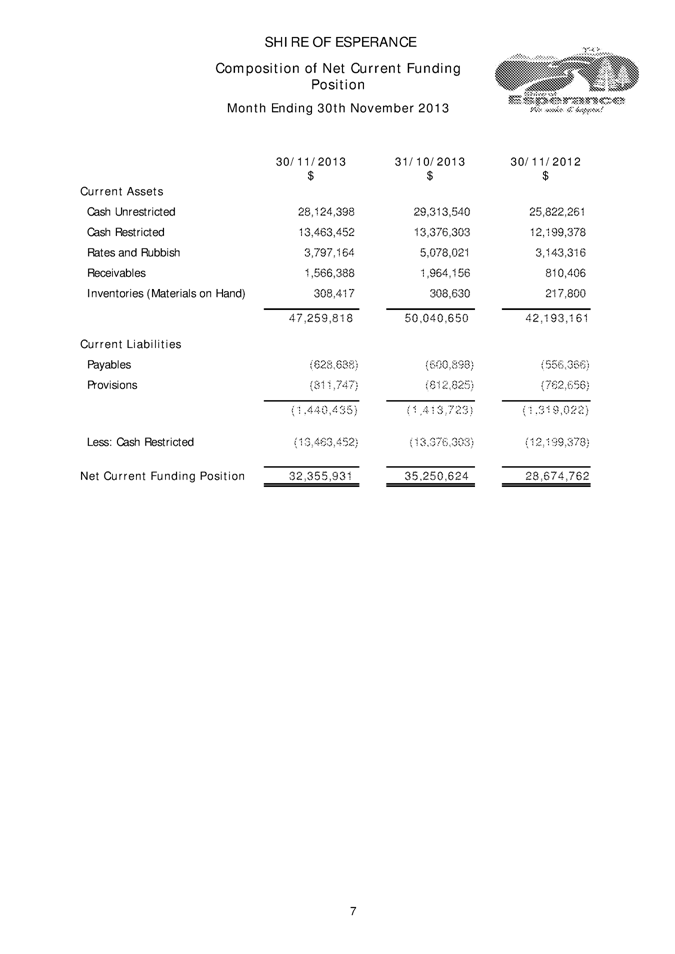
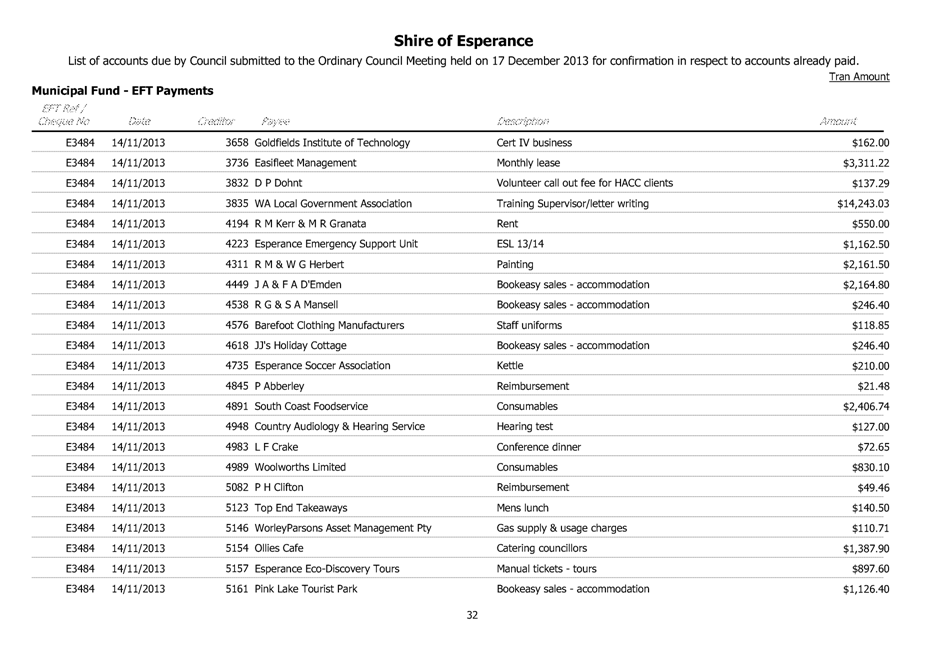
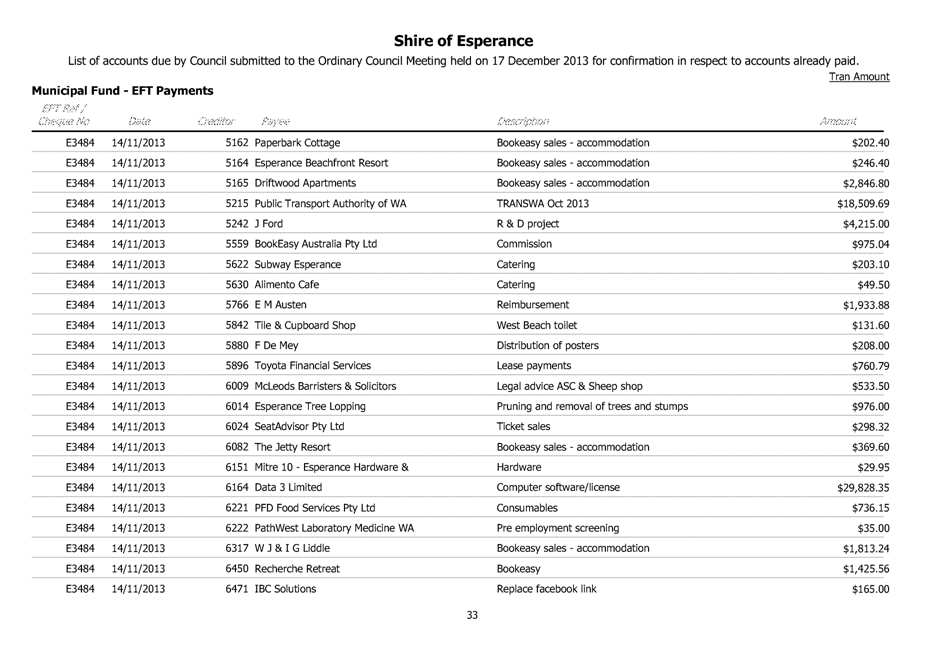
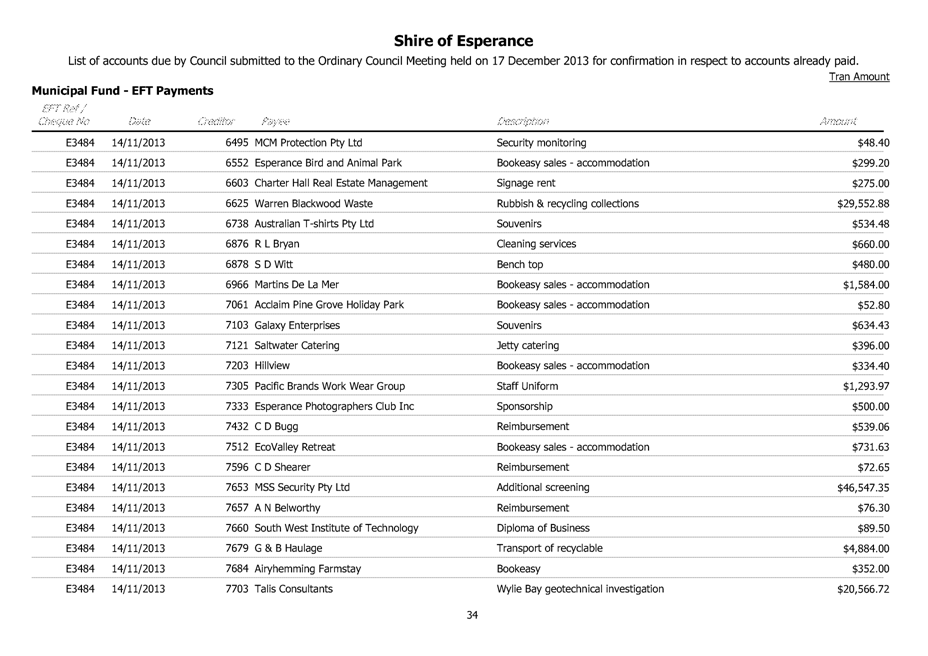
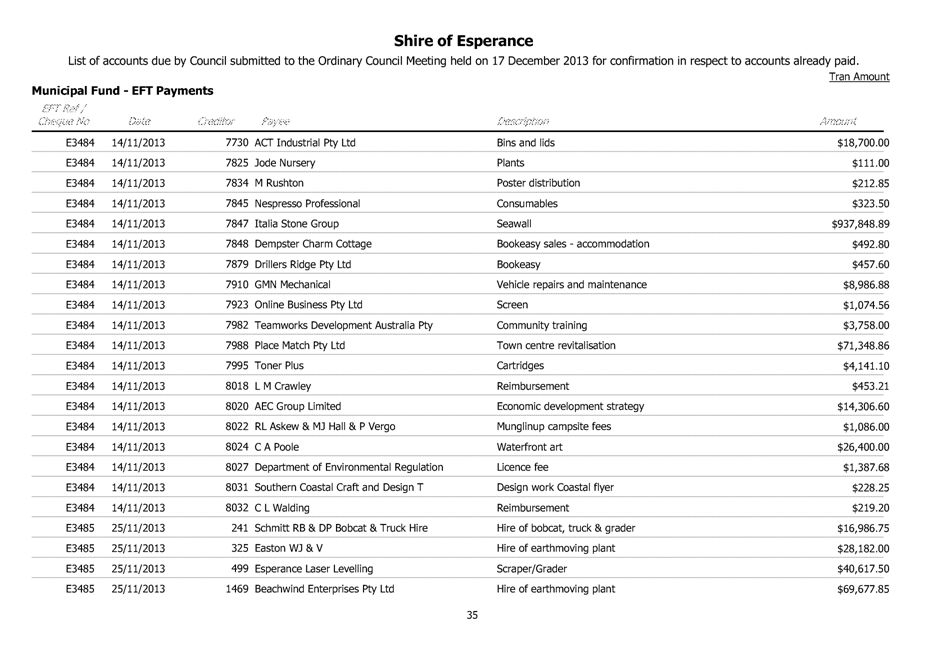
That the report entitled Monthly
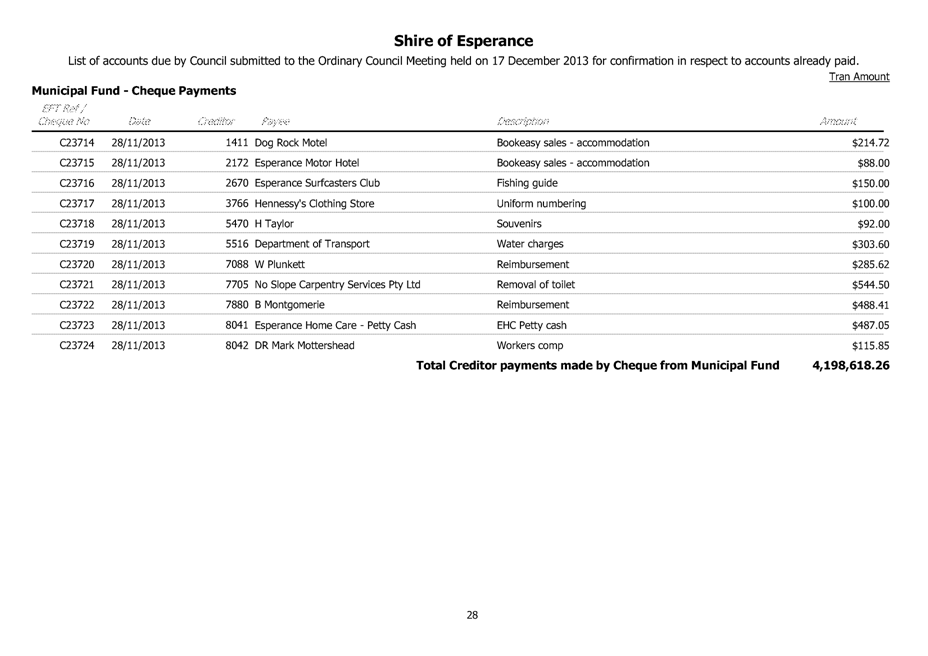
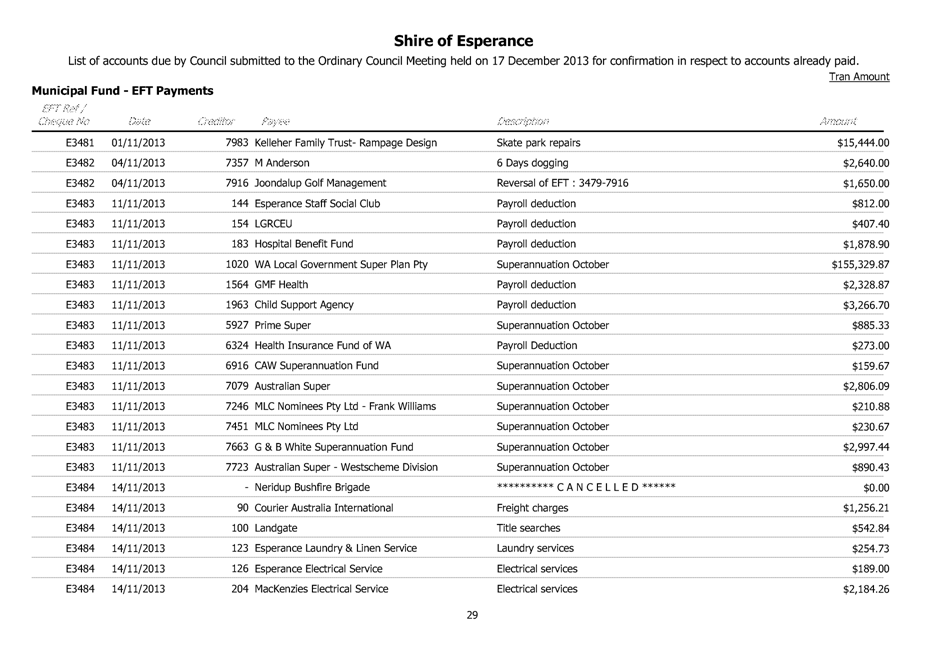
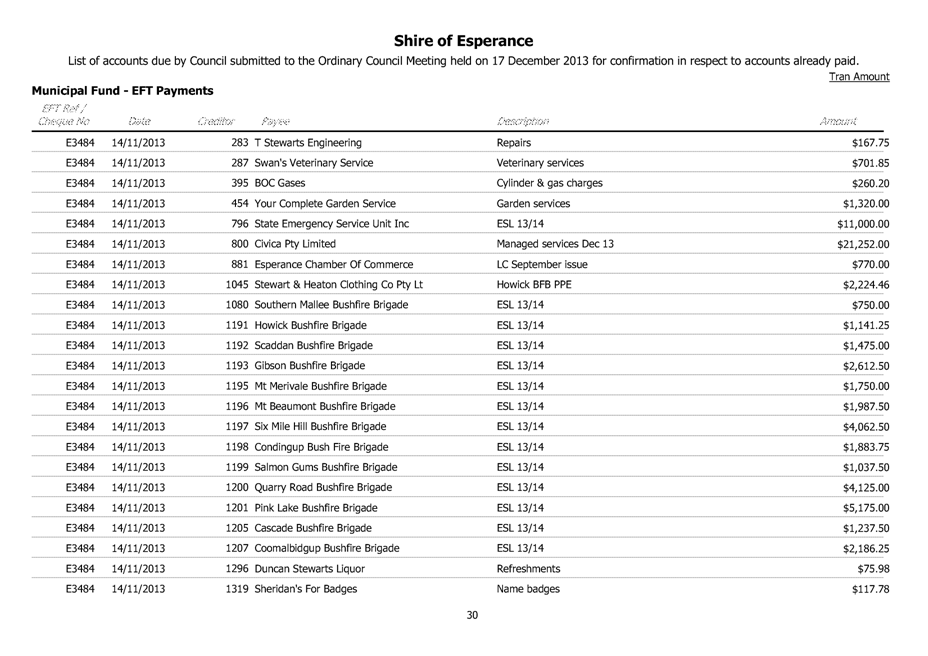
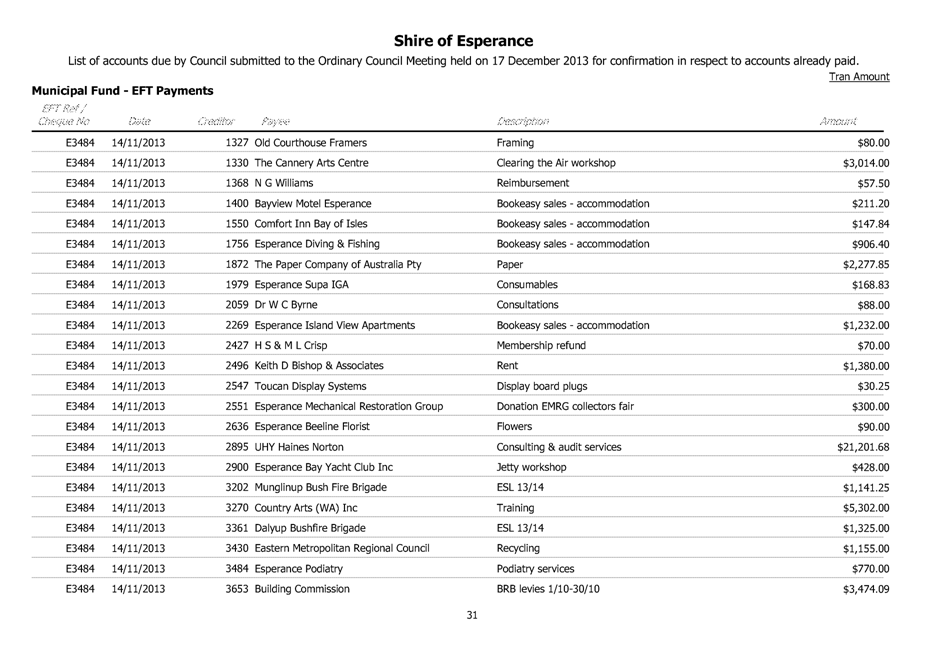
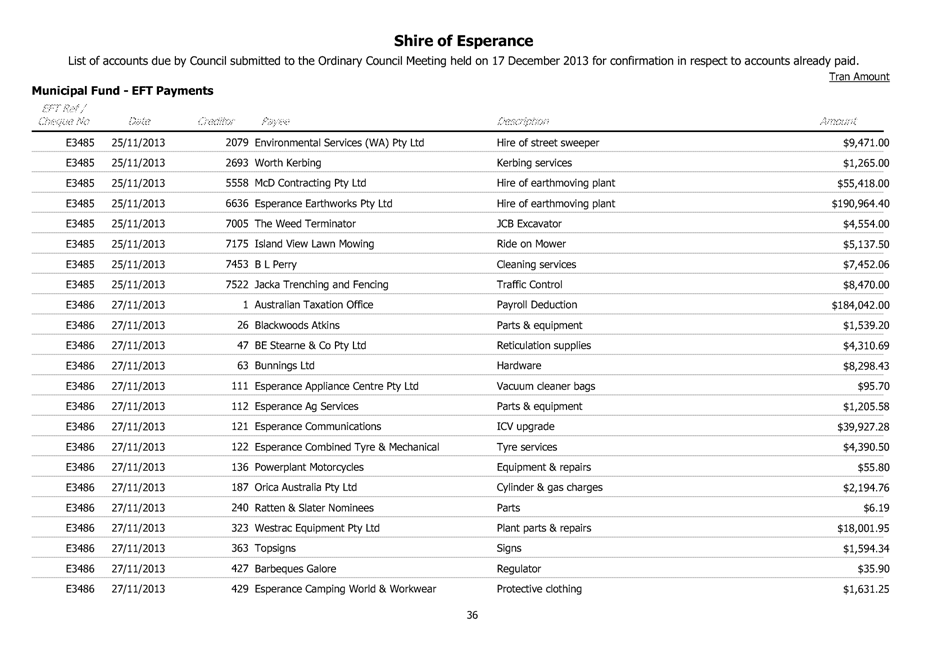
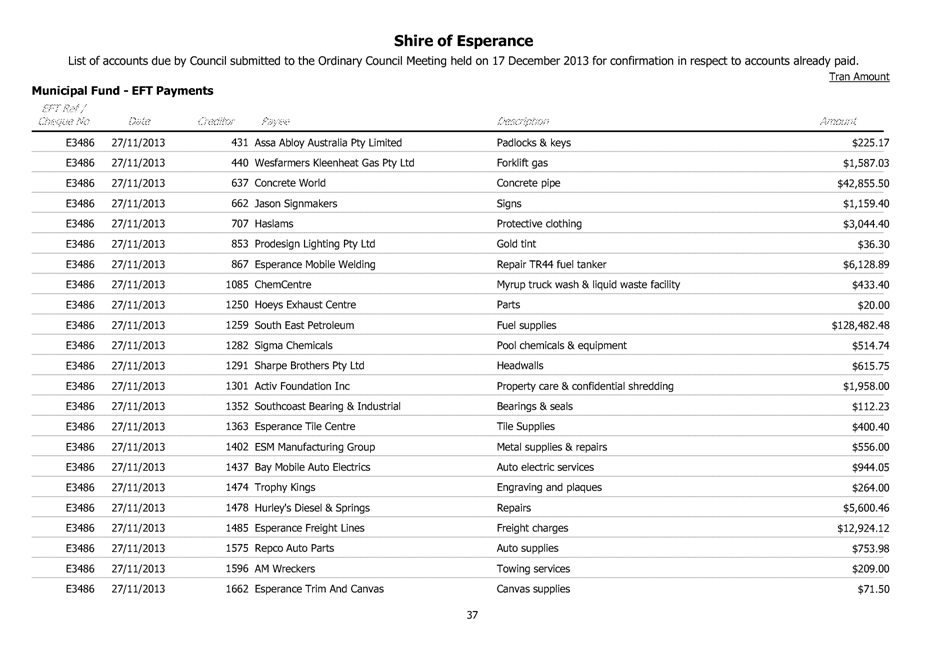
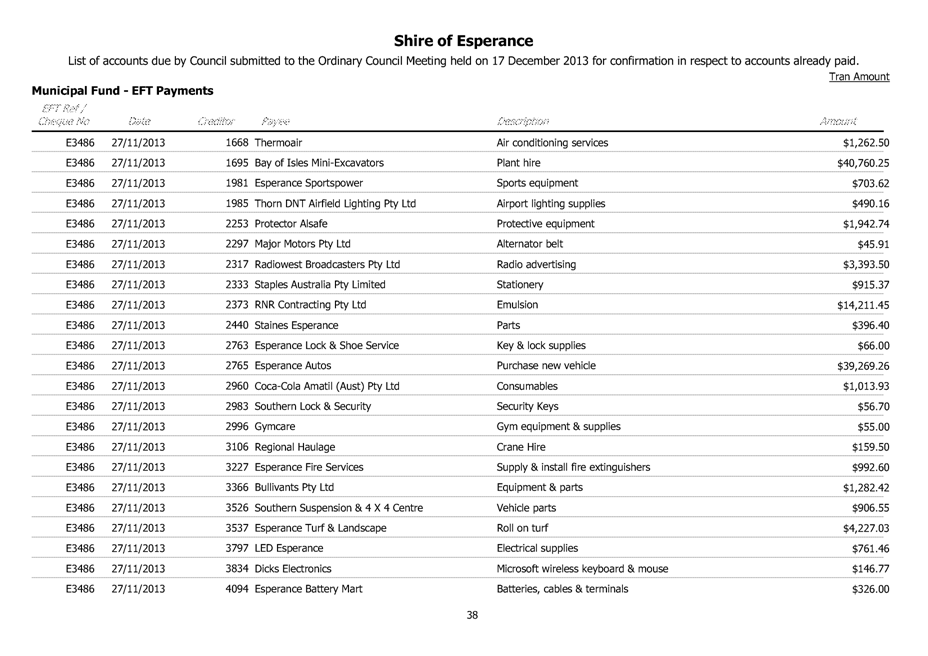
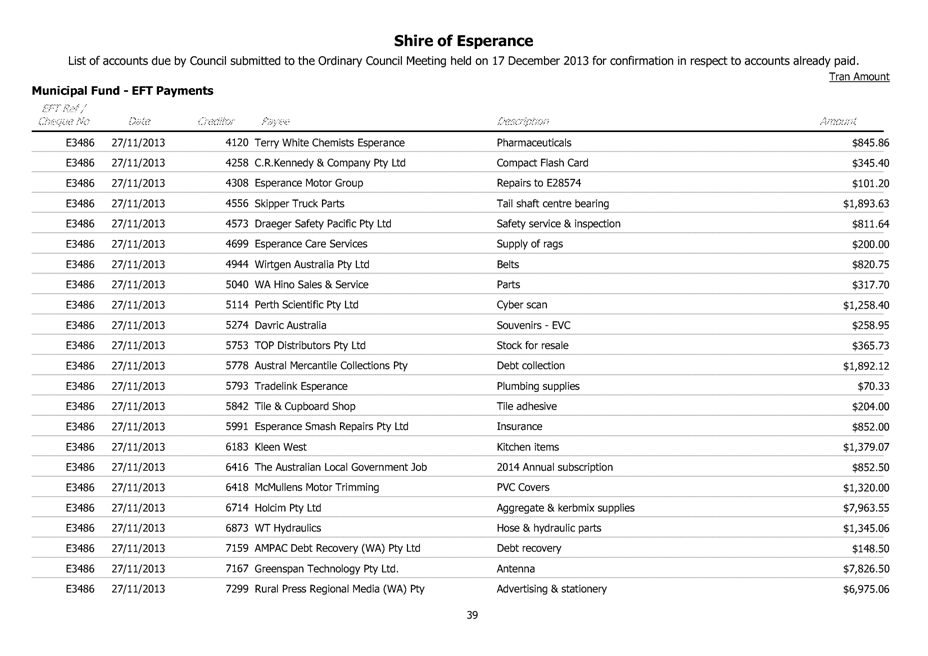
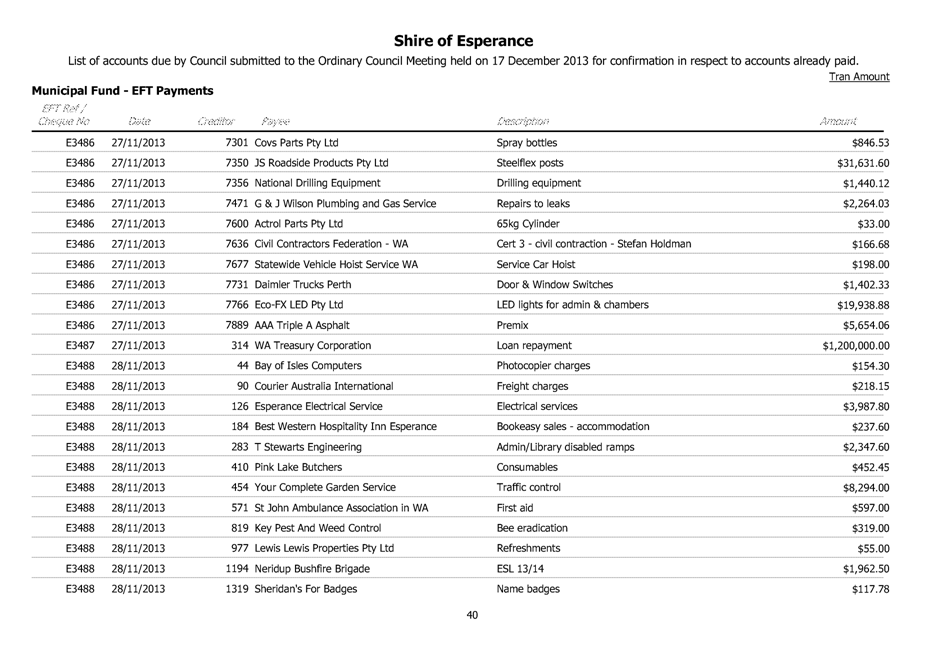
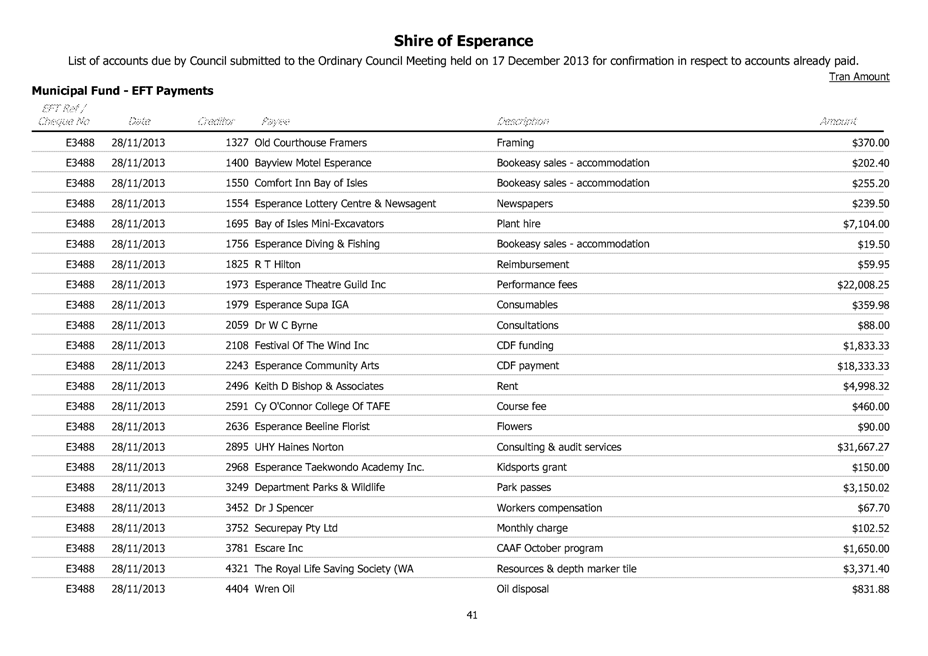
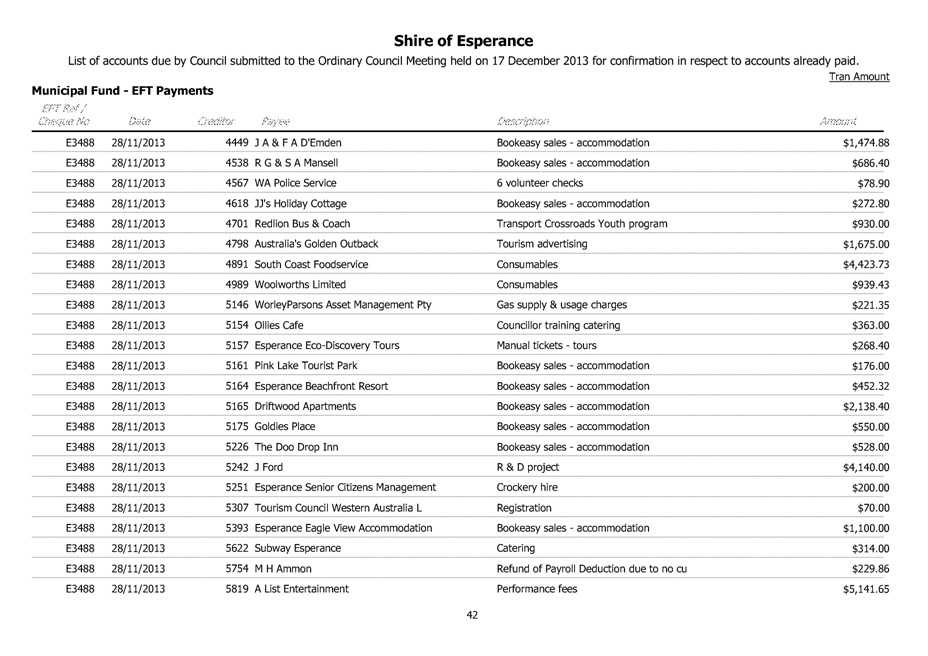
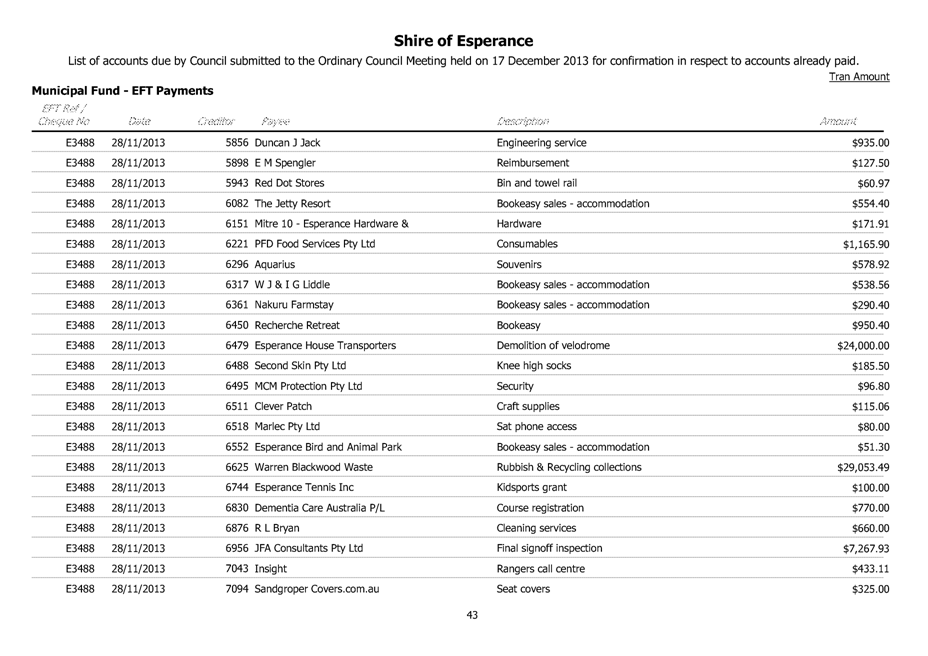
Financial Management Report (incorporating the Statement of Financial Activity
and the Accounts for Payment) for the month of November as attached be
received.
Voting Requirement Simple Majority
|
12.4 Community Services
Item: 12.4.1
Community
Arts and Activities Funding
|
Author/s
|
Lynda Horn
|
Community Services Officer
|
|
Authorisor/s
|
Rod Hilton
|
Director Community Services
|
File Ref: F13/668
Applicant
Community Services
Location/Address
N/A
Executive Summary
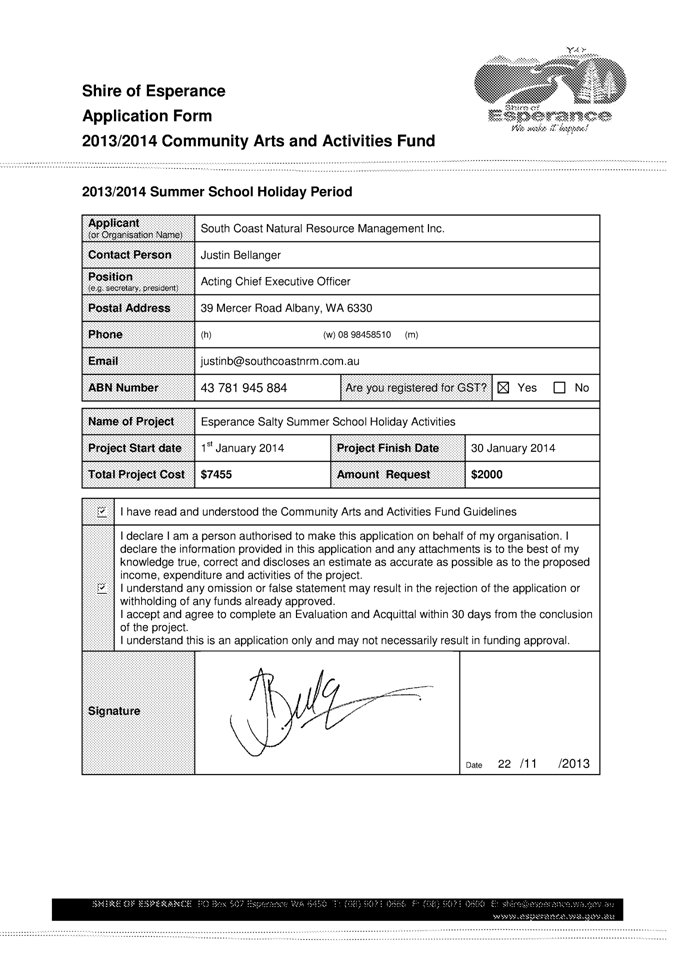
That Council considers the 4 Community Arts and
Activities Funding applications that have been received for the Summer School
Holiday period.
Recommendation in Brief
That Council:
1. Approve
$1,000 for South Coast Natural Resource Management towards the presenter fees
of the Salty School Holiday Activities.
2. Approve
$1,000 for ESCARE towards the presenter fees of the Summer Surf School
3. Approve
$1,500 for the Cannery Arts Centre towards the presenter fees and material
costs of the Summer School Holiday Program.
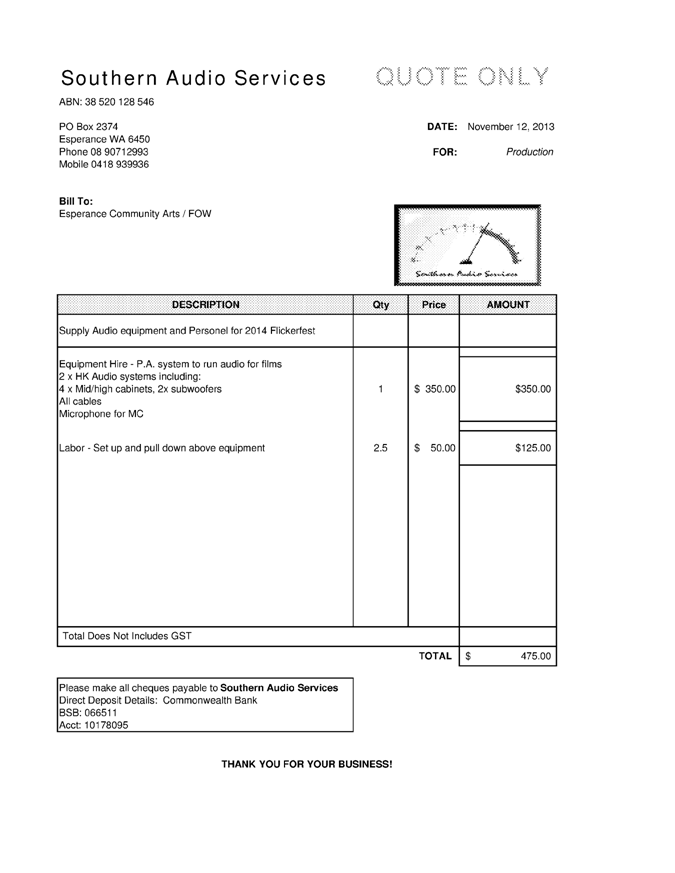
4. Approve
$600 funding for the Festival of the Wind towards Flickerfest.
Background
The Community Arts and Activities fund has a total
annual budget of $12,000. This is the second round of application for this
financial year.
The previous round of funding allocated $2,500,
leaving $9,500 in the budget.
Four applications were received by the due date of
4:30pm Friday 22 November 2013. One application was partially received on the
due date, with the remaining information received two days later. The
applications are summarised
below:
1. South
Coast Natural Resource Management – Salty Summer School Holidays
Purpose: To provide up to 12
events incorporating environmental related activities at locations around
Esperance for the Esperance community.
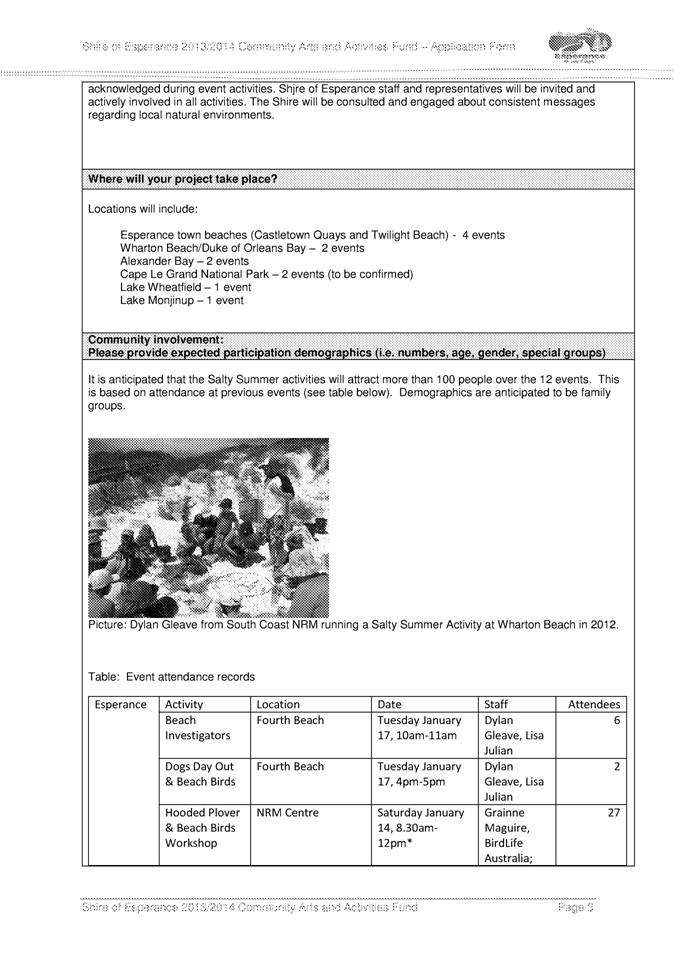
Participants: anticipated that 100
participants from the community, with a family demographic, will attend over
the 12 events.
Funding Request:
Total Project Cost $7,455
Applicant/Other
contributions $5,455
Amount Requested $2,000
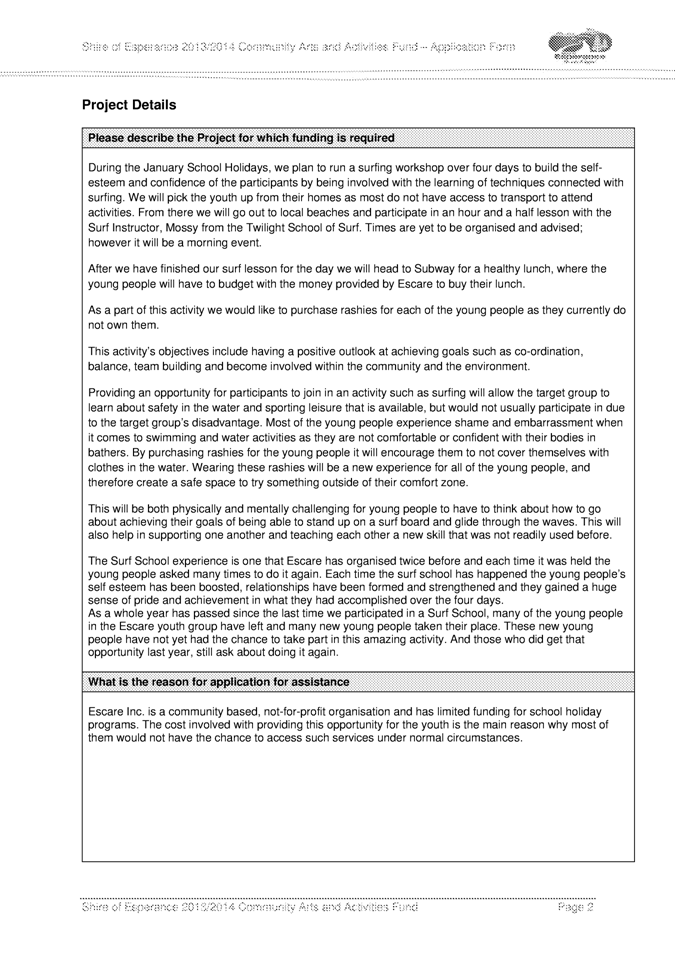
2. ESCARE
– Summer Surf School
Purpose: to conduct a four day
surfing workshop.
Participants: a total of 10 at risk
indigenous youth aged between 12 and 18 years of age.
Funding Request
Total Project Cost $3,750
Applicant/Other
contributions $2,500
Amount Requested $1,250
ESCARE have acquitted
their previous funding accordingly.
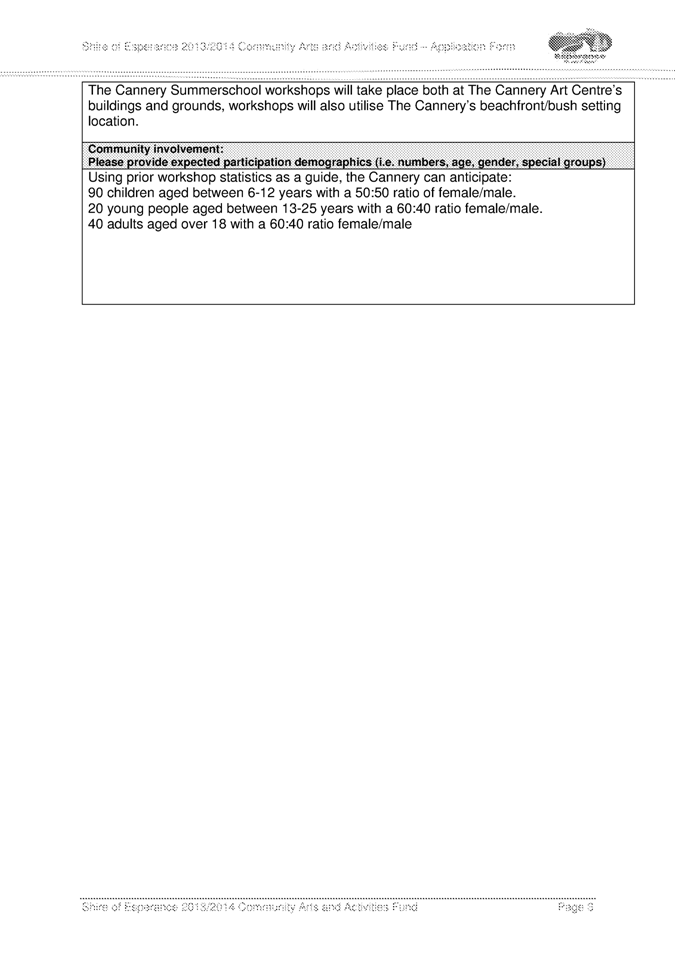
3. Cannery
Arts Centre – Summer School Holiday Program
Purpose: To provide arts and
crafts based workshops to the Esperance community. Specifically, 12 workshops
for children (6-12 years), 6 workshops for youth (13-25 years) and 10 workshops
for adults.
Participants: based on previous
events, it is anticipated that 90 children aged 6-12, 20 youth aged 13-25 and
40 adults aged over 18.
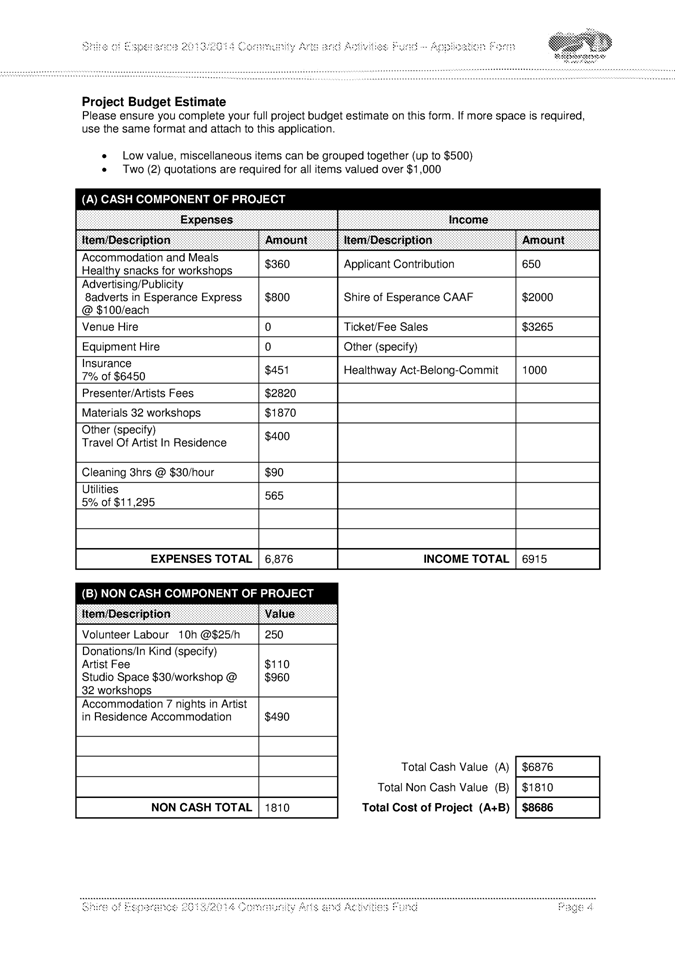
Funding request:
Total project cost $8,686
Applicant/other
contributions $6,686
Amount Requested $2,000
The Cannery Arts Centre
has acquitted their previous funding accordingly.
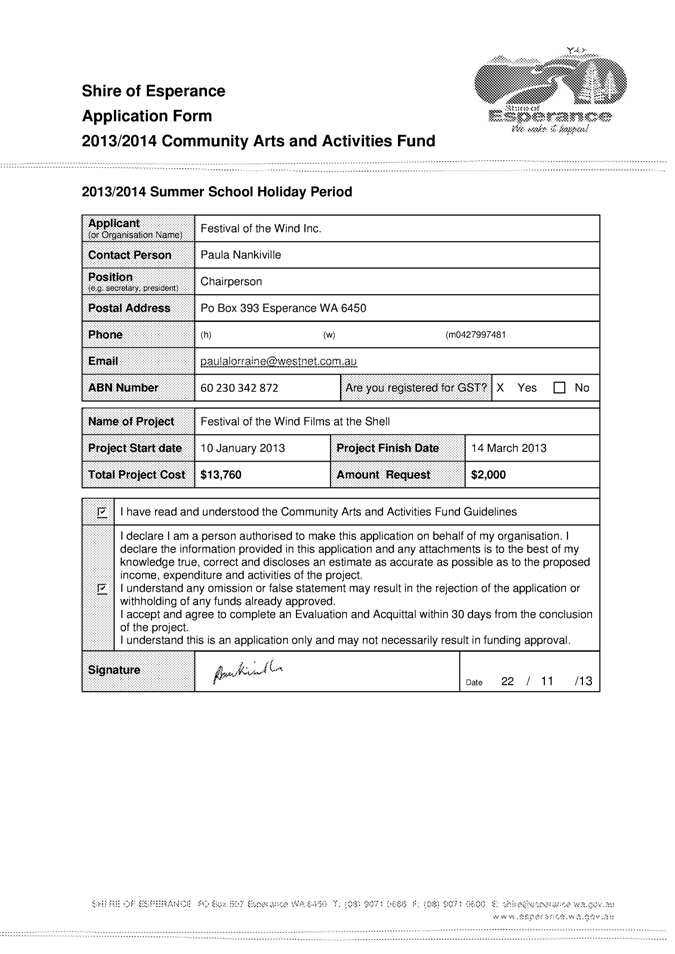
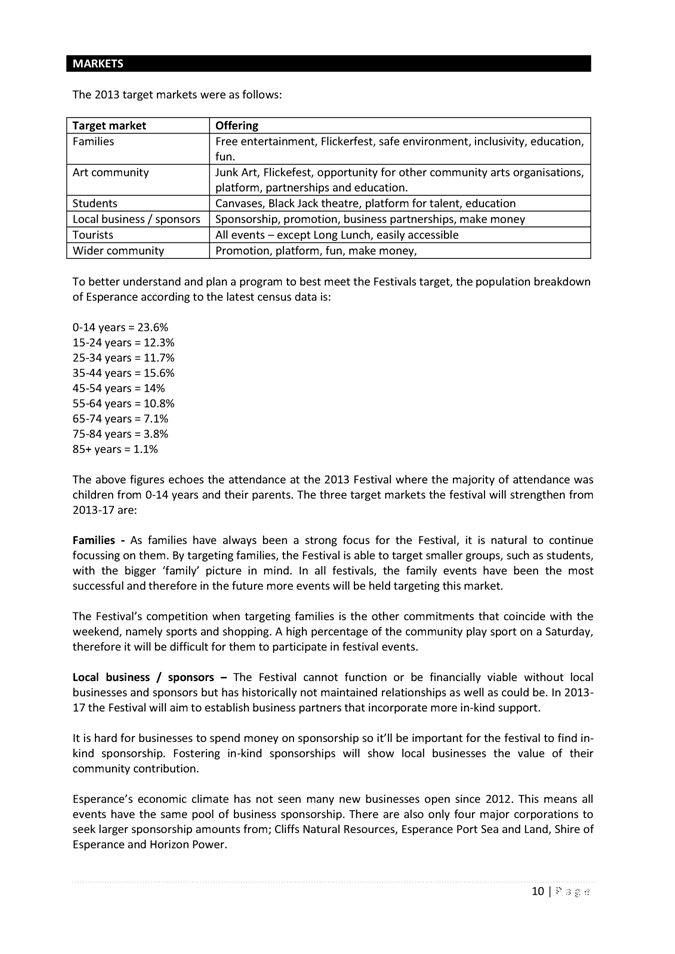
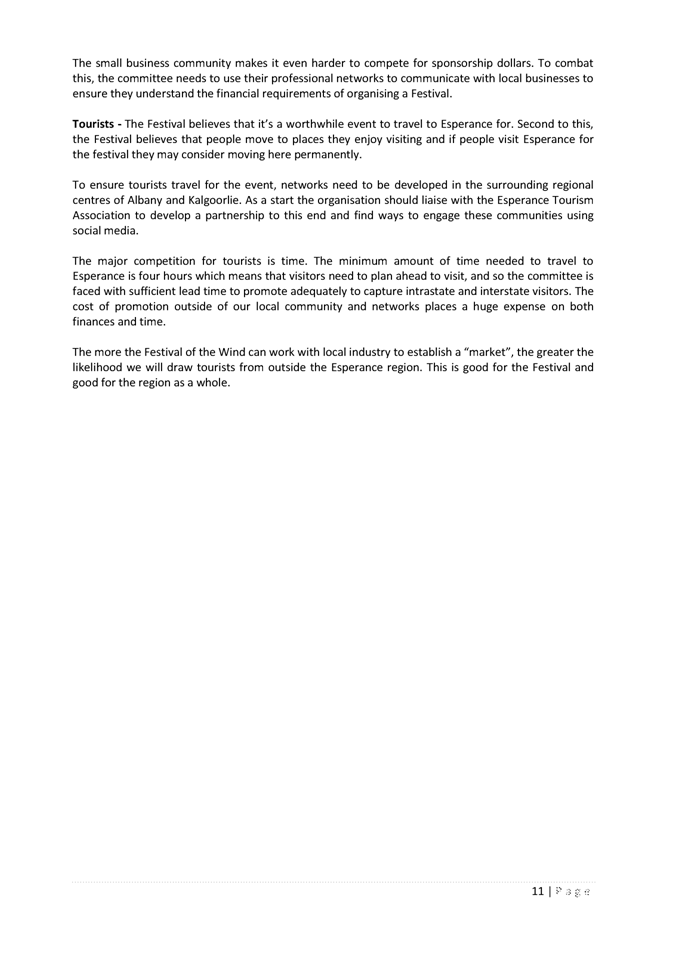
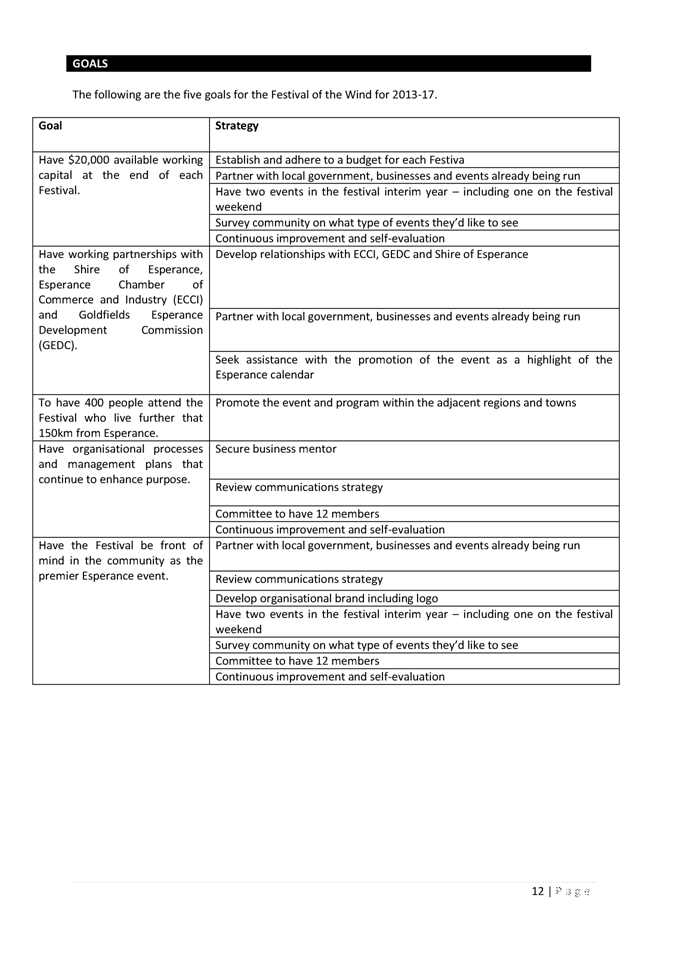
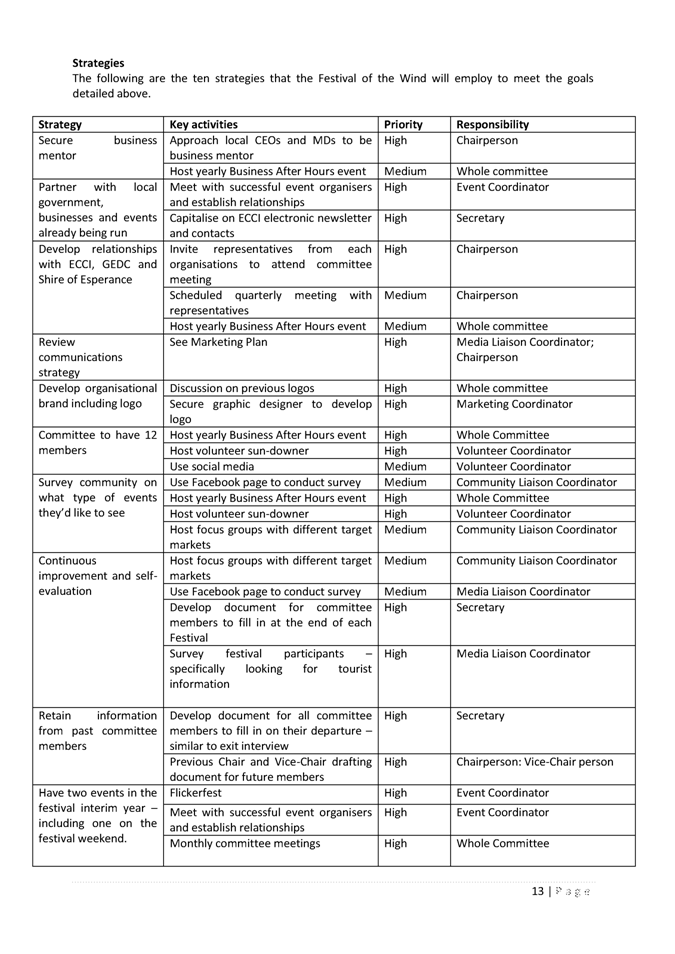
4. Festival
of the Wind – Flickerfest
Purpose: to host four open air
cinema experiences from January to March.
Participants: based on previous events
the average participation rate is 300 per event and includes young adults,
families and couples.
Funding Request
Total Project Cost $13,760
Applicant/other
contribution $11,760
Amount Requested $2,000
Officer’s Comment
Both the Cannery Arts Centre and ESCARE have run
previous activities that were well attended.
South Coast Natural Resource Management has run their
activity in the past and are seeking support to expand the program.
The Festival of the Wind provided a partial application
on the closing date, and provided the remaining documentation two days later.
The suggested funding of $600 will cover the hire of the Sound Shell.
If all applications ($7,250) are approved, there will
be $2,300 left for the remaining two funding rounds.
Consultation
The applications were reviewed by the Community
Services Officer, the Manager of Library and Culture and the Manager of the
Volunteer Resource Centre.
Financial Implications
There are no known financial implications from this report as
the Community Arts and Activities Funding has already been budgeted for the
2012/2013 financial year.
If the officers recommendation is accepted there will be
$5,400 remaining in the fund for the next 2 funding rounds.
Asset Management Implications
N/A
Statutory Implications
N/A
Policy Implications
N/A
Strategic Implications
Strategic Community Plan 2012-2022
Social
1.7 facilitate and promote the arts and cultural activities
for all ages.
Environmental Considerations
N/A
Attachments
|
aView.
|
Application - South Coast Natural
Resource Management - Salty School Holidays (TRIM Ref D13/20898)
|
|
|
bView.
|
Application - ESCARE - Summer Surf
School (TRIM Ref D13/20782)
|
|
|
cView.
|
Application - Cannery Arts Centre
Summer School Holiday Program (TRIM Ref D13/21173)
|
|
|
dView.
|
Application - Festival of the Wind
Flickerfest (TRIM Ref D13/21376)
|
|
|
Officer’s Recommendation
That Council approve the following
Community Arts and Activities Fund applications:
1) $1,000 to South Coast Natural
Resource Management, towards the presenter fees of the Salty School Holiday
Activities.
2) $1,000
to ESCARE, towards the presenter fees for the Summer Surf School
3) $1,500
to Cannery Arts Centre, towards the presenter and material costs for the
Summer School Holiday program
4) $600
funding to Festival of the Wind for Flickerfest
Voting Requirement Simple Majority
|



12.5 Executive Services
Item: 12.5.1
Community
Engagement Policy
|
Author/s
|
Priscilla Davies
|
Coordinator Corporate Reporting
|
|
Authorisor/s
|
Matthew Scott
|
Chief Executive Officer
|
File Ref: D13/10249
Applicant
Internal
Location/Address
Shire of Esperance
Executive Summary
For Council to adopt a policy that provides a broad
framework and direction for community engagement. This policy supports Councils
commitment to build community engagement into work practices by making it an
integral part of Council and Shire operations
Recommendation in Brief
That Council adopt the Community Engagement Policy.
Background
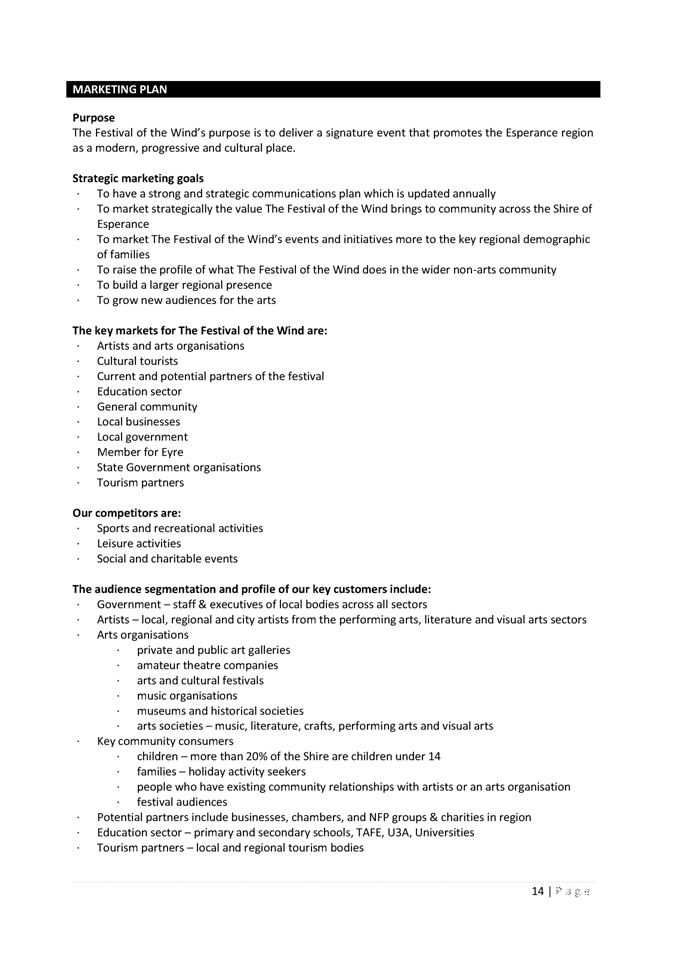
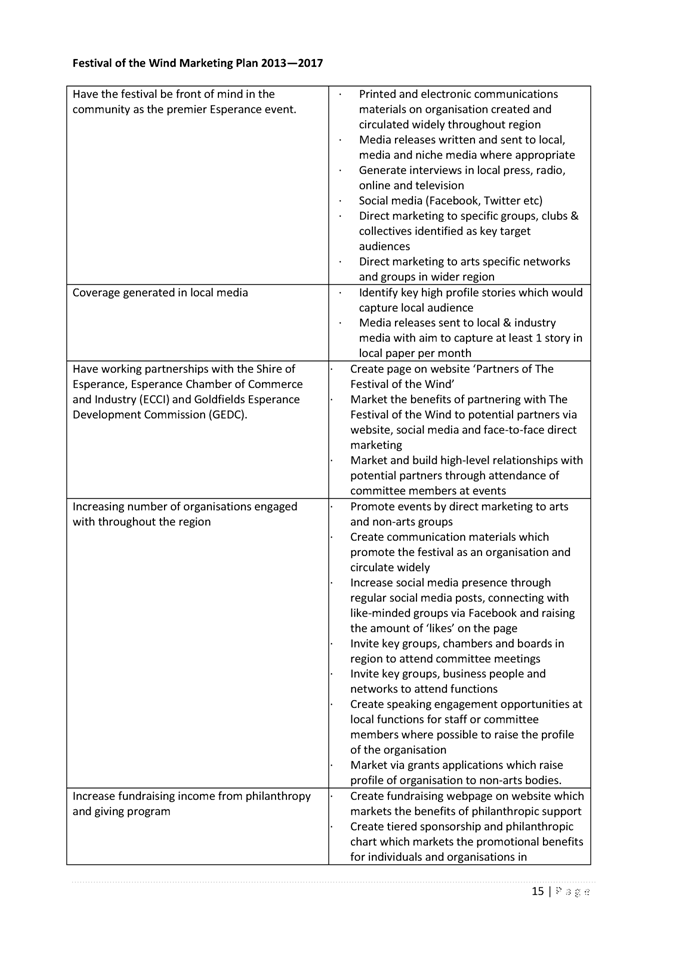
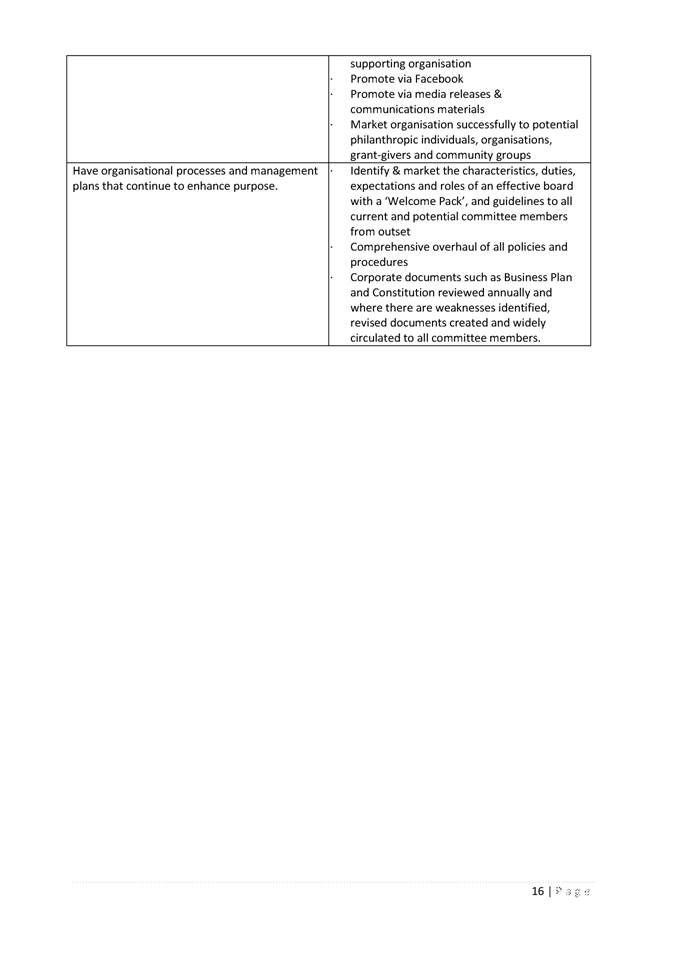
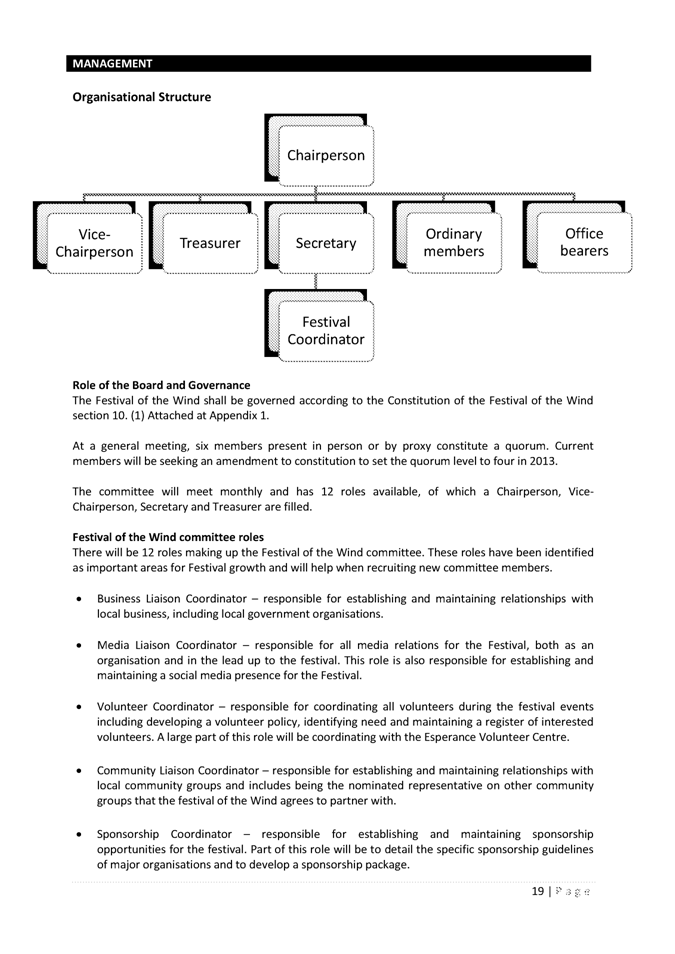
Community Engagement is about involving the community
in decision making processes, which is critical in the successful development
of acceptable policies and decisions in government, the private sector and the
community.
Council’s commitment to community engagement has been
noted as a priority in the Shire of Esperance Strategic Community Plan
2012-2022 with Strategy 4.4:
Actively engage with the community to
inform decision making and improve conversations within the community.
The Community Engagement Policy will be one of three
documents that form the Community Engagement Framework. The purpose of the
framework is to ensure a strong foundation to base community engagement on
exists across the organisation which will promote consistency and an engaged
community. Two operational documents that compliment the Community Engagement
policy and form part of the Framework are the Community Engagement Matrix and
the Community Engagement Handbook. These documents will direct staff on when,
how and what level of engagement is required and the techniques that can be
utilized.
Officer’s Comment
Council have been actively involved with shire
officers in working towards improving communication and engagement with our
community. This policy will provide guidance to both Council and shire officers
on our approach to community engagement and the underpinning principles that
will lead all future engagement activities. The policy outlines our intention
to approach community engagement based on the International Association for
Public Participation Spectrum (IAP2), which is widely recognised in both the
public and private sector as a roadmap on the goals of each level of
participation.
Consultation
Executive Management Staff
Council
Media and Communication staff
Various other Local Governments (Statewide &
Nationally)
WALGA
Financial Implications
Nil
Asset Management Implications
Nil
Statutory Implications
Nil
Policy Implications
The policy implications arising from this report are that on its adoption this
policy will provide guidance to Council and Shire Officers on the approach to
taken to community engagement.
Strategic Implications
Strategic Community Plan 2012-2022
Civic Leadership
4.4 Actively engage with the community to inform decision
making and improve conversations within the community,
Corporate Business Plan 2013/2014 – 2016/2017
4.4.1 Develop and implement a Consultation and Engagement
Strategy
Environmental Considerations
Nil
Attachments
|
aView.
|
Community Engagement Policy
|
|
|
Officer’s Recommendation
That Council adopt the Community
Engagement Policy.
Voting Requirement Simple Majority
|
Community
Engagement Policy
Document
Management
Creation
Date: November 2013
Last
Reviewed:
Key
Words:
Engagement; community; consultation; participation
Statute
and Related Plans:
a) Local
Government Act 1995
b) Shire
of Esperance Disability Access and Inclusion Plan
c) Planning
and Development Act 2005
d) Land
Administration Act 1997
e) Town
Planning Regulations 1967
f) Local
Planning Scheme No. 23
g) International
Association for Public Participation (IAP2)
h) Shire
of Esperance Community Engagement Matrix
i) Shire
of Esperance Community Engagement Handbook
j) Shire
of Esperance Communication Plan (under development)
k) Shire
of Esperance Strategic Community Plan 2012-2022
l) Shire
of Esperance Corporate Business Plan 2013-2017
m) Shire
of Esperance Code of Conduct
Definitions:
Community – includes all the
people who live, work, study, own property, conduct private or government
business, visit or use the services, facilities and public spaces and places in
the Shire of Esperance
Community
Engagement
- community engagement is about involving the community in the decision making
process and is critical in the successful development of acceptable policies
and decisions in government, the private sector and the community.
Objectives
The
Shire of Esperance recognises that community engagement and participation
processes are a vital part of local democracy. It helps strengthen the
relationship Council and the Shire have with the community and is critical to
good governance. For this reason both Council and Shire Staff are committed to
engaging with the Esperance Community. The Shire of Esperance Strategic
Community Plan 2012-2022 highlights this commitment with Strategy 4.4:
Actively engage
with the community to inform decision making and improve conversations within
the community.
Community
engagement does not necessarily mean achieving consensus. It does involve
seeking broad informed agreement and the best possible solutions for Council,
the Shire of Esperance and the community. Council will be presented each
quarter with a review of all community engagement that has taken place for
ongoing and project specific activities.
Council’s
commitment to community engagement is supported by the Local Government Act
1995 which outlines the essential roles of a Councillor:
2.10. A councillor —
(a) represents the interests of electors, ratepayers and residents of the
district;
(b) provides
leadership and guidance to the community in the district;
(c) facilitates
communication between the community and the council;
(d) participates in
the local government's decision-making processes at council and committee
meetings; and
(e) performs such
other functions as are given to a councillor by this Act or any other written
law.
Policy
This
policy applies to all aspects of Council and Shire operations to ensure the
Esperance community is well informed about issues, strategies or plans that may
directly or indirectly affect them. Development approvals and other planning
related matters are the only exception to this rule as their engagement
requirements are addressed by the Planning and Development Act 2005, Land
Administration Act 1997, Town Planning Regulations 1967 and Local Planning
Scheme No. 23.
It
defines the principles underpinning engagement activities and the role of
councillors and staff in engaging with the community. By receiving diverse
perspectives and potential solutions the quality of decisions improves and
subsequently a higher standard of customer service is provided. Shire staff
will ensure that the Councillors are fully informed of all community engagement
activities regarding significant issues or high impact projects prior to
occurring.
The
decision to develop an engagement strategy and engage with the community may
occur as part of, though not limited to:
· Planning the
strategic direction of the Shire of Esperance
· Policy development
and/or implementation
· Any changes to land
zoning that may have impact on the community
· Service level planning
and delivery
· When an issue is
brought to Council by the community
· Changes to Local
By-laws
· Impending
legislative or statutory changes with local impact
· Major project
development and/or implementation
The
Community Engagement Policy, provides a broad framework and policy direction
for engagement. The Shire of Esperance Community Engagement Matrix (which is an
attachment to this document), which aims to provide staff with direction on
engagement planning and guidance on when and how community engagement should
occur.
The
Council and Shires approach to community engagement is based on the spectrum of
engagement activities as advocated by the International Association for Public
Participations (IAP2).
Figure
1: IAP2 Public Participation Spectrum
|
|
Inform
|
Consult
|
Involve
|
Collaborate
|
Empower
|
|
Goal
|
To provide the public with balanced
and objective information to assist them in understanding the problems,
alternatives and/or solutions.
|
To obtain public feedback on
analysis, alternatives and/or decision.
|
To work directly with the public
throughout the process to ensure that public issues and concerns are
consistently understood and considered.
|
To partner with the public in each
aspect of the decision including the development of alternatives and the identification
of the preferred solution.
|
To place final decision-making in
the hands of the public.
|
|
Promise to the Pubic
|
We will keep you informed.
|
We will keep you informed, listen
to and acknowledge concerns and provide feedback on how public input influenced
the decision.
|
We will work with you to ensure
that your concerns and issues are directly reflected in the alternatives
developed and provide feedback on how public input influenced the decision.
|
We will look to you for direct
advice and innovation in formulating solutions and incorporate your advise
and recommendations into the decisions to the maximum extent possible.
|
We will implement what you decide.
|
|
Example Tools
|
Fact sheets Websites
Open houses
Council Minutes
Newsletters
|
Public comment Focus groups Surveys
Public meetings
|
Workshops
Deliberate polling
|
Community Reference Group Advisory committees
Consensus-building Participatory decision-making
|
Referendum Ballots
Delegated decisions
Council Elections
|
|
Role of community
|
Listen
|
Contribute
|
Participate
|
Partner
|
Decide
|
The Community Engagement Matrix is relevant to Council and Shire
officer when interacting with the community. It aims to guide Council and staff
by ensuring the level
of community engagement undertaken relates directly to the level of community
involvement required, and should make sure it is appropriate to the nature,
complexity and impact of the issue, plan or strategy. In some cases
requirements may be imposed by the State Government and may override the policy
and matrix.
Principles
The Shire of Esperance’s Community
Engagement Policy is based on a set of core values adapted from the IAP2.
These principles are used to guide the development, implementation and
evaluation of Council and the Shire’s engagement process. Council members are
elected to govern and final decisions and accountability rests with Council.
Shire officers make recommendations to Council based on known facts and
research. Community engagement does not remove these roles but it increases
opportunities for the community to provide advice and influence planning. This
process enables decisions to be made that are part of a continuous process
recognising the needs and interests of the whole community.
The following principles embody
Council’s and Shire officers commitment to community engagement:
· Be representative of the broader
community and ensure their views are adequately reflected when making
decisions.
· Seek out and encourage contributions
from community members who may be affected by or interested in a decision.
· Actively listen so that the
community’s ideas and input can assist in making decisions.
· Inform the community about
decisions, and how their input was considered.
· Prior to any decision Council and
Shire staff will ensure that they are well informed regarding the benefits of
alternative decisions, reflecting all sides of the argument and including any
community input on matters before them.
· Collaborate with key stakeholders
and other levels of government to achieve common goals for the Shire.
· Provide relevant, timely and balanced
information so the community/stakeholders can contribute in a meaningful way.
· Provide a variety of appropriate,
inclusive and accessible ways for people to have their say and to speak
honestly.
· Endeavour to ensure
that engagement processes are appropriate, accessible, well planned and
adequately resourced.
· Clearly identify the level of
community influence and limitations if appropriate.
· The timing of community activities
should take into account key dates (school holidays, special events etc) to
ensure that maximum opportunity is given to encourage community input.
· To ensure both the Council and the
Shire are meeting legislative requirements regarding community consultation in
all areas of service delivery.
-------------------------------------------------
Policy Ends-----------------------------------------------------

Community Engagement Matrix
The
Community Engagement Matrix is a tool designed to assist with the selection of
the most appropriate level of engagement. The selection of a level of
community engagement will be driven by the expectations of internal and
external stakeholders. However, it must be noted that using the matrix is a
technical approach and consideration must be given to the emotional elements as
part of the engagement selection process when using this tool.
Detailed
explanations on engagement responsibilities and planning requirements are in
the Community Engagement Handbook. The Matrix is a component of the Handbook
and does not include other elements that are required when drafting an
engagement plan. This document is to assist in determining the most
appropriate level of engagement only.
Whether
it’s a task, an activity, a program or a project, much of our work has an
impact on, or is impacted by, our communities and the work of other people in
the organisation. Whatever we do will be more effective if the people affected:
· understand what we
are doing and what it will mean for them
· are involved at the
level needed to ensure the best outcome.
It
is vital to note that different stakeholders may require different levels of
engagement. Therefore prior to the level of engagement being determined,
stakeholders must be identified. Stakeholders can be internal and/or external
and can differ in levels of engagement required.
The
matrix is based on three underpinning factors to determine the level of
engagement required. These include:
· Degree of
complexity – is there a single issue or multiple issues?
· Degree of potential
community impact and/or outrage – what is the general community perception of
the issue/s?
· Degree of political
sensitivity – is there potential for individuals/groups to use the situation to
make political gains?
Additionally,
consideration will still need to be given to the following when determining
levels of engagement, however their relevance can differ amongst alternative
tasks, activities or projects due to their subjective nature:
· Background
information, including Council Reports, Briefing Papers, Project scopes and
status reports
· Level of interest
from community as perceived by internal stakeholders
· Level of interest
being shown by the community
· Underlying values
and views of internal and external stakeholders
· Availability of
labour, material and financial resources
· Media interest
· Legislative
requirements
· Is there
significant economic or social impact?
· What is the desired
level of community participation/involvement (does the community need to be
informed or should they have the opportunity to be involved).
· Are there
legislation or Council Policy requirements?
The
Community Engagement Matrix provides a guide on what level of community
engagement is required. The four levels of engagement identified in the matrix
are from the International Association for Public Participation (IAP2) Public
Participation Spectrum (Empower has been left out of the matrix due to the
rarity that it will occur as an engagement level). To determine the level of
engagement complete the Community Engagement Matrix Assessment Sheet (Appendix
1).
Community Engagement
Matrix
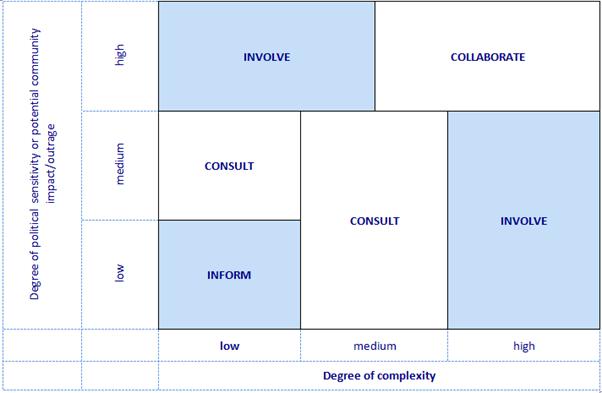
Engagement examples
|
Level
of Engagement
|
Definition
|
Examples
|
|
Inform
|
We
will share information about a decision or direction
|
· Advising the community of a
situation of proposal
· Informing on a decision or
direction – Council Minutes
· Providing advice on an issue
– can include Report times to Council
· Putting out media releases,
updating website news and facebook are all examples of tools we use to inform
· No response is required,
although people are free to seek a further level of participation
|
|
Consult
|
We
will explore options, gain feedback and an understanding of your concerns and
preferences
|
· Undertake research to
identify needs or issues
· Seeking comment on a
proposal, action or issue
· Seeking input/feedback on a
service or facility – might run a survey
· Requiring a response but
limited opportunity for dialogue
|
|
Involve
|
We
will involve you in the process so your ideas, concerns and aspirations are
reflected in the alternatives developed of the final decision
|
· Involving the community in
discussion and debate
· Ensuring informed input
through briefings and information
· Adopting amore personal and
innovative approach through personal contact and workshops that encourage
participation
· Involving at different times
in the planning process (keep informed and enable further comment)
|
|
Collaborate
|
We
will collaborate with you so your advice, innovation and recommendations are
included in the final decision that we make together
|
· Establishing a structure for
involvement in decision making (eg committees, CRG’s etc)
· Enabling ongoing involvement
and keeping informed
· Allocating responsibility in
achieving initiatives
|
|
Empower
|
We
will implement what you decide
|
· Joint ventures
|
Exceptions
to engagement
In
an emergency situation, it may not be feasible to involve the community or seek
information prior to action. Should this situation arise informing the community
after the event is advisable when possible. Legal constraints may also prevent
community engagement on sensitive issues.
Additionally
it is not always necessary to involve the community in forms of engagement,
other than informing, if the community has no ability to impact on the final
outcome. For example, a review of a local policy that is dictated by
legislation does not need to include a consulting session, results from a
survey can be presented and may not require feedback.
Community Engagement
Matrix Assessment Sheet
Engagement for: ________________________________
Date: ________________________________
|
Assessment (tick the
boxes ü)
|
Low
|
Medium
|
High
|
|
Degree
of Complexity
· there is one clear issue
and/or problem that needs to be addressed (low); or
· there are more than one or
two issues and/or problems that can be resolved (medium); or
· there are multiple issues
and/or problems and it is unclear how to resolve them (high).
|
|
|
|
|
Degree
of potential community impact and/or outrage
· little effect on communities
and they will hardly notice any changes (low); or
· fixes a problem or creates a
change that will benefit communities and will/may cause minor inconvenience
(medium); or
· creates a change that will
have an impact on communities and the living environment, and the degree of
impact/outrage and acceptance will vary (high).
|
|
|
|
|
Degree
of political sensitivity
· has acceptance throughout the
community (low); or
· some may see a potential in
raising the profile of a project/plan/service to gain attention for their
cause (medium); or
· community expectations are
different to those of the decision makers and there is high potential for
individuals and groups to use the uncertainty to gain attention (high).
|
|
|
|
|
Total
|
|
|
|
The Community Engagement
Matrix Score
Take the scores from the total
number of ticks in each column and follow the information below to begin to
determine the level of community engagement.
If the total score is three
ticks in the “low” column, the “inform” level should be selected.
If the total score is three
ticks in the “medium” column, the “consult” level should be selected.
If the total score is three
ticks in the “high” column, the involve or collaborate level should be
considered.
If the total score in the “low”
column is one tick and the score is two ticks in the “medium” or “high” column,
the highest scoring column would indicate that “consult” should be selected –
the leaning should be towards the highest number of ticks scored.
If the total score in the “medium”
column is two ticks and the score is one tick in the “high” column, the highest
scoring column would indicate that “consult” should be selected as the main
level with consideration for the “involve” level to address the variety of
community concerns.
If the total score in the
“high” column is two ticks and the score is one tick in the “medium” column,
the highest scoring column would indicate that “involve” should be selected.
If there was a tick scored in
each of the “low”, “medium” and “high” columns, it would indicate that
“involve” or “collaborate” should be considered to cover the varying degrees of
sensitivity and impact/outrage.
To decide between “involve” and
“collaborate”, revisit the degree of complexity - the more complex the issues
and problems, the more you should consider the level of “collaborate”. However,
you will need to bear in mind that, in particular, for collaboration to be
possible and effective, working relationships between stakeholders need to be
established and maintained.
17 December 2013
Page
100
Item: 12.5.2
Information
Bulletin
|
Author/s
|
Chantelle Spain
|
Executive Assistant
|
|
Authorisor/s
|
Matthew Scott
|
Chief Executive Officer
|
File Ref: 0.00
Attachments
|
aView.
|
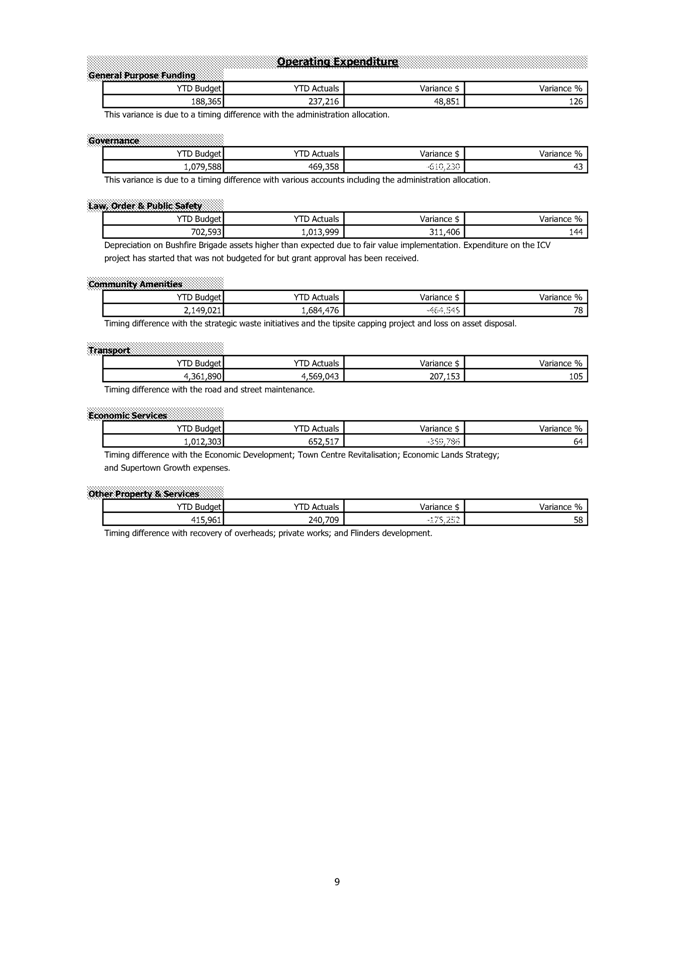
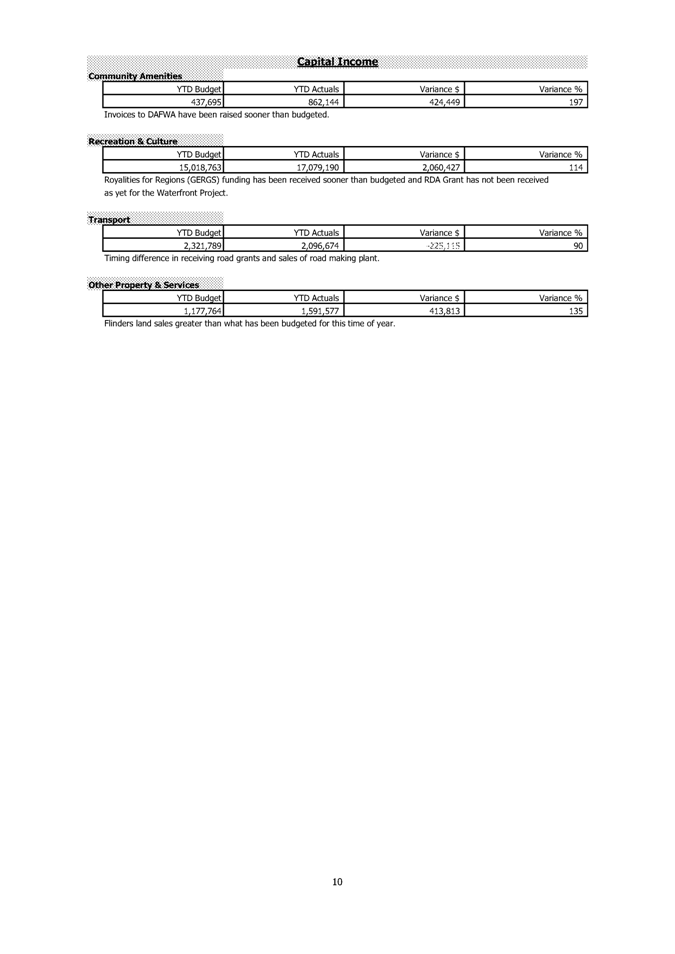
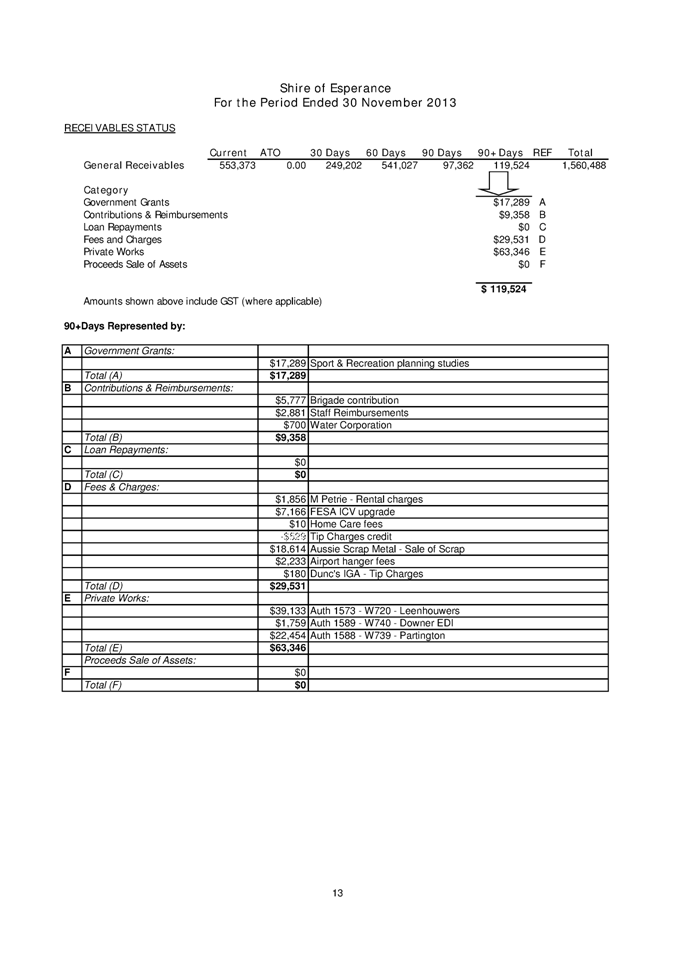
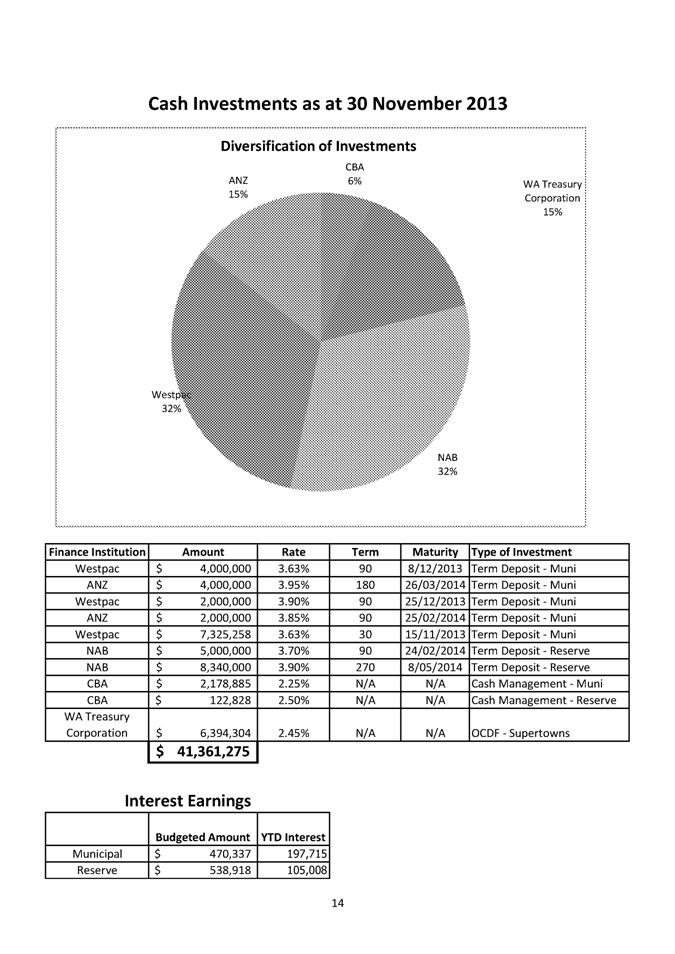
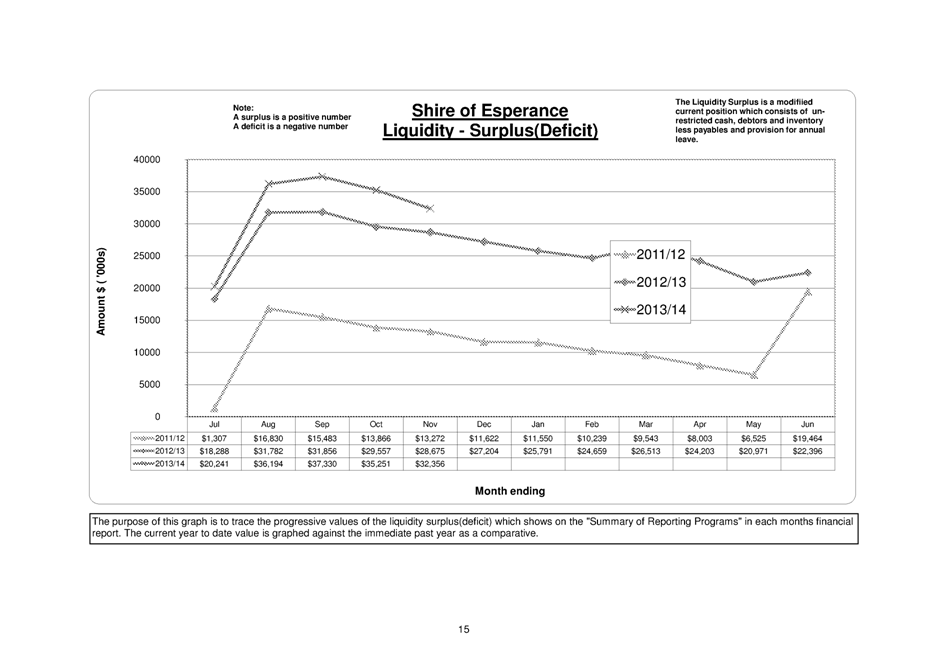
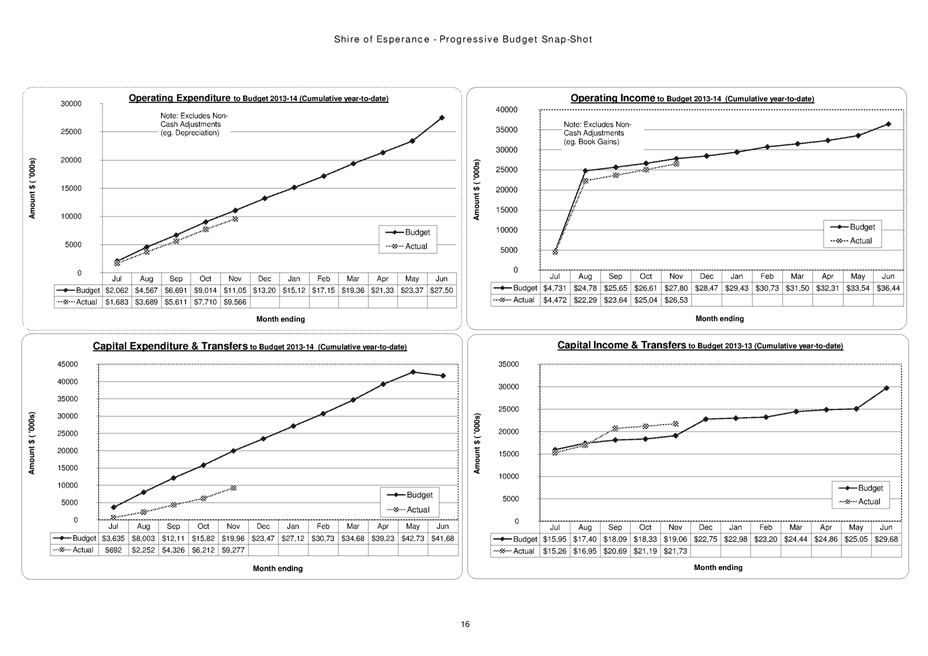
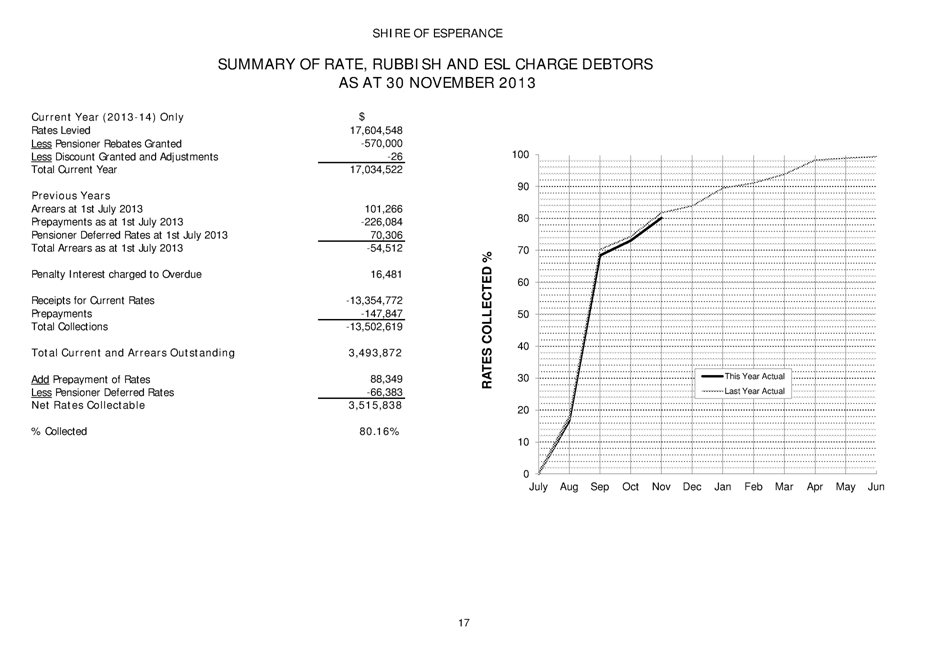
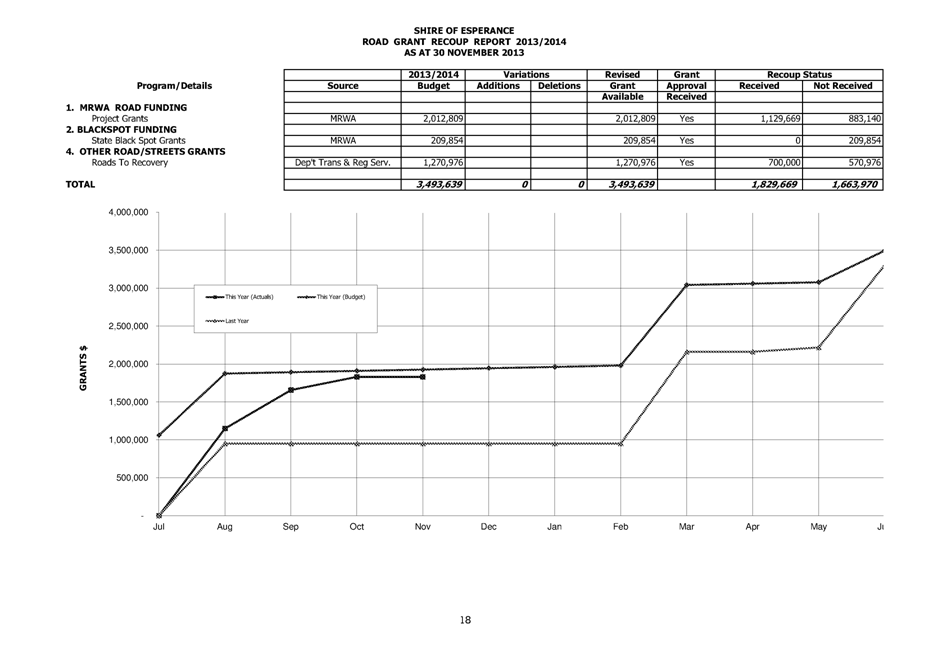
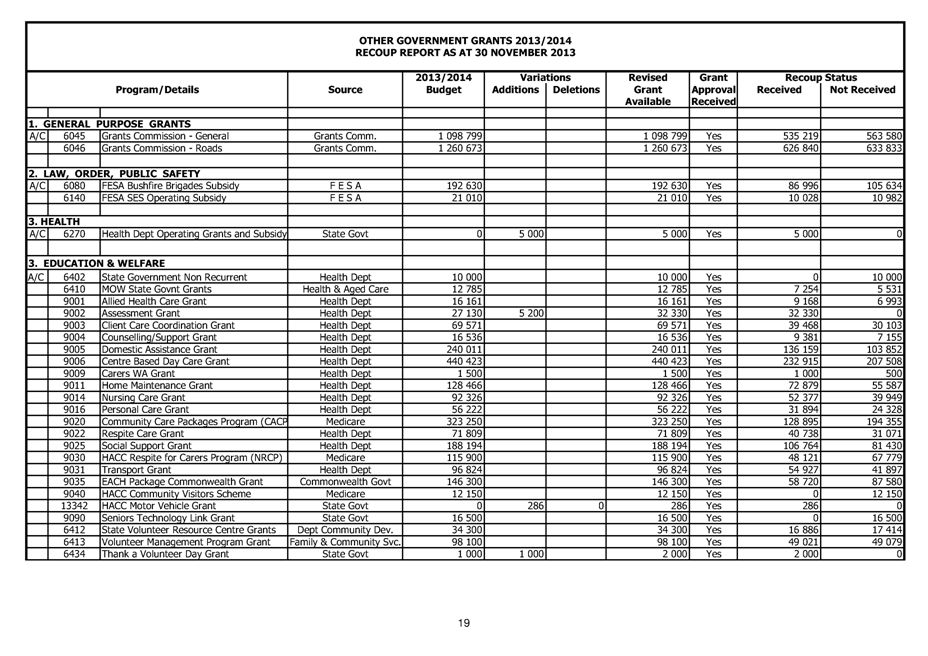
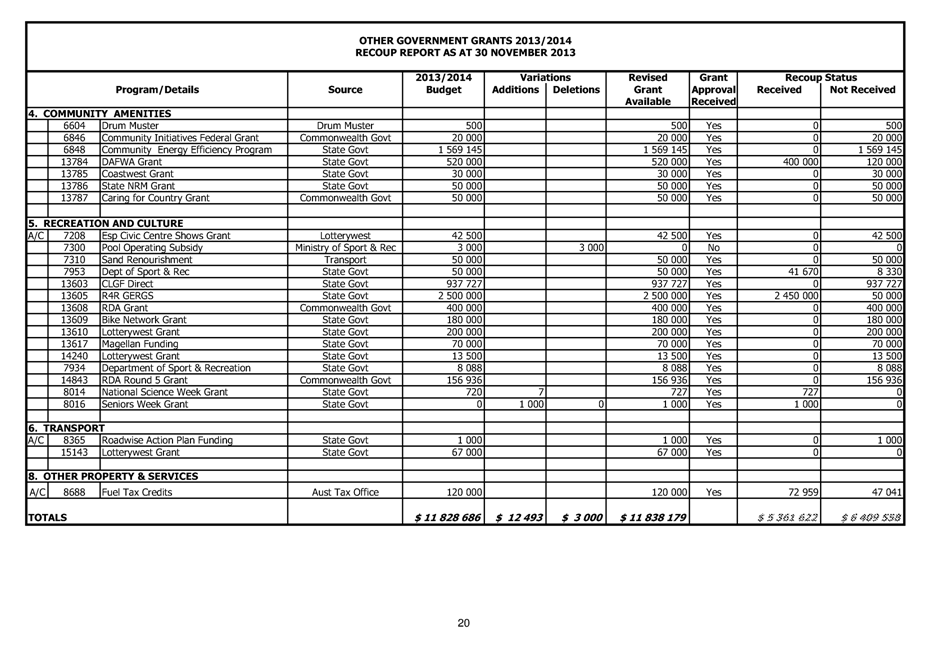
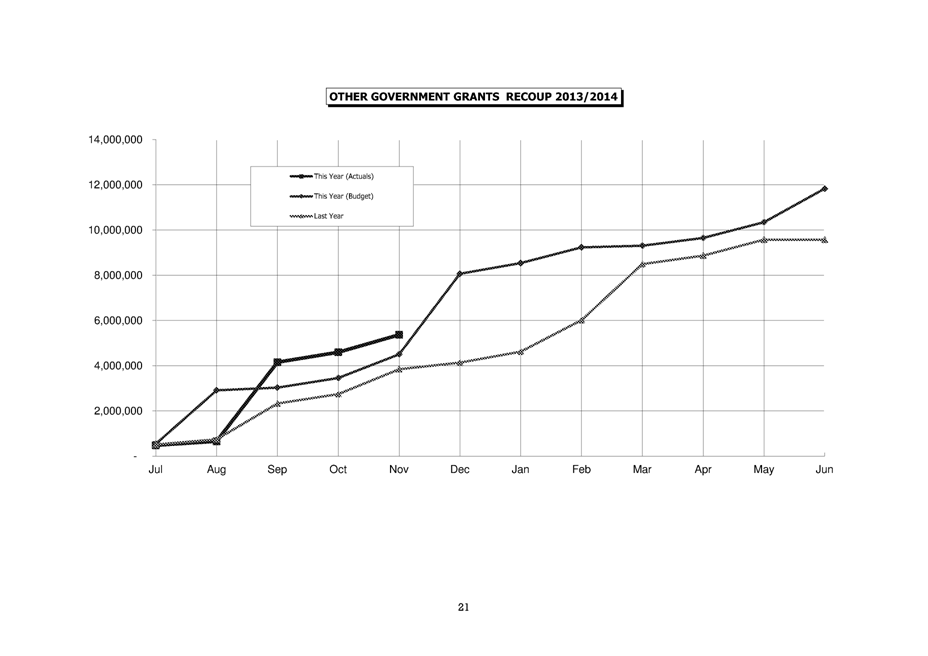
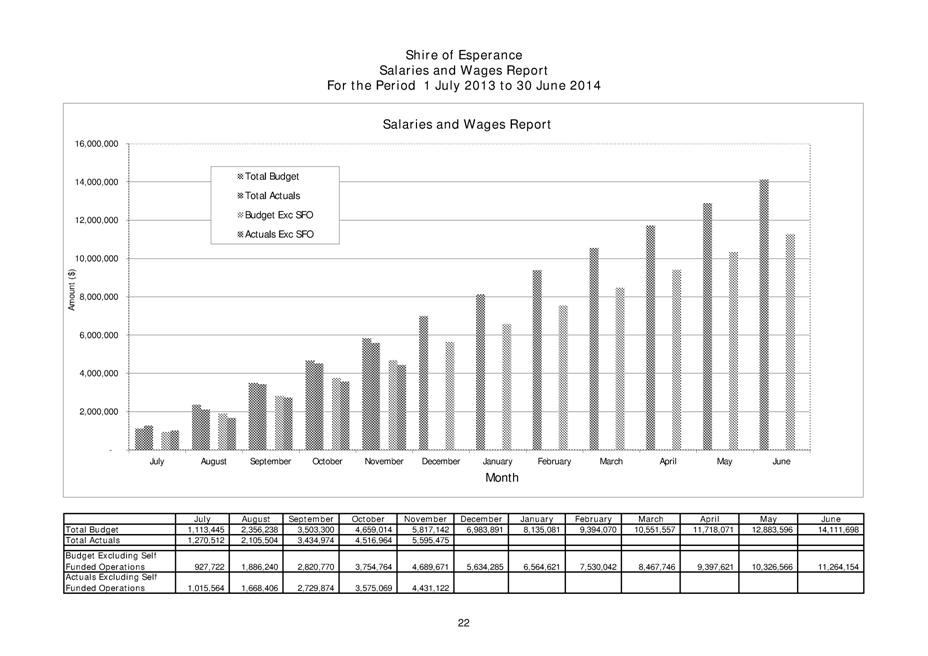
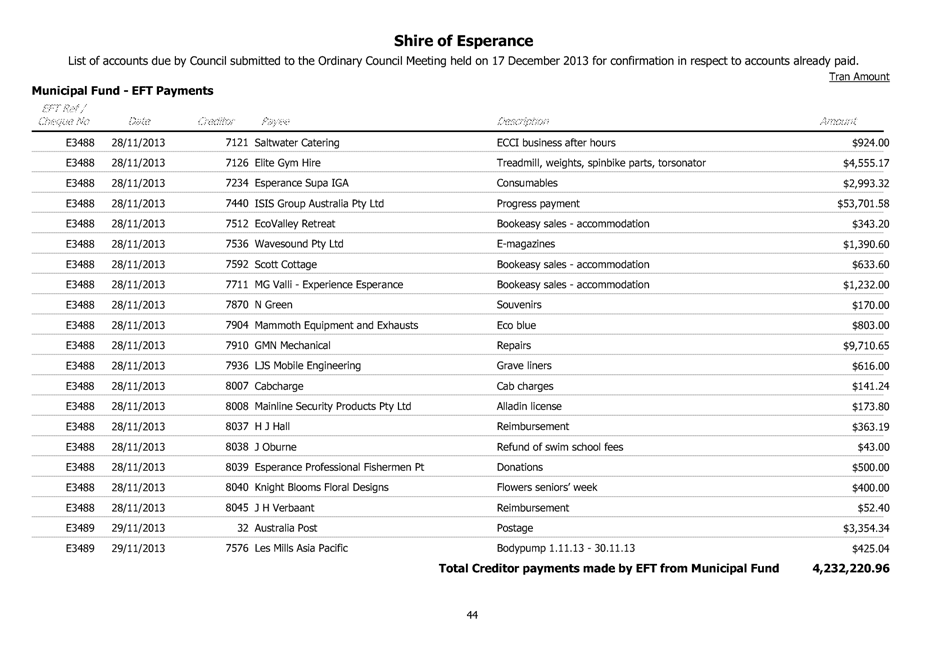
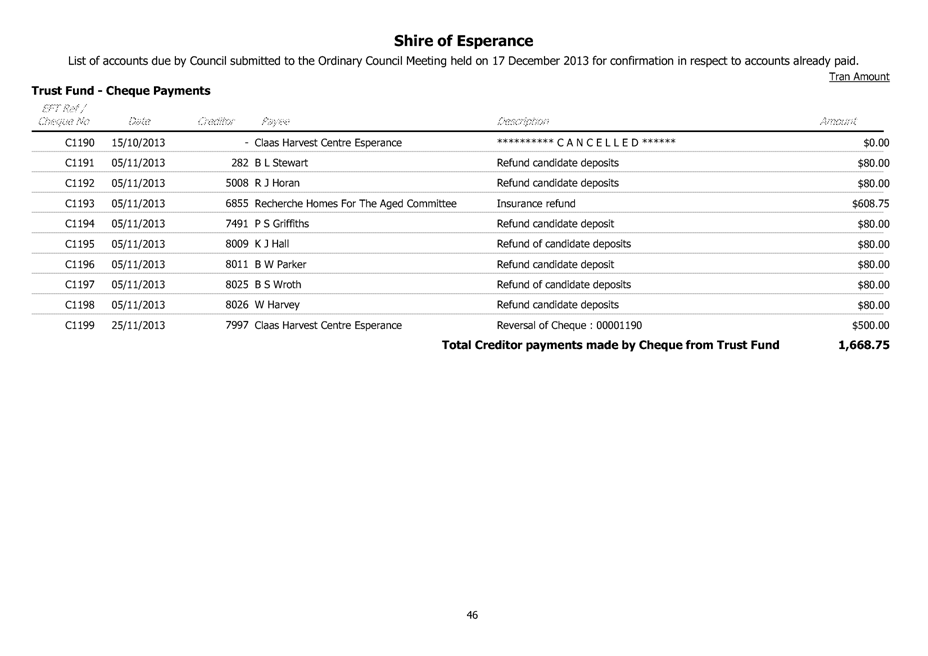
Financial Services Report November
2013
|
|
|
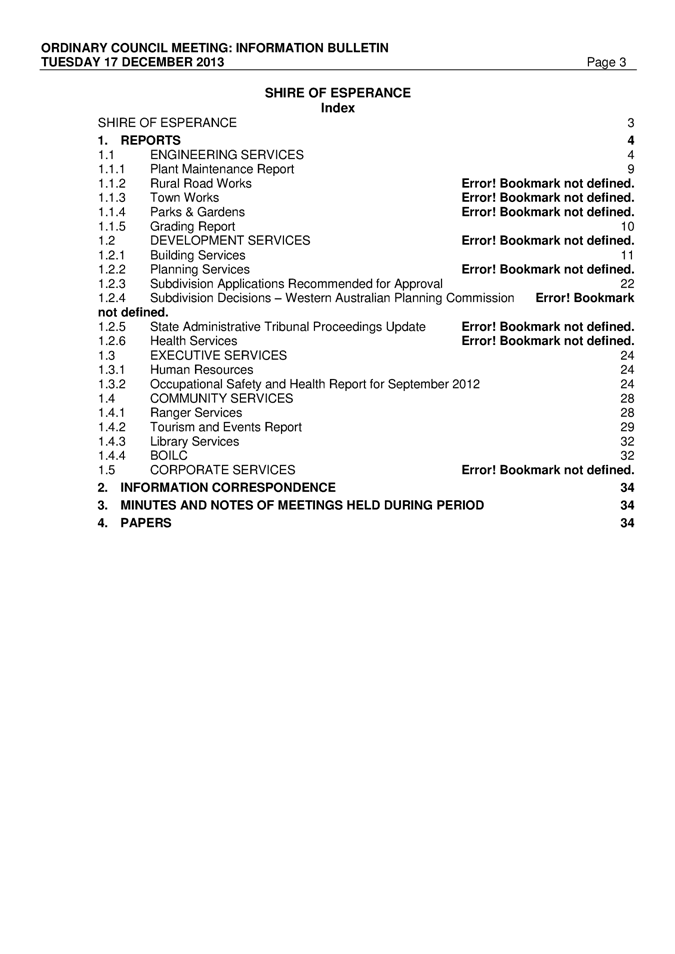
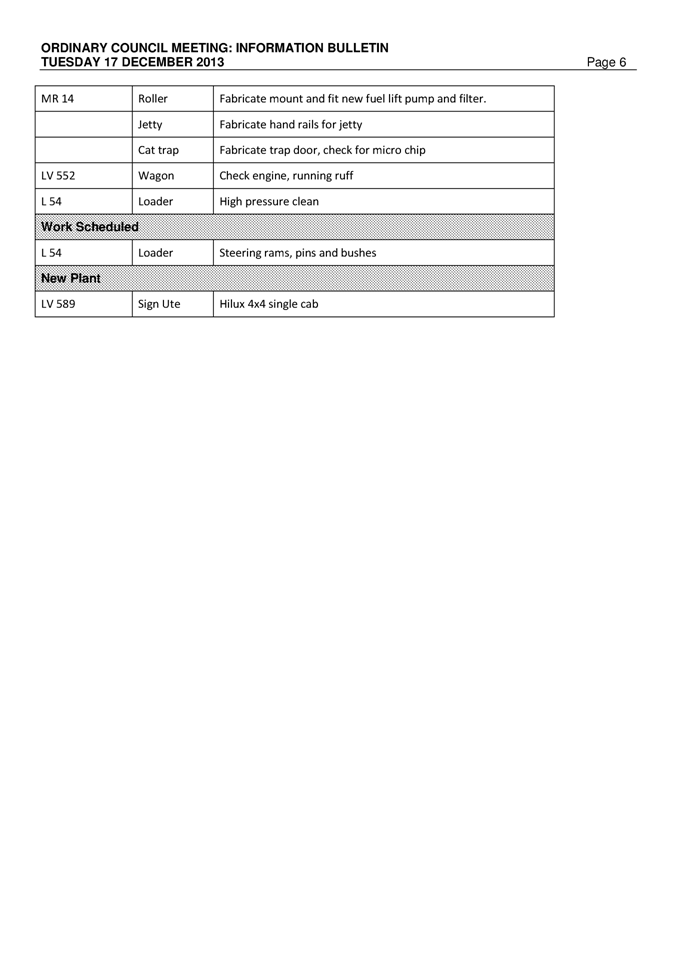
bView.
|
Information Bulletin December 2013
|
|
|
Officer’s Recommendation
That the report entitled
Councillor’s Information Bulletin December 2013 be received.
Voting Requirement Simple Majority
|
|
17 December 2013
Page
101





17 December 2013
Page
117
17 December 2013
Page
120

17 December 2013
Page
128





17 December 2013
Page
157





17 December 2013
Page
164








17 December 2013
Page
180







17 December 2013 Page
191
13. Reports Of Committees
Nil
14. Motions of which Notice has been Given
Nil
15. MEMBERS QUESTIONS WITH OR WITHOUT
NOTICE
16. URGENT BUSINESS APPROVED BY DECISION
17. MATTERS BEHIND CLOSED DOORS
18. PUBLIC QUESTION TIME
19. CLOSURE